UNDERSTANDING THE IMPORTANCE OF WORLD TSUNAMI AWARENESS DAY
Every year on November 5, the world observes World Tsunami Awareness Day, an international occasion dedicated to promoting knowledge, preparedness, and resilience against one of nature’s most destructive hazards.
Established by the United Nations in 2015, the day encourages governments, organizations, and communities to work together to reduce the risks associated with tsunamis and to strengthen disaster preparedness worldwide. While tsunamis are relatively rare events, their consequences can be devastating, causing widespread destruction, loss of life, and long-term social and economic impacts.
By increasing awareness and promoting preventive measures, this observance reminds us that preparedness can save lives and help communities recover more effectively when disaster strikes.
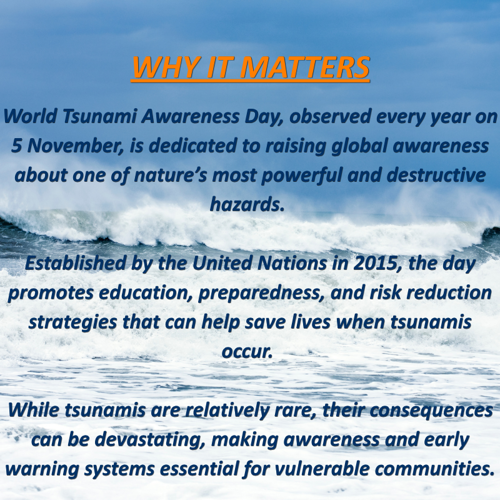
WHAT IS A TSUNAMI AND WHY IS IT SO DANGEROUS?
A tsunami is a series of powerful ocean waves typically generated by underwater earthquakes, volcanic eruptions, submarine landslides, or other large-scale disturbances beneath the sea. The word "tsunami" comes from Japanese and means "harbor wave," reflecting the country's long history of experiencing these events. Unlike ordinary waves, tsunamis can travel across entire ocean basins at extraordinary speeds and strike coastlines with immense force.
One of the most dangerous aspects of a tsunami is that the first wave is not always the largest, and multiple waves can continue to arrive for hours. Natural warning signs, such as strong ground shaking or the sudden retreat of seawater from the shoreline, often precede a tsunami, making public awareness and education essential for rapid evacuation and survival.
LEARNING FROM PAST TRAGEDIES
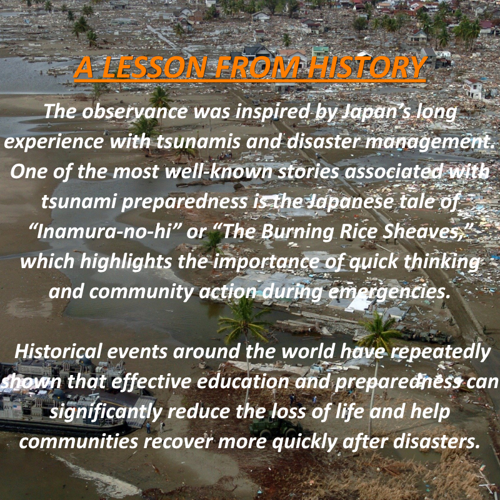
History has shown the catastrophic impact that tsunamis can have on communities around the world. Over the past century, tsunamis have claimed more than 260,000 lives, making them one of the deadliest natural hazards.
The most devastating recent example was the Indian Ocean tsunami of December 2004, which killed approximately 227,000 people across 14 countries and left millions affected. This tragedy highlighted the urgent need for better warning systems, emergency planning, and international cooperation.
In the years that followed, significant efforts were made to improve tsunami monitoring and disaster risk reduction strategies, including the establishment of advanced warning networks and the adoption of international frameworks designed to help countries better prepare for future disasters. These lessons continue to shape global efforts to protect vulnerable populations today.
PREPAREDNESS AND EARLY WARNING SAVE LIVES
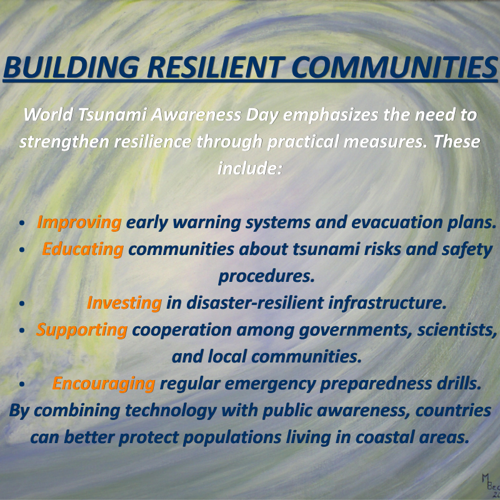
One of the key messages of World Tsunami Awareness Day is that tsunamis do not have to become large-scale disasters if communities are prepared. Modern early-warning systems, combined with effective communication networks, evacuation planning, and regular emergency drills, play a crucial role in reducing casualties and damage.
The United Nations and its partners promote initiatives such as the #GetToHighGround campaign, which encourages people living in at-risk areas to learn evacuation routes and participate in preparedness exercises. Experts emphasize that investment in early-warning technologies, public education, and community resilience can significantly reduce disaster losses.
Ensuring that warnings reach all populations, especially those in vulnerable coastal regions, remains a global priority in the effort to create safer and more resilient societies.
A SHARED RESPONSIBILITY FOR A SAFER FUTURE
As coastal populations continue to grow and tourism expands in many tsunami-prone regions, the importance of preparedness becomes even greater. World Tsunami Awareness Day serves as a reminder that reducing disaster risk is not solely the responsibility of governments or emergency services.
Individuals, schools, businesses, scientists, and local communities all have a role to play in building a culture of awareness and readiness. Simple actions such as learning evacuation procedures, staying informed about local risks, and supporting disaster preparedness initiatives can make a significant difference.
By working together and investing in knowledge, prevention, and resilience, societies can better protect lives and livelihoods from future tsunami events.
CONCLUSION
World Tsunami Awareness Day is more than a commemorative event; it is a global call to action. By remembering past tragedies, promoting education, and strengthening preparedness measures, the international community can reduce vulnerability and increase resilience to future disasters.
As climate challenges, urban growth, and coastal development continue to shape our world, investing in awareness and preparedness remains essential. Ultimately, the knowledge we share and the actions we take today can help save lives tomorrow and create safer communities for generations to come.
Sources: National Today
