
THE SIGNIFICANCE OF WORLD TEACHERS’ DAY
Every year on October 5, the world comes together to celebrate World Teachers’ Day, an international observance dedicated to recognizing the invaluable contributions of teachers to society. Established by UNESCO in 1994, the day commemorates the adoption of the 1966 ILO/UNESCO Recommendation concerning the Status of Teachers, a landmark framework that defines the rights, responsibilities, and professional standards of educators worldwide.
More than just a celebration, World Teachers’ Day is an opportunity to acknowledge the vital role teachers play in shaping minds, nurturing talent, and building stronger communities. Whether in primary schools, universities, or lifelong learning environments, educators inspire curiosity, encourage critical thinking, and empower future generations to reach their full potential. The day reminds us that quality education begins with supported, respected, and motivated teachers.
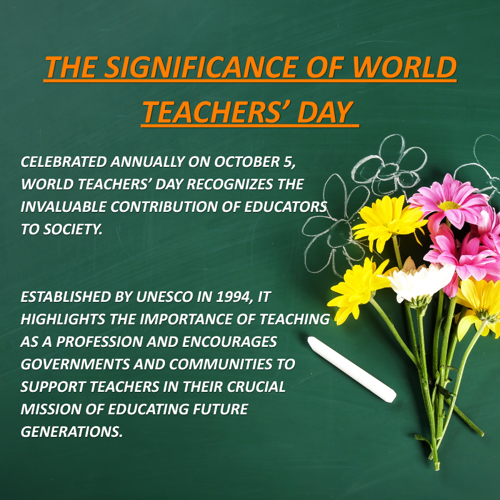
TEACHERS AT THE HEART OF EDUCATIONAL PROGRESS
Teachers are among the most influential figures in a person's life. Beyond teaching academic subjects, they help students develop confidence, resilience, creativity, and social skills. Their work extends far beyond the classroom, as they often serve as mentors, role models, and sources of encouragement during critical stages of personal development.
In an increasingly complex and interconnected world, teachers play a crucial role in preparing young people for future challenges. They foster inclusion, promote lifelong learning, and equip students with the knowledge and skills necessary to participate actively in society. As education systems evolve to address technological advancements and changing workforce demands, the expertise and commitment of teachers remain essential to ensuring that no learner is left behind.
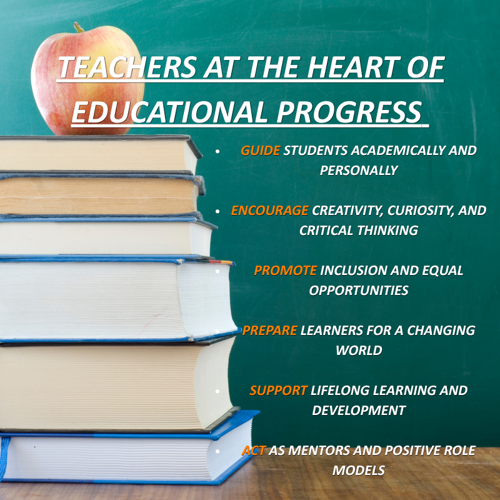
CHALLENGES FACING THE TEACHING PROFESSION
While teachers are widely recognized for their dedication, many continue to face significant challenges. Around the world, educators often deal with heavy workloads, limited resources, staff shortages, and growing expectations from society. UNESCO highlights that modern challenges such as digital transformation, climate change, migration, inclusion, and displacement are reshaping the profession and increasing demands on teachers.
In addition, concerns related to professional autonomy, working conditions, salaries, and recognition continue to affect the attractiveness of teaching as a career. Many education systems struggle to recruit and retain qualified teachers, creating shortages that can impact educational quality and student outcomes. World Teachers’ Day serves as a platform to discuss these issues openly and advocate for policies that strengthen and support the profession.
RECOGNIZING AND APPRECIATING TEACHERS
One of the most meaningful aspects of World Teachers’ Day is the opportunity to express gratitude. Students, parents, schools, and communities celebrate educators through appreciation events, thank-you messages, awards, and special activities that recognize their hard work and dedication. Even a simple gesture of acknowledgment can have a lasting impact on teachers, who often invest countless hours in helping students succeed.
The observance also encourages governments, educational institutions, and stakeholders to invest in teacher development and well-being. By providing quality training, professional growth opportunities, and supportive working environments, societies can ensure that teachers have the resources they need to thrive and continue making a positive difference in the lives of learners.
BUILDING A BETTER FUTURE THROUGH EDUCATION
Education remains one of the most powerful tools for social and economic progress, and teachers are at the center of this transformation. Every lesson taught, every student encouraged, and every challenge overcome in the classroom contributes to a more informed, innovative, and equitable world. Teachers do not simply deliver knowledge; they help shape the leaders, thinkers, and citizens of tomorrow.
As global education systems continue to evolve, supporting teachers becomes increasingly important. Ensuring their professional growth, well-being, and recognition is essential to achieving quality education for all and building stronger societies for future generations.

CONCLUSION
World Teachers’ Day is much more than an annual celebration. It is a global reminder of the profound impact educators have on individuals, communities, and societies. By honoring their dedication, addressing the challenges they face, and investing in their future, we reaffirm the importance of education as a foundation for sustainable development and human progress. On October 5, and every day of the year, teachers deserve our appreciation, respect, and support for the extraordinary role they play in shaping a better future for all.
Sources: United Nations
