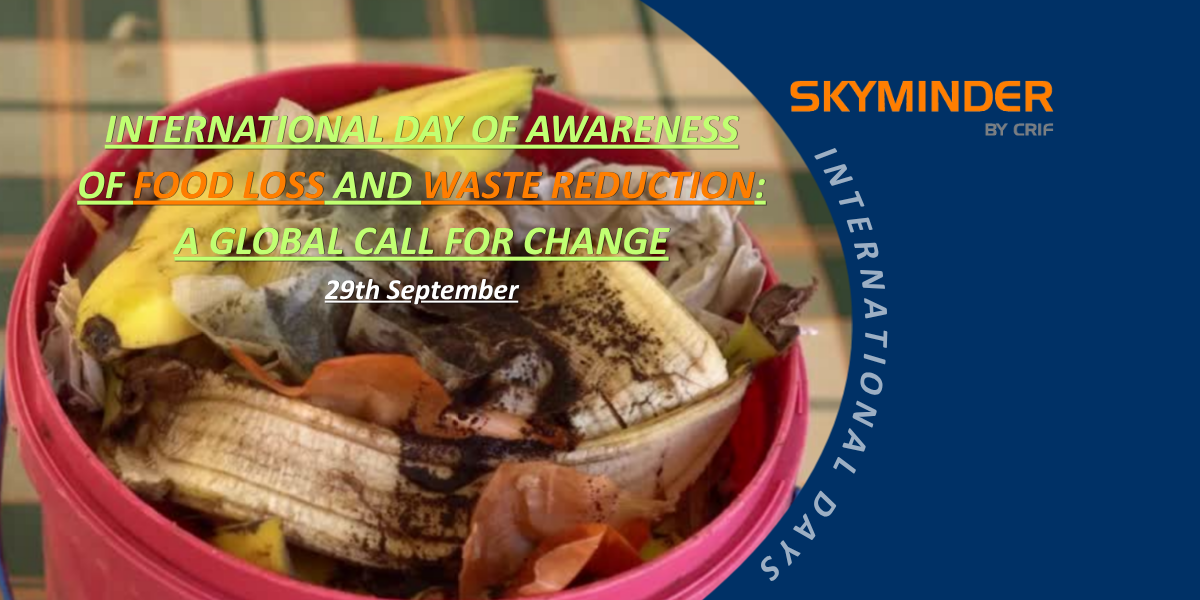
UNDERSTANDING THE SCALE OF FOOD LOSS AND WASTE
Every year on September 29, the world observes the International Day of Awareness of Food Loss and Waste Reduction, a United Nations initiative dedicated to highlighting one of the most pressing yet often overlooked global challenges. While millions of people struggle with food insecurity and hunger, enormous quantities of food are lost or wasted throughout the food supply chain. This paradox reveals a significant flaw in the way food is produced, distributed, and consumed worldwide. According to the United Nations, approximately 13.2% of food is lost between harvest and retail, while a further 19% is wasted at the household, food service, and retail levels.
The observance serves as a powerful reminder that reducing food loss and waste is not only a matter of efficiency but also of social responsibility. As the global population continues to grow, ensuring that food reaches people rather than landfills is becoming increasingly important for building a sustainable and food-secure future.
WHY FOOD LOSS AND WASTE MATTER
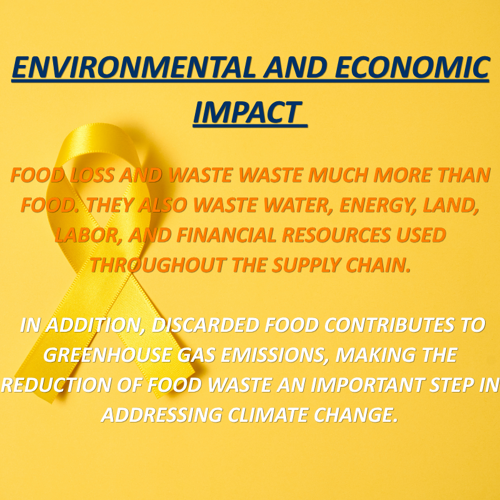
Food loss and waste have consequences that extend far beyond empty plates. When food is discarded, all the resources used to produce it are wasted as well. Water, land, energy, labor, transportation, and financial investments are consumed during production, yet they provide no benefit when food ultimately goes uneaten. This inefficiency places additional pressure on natural resources and accelerates environmental degradation.
The environmental impact is particularly alarming. The United Nations reports that food loss and waste account for approximately 8% to 10% of global greenhouse gas emissions. Food decomposing in landfills releases methane, a potent greenhouse gas that significantly contributes to climate change. By reducing food waste, societies can simultaneously make progress toward climate action, resource conservation, and sustainable development.
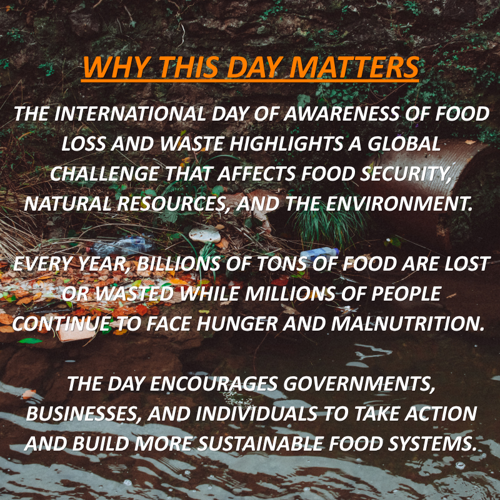
A CHALLENGE THAT AFFECTS EVERYONE
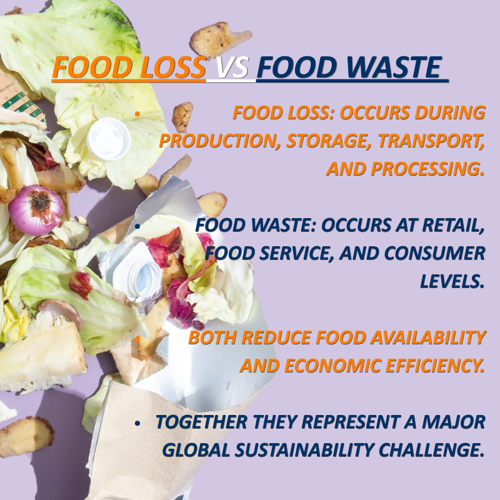
Food loss and waste occur at different stages of the food system. Food loss generally happens during production, harvesting, storage, processing, and transportation, often due to inadequate infrastructure, technology, or logistics. Food waste, on the other hand, mainly occurs at the retail and consumer levels when edible food is discarded because of purchasing habits, improper storage, or confusion over expiration dates.
Because these issues arise throughout the entire supply chain, solving them requires collective action. Farmers, businesses, governments, researchers, retailers, restaurants, and consumers all have a role to play. The International Day of Awareness of Food Loss and Waste Reduction encourages stakeholders to work together to implement innovative solutions, improve food management practices, and promote responsible consumption habits.
SMALL ACTIONS CAN MAKE A BIG DIFFERENCE
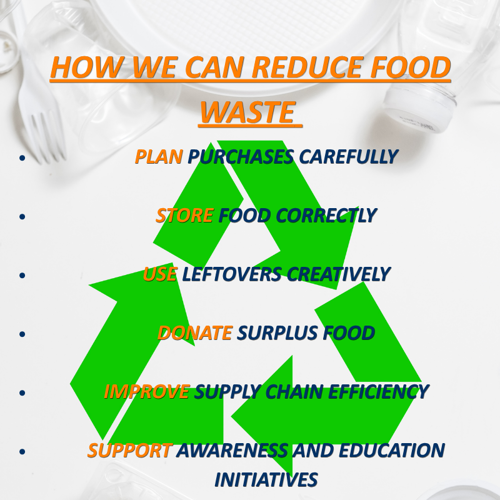
One of the most important messages of this international observance is that individual actions matter. Households are responsible for a significant share of global food waste, meaning that everyday choices can have a meaningful impact. Planning meals, storing food correctly, purchasing only what is needed, using leftovers creatively, and learning food preservation techniques are simple but effective ways to reduce waste.
At the same time, technological innovation and community initiatives are helping to tackle the problem on a larger scale. Digital platforms that connect consumers with surplus food, food donation programs, improved storage techniques, and more efficient supply chains are demonstrating that sustainable solutions are both achievable and beneficial. These efforts not only reduce waste but also support communities facing food insecurity.
BUILDING A MORE SUSTAINABLE FOOD FUTURE
The International Day of Awareness of Food Loss and Waste Reduction is closely linked to the United Nations Sustainable Development Goals, particularly Goal 12, which promotes responsible consumption and production. Reducing food loss and waste is essential for creating resilient food systems capable of meeting the needs of present and future generations. It also supports efforts to alleviate hunger, protect the environment, and improve economic efficiency.
As awareness grows, governments and organizations around the world are implementing strategies to address the issue through policy changes, education campaigns, and investments in sustainable food systems. However, achieving meaningful progress will require continued commitment and cooperation at every level of society.
CONCLUSION
The International Day of Awareness of Food Loss and Waste Reduction reminds us that food is far too valuable to be wasted. In a world where millions of people still face hunger, reducing food loss and waste is both a moral responsibility and a practical necessity.
By changing the way food is produced, managed, and consumed, we can help conserve resources, reduce greenhouse gas emissions, strengthen food security, and build a more sustainable future.
Every action, whether taken by governments, businesses, or individuals, contributes to a global movement that ensures more food reaches people rather than ending up as waste.
Sources: United Nations
