THE MEANING BEHIND THE INTERNATIONAL DAY OF PEACE
Every year on September 21, people around the world come together to observe the International Day of Peace, a global occasion dedicated to strengthening the ideals of peace among nations, communities, and individuals. Established by the United Nations General Assembly in 1981, this day serves as a reminder that peace is more than the absence of conflict. It is a condition in which people can live with dignity, security, equality, and mutual respect.
In an increasingly interconnected world, where global challenges affect everyone regardless of borders, the message of peace remains as relevant as ever. The observance encourages governments, organizations, and citizens to reflect on the importance of cooperation and to take meaningful actions that promote harmony in daily life.
A HISTORY ROOTED IN HOPE
The International Day of Peace was first observed in 1982 following a United Nations resolution that designated a specific day for promoting peace worldwide. Initially linked to the opening of the UN General Assembly, the observance gained greater significance in 2001 when the General Assembly unanimously declared September 21 as an annual day of global ceasefire and non-violence.
This decision transformed the day into a symbol of humanity’s shared aspiration for a more peaceful future. By calling for a 24-hour cessation of violence, the United Nations sought to inspire both reflection and action, demonstrating that even small gestures of peace can have a powerful impact. Over the years, the day has become a platform for international dialogue and cooperation, uniting people from different cultures and backgrounds around a common goal.
PEACE BEGINS IN EVERYDAY LIFE
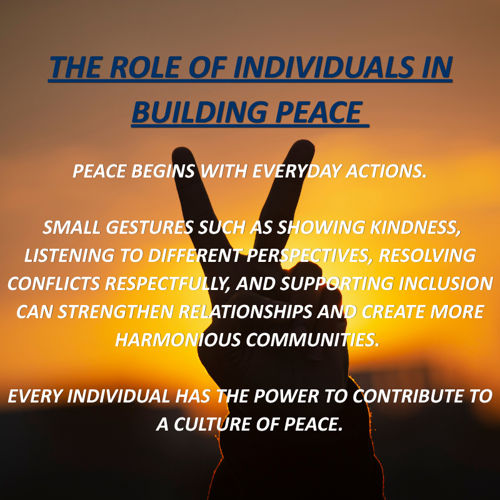
One of the most important messages of the International Day of Peace is that lasting peace is built not only through international agreements but also through everyday actions. Peace starts in homes, schools, workplaces, and local communities, where people interact with one another on a daily basis. Acts of kindness, empathy, understanding, and respect contribute to creating environments where peace can flourish.
The United Nations emphasizes that everyone has a role to play in building a more peaceful world, whether by helping someone in need, supporting positive causes, encouraging dialogue, or standing against discrimination and violence. These seemingly small actions can create a ripple effect, inspiring others and strengthening the foundations of peaceful societies.
GLOBAL CELEBRATIONS AND ACTIVITIES
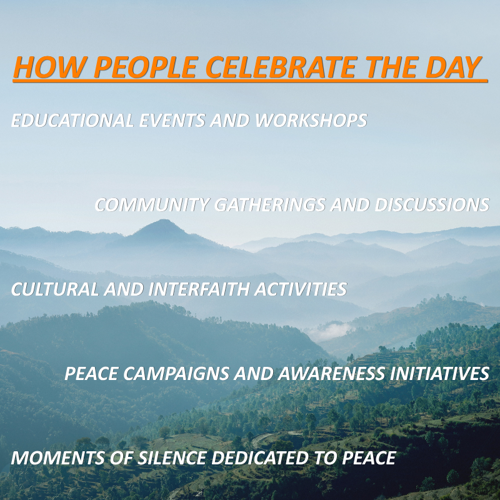
Across the world, the International Day of Peace is marked through a wide variety of events and initiatives. Educational institutions often organize lessons, discussions, art exhibitions, and cultural activities that help students understand the value of peace and the consequences of conflict. Communities host peace walks, concerts, public ceremonies, and interfaith gatherings designed to encourage unity and mutual understanding.
Many people also participate in the global Minute of Silence, a symbolic act that allows individuals everywhere to pause and reflect on the importance of peace. Non-profit organizations, humanitarian groups, and public institutions use the occasion to raise awareness about ongoing conflicts and promote initiatives that support dialogue, reconciliation, and social justice.
These collective efforts demonstrate that peace is a shared responsibility that transcends geographical, political, and cultural boundaries.
WHY PEACE MATTERS MORE THAN EVER
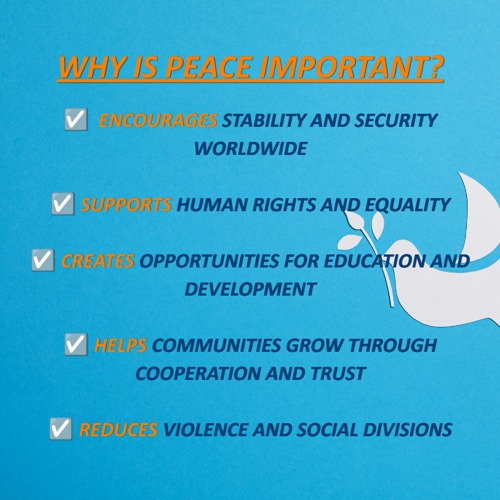
Modern societies face numerous challenges, including armed conflicts, social inequalities, humanitarian crises, and growing divisions among communities. In this context, the International Day of Peace serves as a powerful reminder that peace is essential for sustainable development, human rights, and global well-being. Without peace, it becomes difficult to address issues such as poverty, hunger, education, and environmental sustainability.
Promoting peaceful dialogue and cooperation enables societies to find solutions to common problems and build a future based on trust and mutual respect. The observance encourages individuals and leaders alike to move beyond differences and work together for the benefit of present and future generations.
CONCLUSION
The International Day of Peace is far more than a symbolic observance. It is a global invitation to reflect on the value of harmony, compassion, and cooperation in an increasingly complex world. While governments and international organizations play a crucial role in maintaining peace, lasting change begins with individual actions and everyday choices.
By promoting understanding, rejecting violence, and supporting dialogue, each person can contribute to building a more peaceful and inclusive society. As we observe this important day, we are reminded that peace is not simply a distant aspiration but a shared responsibility that requires commitment from everyone, everywhere, every day.
Sources: National Today
