INTRODUCTION
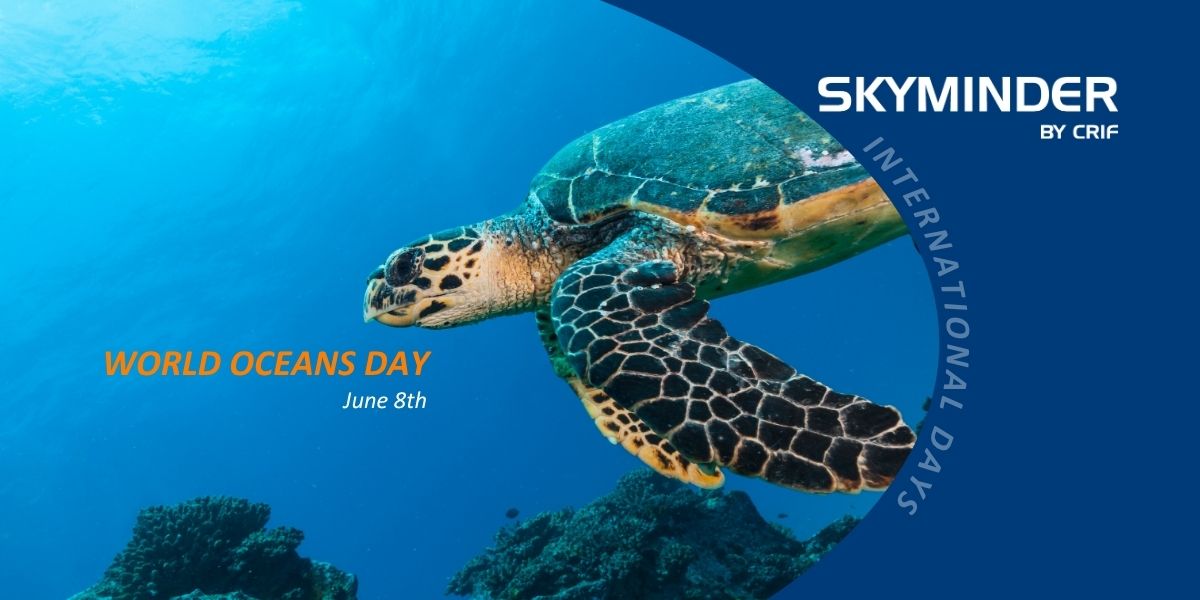
Imagine a world without the ocean. No salty breeze, no seafood, no coral reefs and, surprisingly, no air as we know it.
Every year on June 8, World Oceans Day reminds us that the ocean is not just a distant blue horizon, but the foundation of life on Earth. Recognized by the United Nations and promoted by UNESCO, this day invites people everywhere to rethink their relationship with the sea and to act before it’s too late.
WHY THE OCEAN MATTERS
The ocean is often called the “blue heart of the planet”, constantly working behind the scenes; it regulates our climate, feeds billions of people, and produces much of the oxygen we breathe. Yet, despite its importance, it remains largely unexplored like a vast, living mystery beneath the surface.
World Oceans Day is not just about admiration, it’s about responsibility. Across the world, people take part in events ranging from international conferences to simple beach clean-ups. Scientists, activists, governments, and even students all come together, united by a single mission: protect what we cannot replace.
And here’s the powerful part; you don’t need to be an expert to make a difference. Something as small as refusing plastic, choosing sustainable products, or sharing knowledge can contribute to a global movement.
WHAT THE DAY REALLY PROPOSES
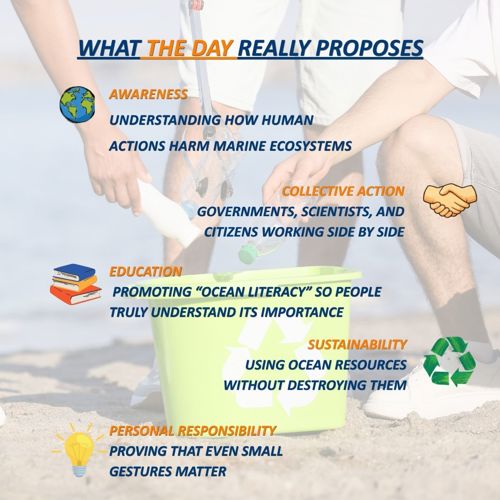
• Raising Awareness: World Oceans Day encourages people to truly understand the impact of everyday actions on the ocean. From plastic pollution to overfishing, many human activities are damaging marine ecosystems, often without us even realizing it. The goal is to open people’s eyes and make the invisible visible because what happens in the ocean affects all of us.
• Building Global Cooperation: Protecting the ocean is not something one country can do alone; World Oceans Day promotes collaboration between governments, scientists, organizations, and communities worldwide. By sharing knowledge and working together, it becomes possible to create real and lasting solutions to global problems like climate change and biodiversity loss.
• Spreading Ocean Education: One of the key goals is improving what UNESCO calls “ocean literacy”, helping people understand how the ocean works and why it is so important. Through schools, events, and campaigns, people of all ages can learn to appreciate the ocean not just as a place, but as a system that keeps the planet alive.
• Promoting Sustainable Choices: World Oceans Day pushes for a shift in how we use ocean resources. Instead of exploiting the sea without limits, it encourages more sustainable habits such as reducing plastic use, choosing responsible fishing practices, and supporting eco-friendly industries. The idea is simple: use what we need without destroying what we depend on.
• Inspiring Personal Action: Perhaps the most powerful message is that every individual matters and you don’t need to be a scientist to make a difference. Small actions, like joining a beach clean-up, avoiding single-use plastic, or simply talking about the issue, can inspire others and create a chain reaction of positive change
KEY FACTS
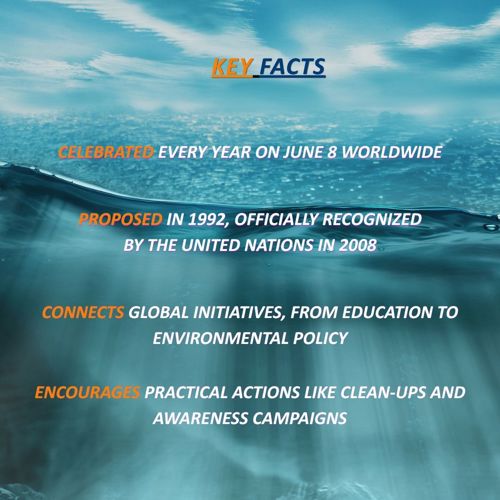
World Oceans Day is celebrated every year on June 8, bringing together millions of people around the world. It was first proposed in 1992 and officially recognized by the United Nations in 2008, showing how awareness about ocean protection has grown over time.
The day is not just symbolic, but it also connects global initiatives, educational programs, and local actions, all with the same goal of protecting the ocean and making its future more sustainable.
STATISTICS
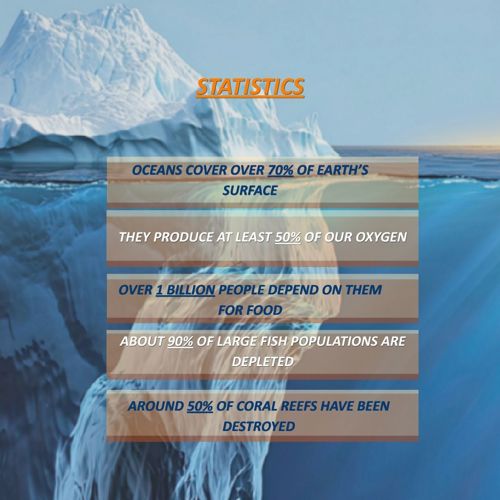
The numbers behind the ocean are impressive and, at the same time, worrying; oceans cover more than 70% of the Earth’s surface and produce at least half of the oxygen we breathe, making them essential for life.
At the same time, human activity is causing serious damage because around 90% of large fish populations are already depleted, and about 50% of coral reefs have been destroyed; these figures highlight the urgent need for action before the situation becomes irreversible.
CURIOUS AND INTERESTING BITS
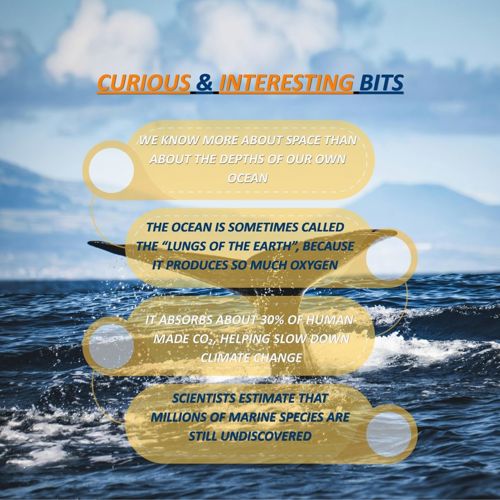
The ocean is still full of mysteries. In fact, we have explored only a small part of it, less than we know about space, making it one of the least understood parts of our planet.
It is often called the “lungs of the Earth” because it produces a huge amount of oxygen and absorbs carbon dioxide, helping regulate the global climate.
And perhaps the most fascinating fact is that millions of marine species may still be undiscovered, meaning the ocean is not just vital, it is also a place of endless discovery.
CONCLUSION
World Oceans Day is more than a celebration, it’s a wake-up call echoing across the planet.
We are deeply connected to the ocean, even if we live far from the coast; every breath we take, every drop of rain, and much of the food we eat ties back to the sea.
As UNESCO suggests, we must “awaken new depths” in our understanding, not just exploring the ocean, but respecting it.
Because in the end, saving the ocean isn’t just about protecting nature.
It’s about protecting our future, our survival, and the only planet we call home.
Sources: UNESCO