
International Tea Day: From Field to Cup, a Global Value Chain That Sustains Millions
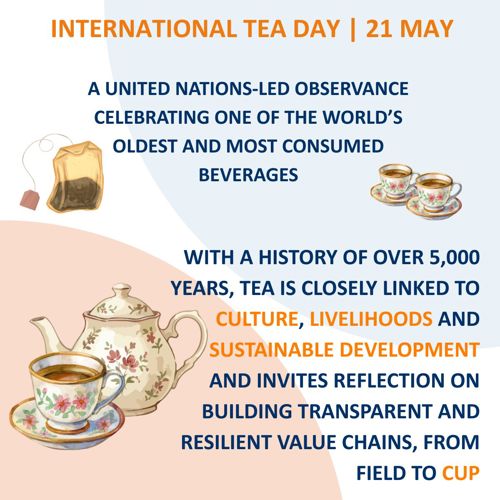
Every year on 21 May, the world celebrates International Tea Day, a United Nations–led observance that recognizes one of the planet’s oldest and most widely consumed beverages. Tea’s history stretches back more than 5,000 years, yet its relevance today goes far beyond tradition and taste. Tea is deeply connected to health, culture, livelihoods, and sustainable economic development across the globe.
For businesses, institutions and supply chain stakeholders, International Tea Day also offers an opportunity to reflect on how global value chains can be made more transparent, resilient and sustainable, from field to cup.
Tea: A Beverage with Global Impact
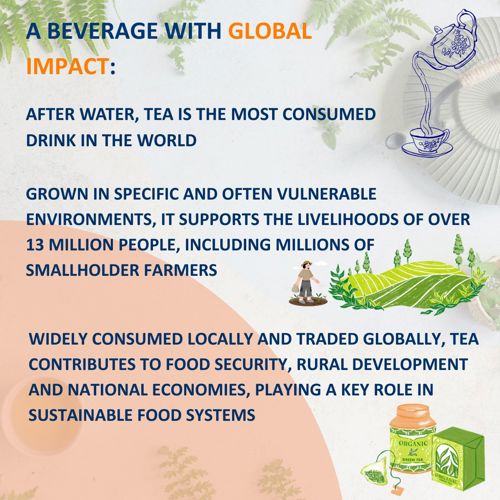
Tea is the most consumed drink in the world after water. It is grown only in specific agro‑ecological conditions, often in vulnerable environments, yet it supports the livelihoods of more than 13 million people worldwide, including millions of smallholder farmers and their families.
While tea estates have historically dominated production, small producers increasingly play a crucial role, particularly in developing countries. For many rural communities, tea cultivation and processing are not just a source of income, but a pathway to poverty reduction, food security and social stability.
Despite the fact that around three quarters of global tea production is consumed domestically, tea remains a widely traded commodity. Export revenues help finance food imports and support national economies, making the tea sector a key contributor to sustainable food systems and international trade.
International Tea Day 2025: Tea for Better Lives
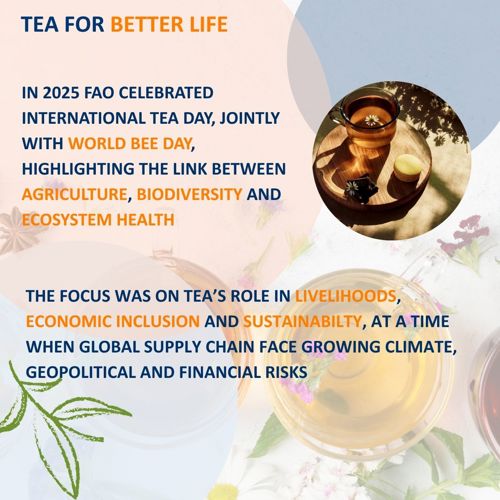
In 2025, International Tea Day was celebrated under the theme “Tea for Better Lives.” The Food and Agriculture Organization of the United Nations (FAO) hosted the official event at its headquarters in Rome, jointly observing World Bee Day, a symbolic reminder of the interconnectedness between agriculture, biodiversity and ecosystem health.
The event highlighted tea’s contribution to:
- Livelihoods and employment, especially in least developed countries
- Economic inclusion, with a strong impact on women and rural communities
- Sustainability and resilience, in the face of climate change and environmental pressures
These themes resonate strongly at a time when global supply chains are increasingly exposed to climate, geopolitical and financial risks.
Sustainability From Field to Cup
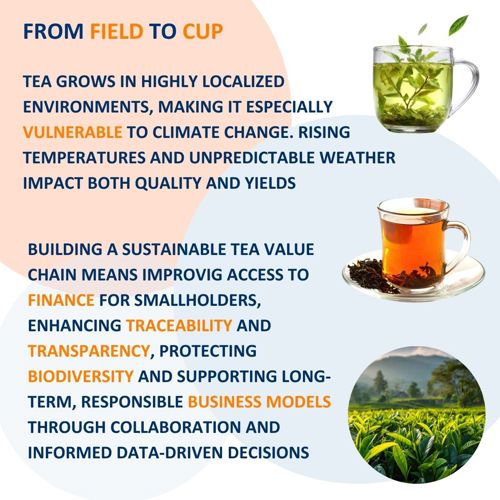
Tea thrives only in very localized environments, making it particularly sensitive to climate change. Rising temperatures, unpredictable rainfall and soil degradation directly affect yields and quality, putting pressure on both producers and buyers.
Ensuring a sustainable tea value chain means improving:
- Access to finance and fair markets for smallholder producers
- Traceability and transparency across production, processing and trade
- Environmental practices that safeguard biodiversity and natural resources
- Long‑term business models that balance profitability with social responsibility
Achieving these goals requires collaboration across the entire ecosystem (farmers, cooperatives, exporters, buyers, financial institutions and policymakers) supported by reliable data, risk insights and informed decision-making.
Why Transparency Matters in Global Value Chains
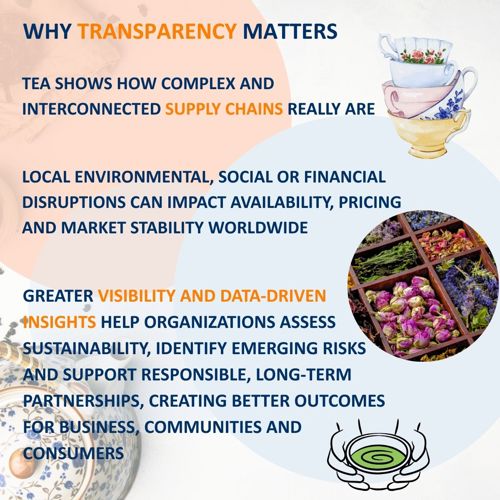
From an economic and risk perspective, tea is a clear example of how complex global supply chains depend on millions of interconnected actors. Disruptions at the local level – whether environmental, social or financial – can have downstream impacts on availability, pricing and market stability.
This is why visibility into supply chains, counterparty risk and country-level dynamics is becoming increasingly important. Data-driven insights help organizations:
- Assess sustainability and resilience across sourcing markets
- Identify emerging risks linked to climate, trade or credit conditions
- Support responsible sourcing and long-term partnerships
Better information enables better outcomes for businesses, communities and consumers alike.
Celebrating Tea, Supporting the Future
International Tea Day is more than a celebration of culture and tradition. It is a reminder that everyday products often rely on fragile ecosystems and human networks that deserve protection and support.
By promoting sustainable production, responsible trade and greater transparency, the tea sector can continue to play a vital role in reducing poverty, supporting rural development and safeguarding natural resources, ensuring that tea truly delivers better lives for generations to come.
On 21 May, let’s raise a cup not only to tea, but to the people, data and decisions that help sustain its journey around the world.
Source: List of International Days and Weeks | United Nations