English Language Day: Celebrating the Global Language of Connection
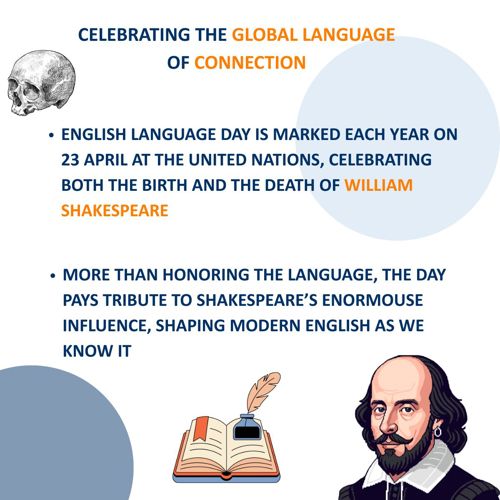
English Language Day is celebrated at the United Nations every year on 23 April, a date traditionally observed as both the birthday and the date of death of William Shakespeare. More than a commemoration of the English language itself, the day is a tribute to one of its greatest contributors: Shakespeare, whose creativity enriched modern English with hundreds of new words and expressions. Terms such as gossip, fashionable, and lonely appeared for the first time in his works, along with idiomatic expressions like break the ice, faint-hearted, and love is blind.
Shakespeare’s Enduring Influence on English
Shakespeare’s impact on English is remarkable. Through his inventive use of language, he expanded the vocabulary and expressive potential of the English tongue, leaving a linguistic legacy that remains alive in everyday communication. Celebrating English Language Day on 23 April therefore honors both the language and the extraordinary imagination of the playwright who helped shape it.
A Global Tool for Communication
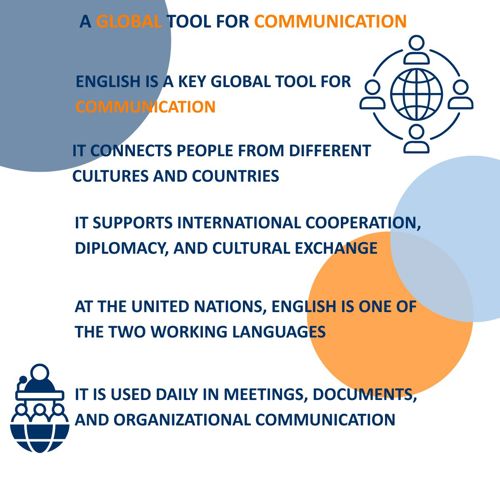
English has become one of the essential languages for international communication. People from different backgrounds, nations, and cultures can increasingly interact in English, even when it is not their first language. This makes it a crucial tool for global cooperation, diplomacy, and cultural exchange.
At the United Nations, English is one of the two working languages, alongside French. It is widely used across the organization for meetings, documentation, and communication, underscoring its central role in the advancement of international dialogue.
A Celebration of Multilingualism
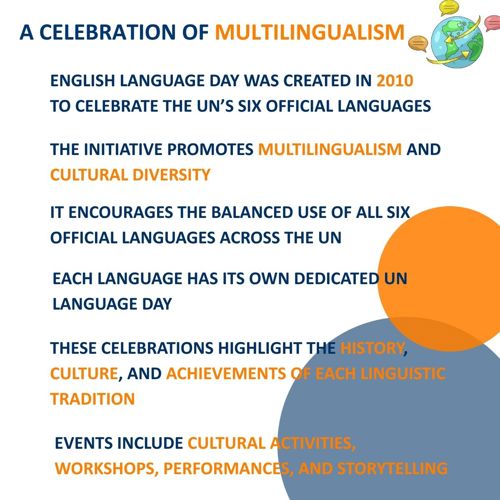
English Language Day was established in 2010 by the UN’s Department of Global Communications, as part of an initiative to celebrate each of the UN’s six official languages. The goals of this initiative are to:
- promote multilingualism,
- celebrate cultural diversity,
- and encourage the balanced use of all six official languages across the Organization.
UN duty stations around the world mark six separate Language Days each year, each dedicated to one official language. These celebrations aim to increase awareness and respect for the history, culture, and achievements associated with each linguistic tradition. The events are meant to inform and entertain, combining cultural activities, language workshops, performances, and storytelling.
The Importance of Multilingualism at the UN
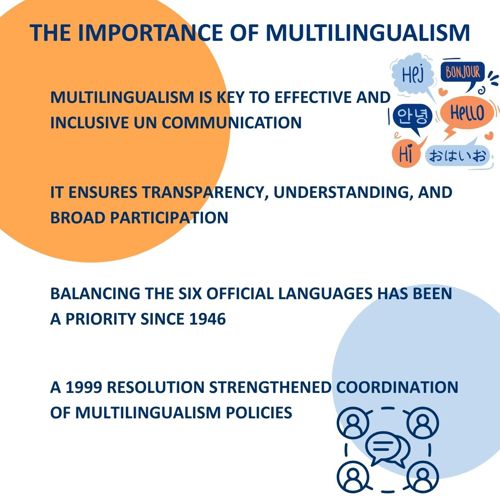
Multilingualism is a cornerstone of effective communication and cooperation at the United Nations. It promotes tolerance, inclusivity, and equitable participation among Member States. By ensuring that multiple languages are represented and used, the UN strengthens transparency, enhances understanding, and broadens engagement in its work.
Since 1946, maintaining a balance among the six official languages has been a consistent priority for the Secretary-General. Numerous initiatives have been implemented to reinforce the use of all official languages and ensure that the Organization’s goals and actions are understood by the widest possible audience.
In its resolution of 6 December 1999 (A/RES/54/64), the General Assembly called for the appointment of a senior Secretariat official responsible for coordinating multilingualism policies, further highlighting the central role languages play in the UN’s mission.
A Day to Celebrate the Power of Language
English Language Day is more than a celebration of a global language: it is an invitation to reflect on the power of words to connect people, foster understanding, and inspire creativity. From Shakespeare’s enduring influence to the essential role English plays in modern diplomacy, the day reminds us that language is both a tool and a bridge, one capable of bringing individuals, cultures, and nations closer together.
Conclusion
English Language Day serves as a reminder of the extraordinary journey of a language that has evolved across centuries, continents, and cultures. From Shakespeare’s enduring legacy to its role as a cornerstone of modern diplomacy, English continues to shape the way people connect, collaborate, and create together. By celebrating this day, the United Nations highlights not only the richness of the English language, but also the importance of multilingualism as a foundation for mutual understanding and peaceful cooperation. In a world where communication is more essential than ever, English Language Day invites us to value language as a bridge, one that brings societies closer, supports global dialogue, and reflects the diverse voices that make up our shared human story.