
THE IMPORTANCE OF LAKES FOR LIFE ON EARTH
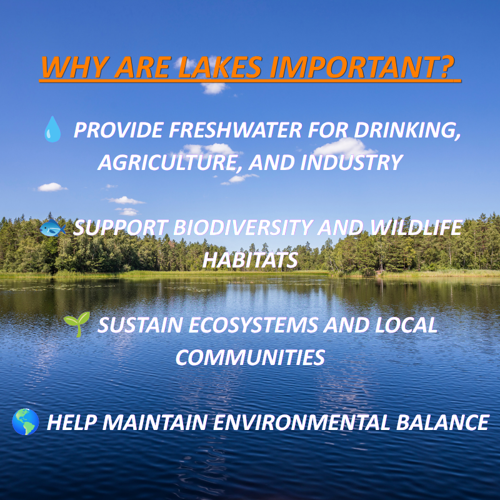
Lakes are among the most valuable natural resources on our planet, providing countless benefits to both people and nature. They serve as essential sources of freshwater for drinking, agriculture, and industrial activities, supporting the daily needs of billions of people around the world. In addition to supplying water, lakes are rich ecosystems that provide habitats for a wide variety of fish, plants, birds, and other wildlife.
Their presence helps maintain biodiversity and ensures the survival of many species that depend on freshwater environments. World Lake Day highlights the crucial role lakes play in sustaining life and reminds us that protecting them is essential for a healthy and prosperous future.
LAKES AND THEIR ROLE IN CLIMATE AND COMMUNITIES
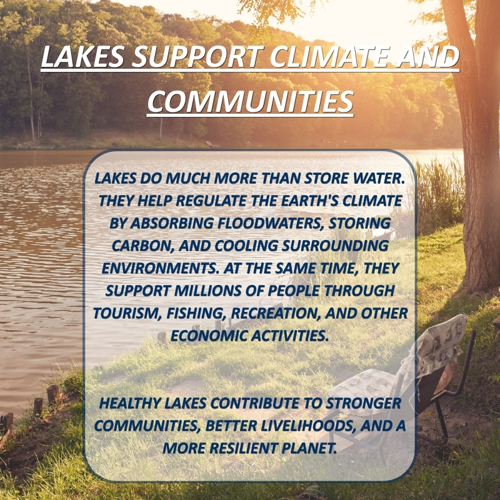
Beyond their ecological importance, lakes contribute significantly to climate regulation and community well-being. They help cool the planet, absorb floodwaters, and store carbon, making them important allies in the fight against climate change.
Lakes also support local economies through tourism, fishing, recreation, and other water-based activities that provide income and employment opportunities for millions of people. Whether it is a small local lake or a vast freshwater body, these ecosystems contribute to cultural traditions, leisure activities, and economic development. World Lake Day encourages people to recognize these benefits and understand that healthy lakes are closely linked to healthy communities.
GROWING THREATS TO FRESHWATER ECOSYSTEMS
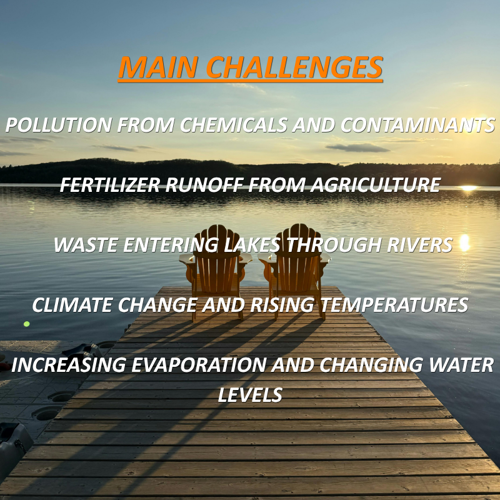
Despite their importance, lakes around the world are facing increasing pressure from human activities and environmental changes. Pollution remains one of the greatest threats, often caused by fertilizers, chemical contaminants, and solid waste entering lakes directly or through rivers.
At the same time, climate change is intensifying these problems by contributing to more frequent floods and altering natural water cycles. Rising global temperatures, changes in cloud cover, and decreasing ice cover are accelerating water evaporation, causing dramatic shifts in lake water levels. These combined pressures are placing freshwater ecosystems at risk and threatening the many benefits lakes provide to people and wildlife.
WHY IMMEDIATE ACTION IS NECESSARY
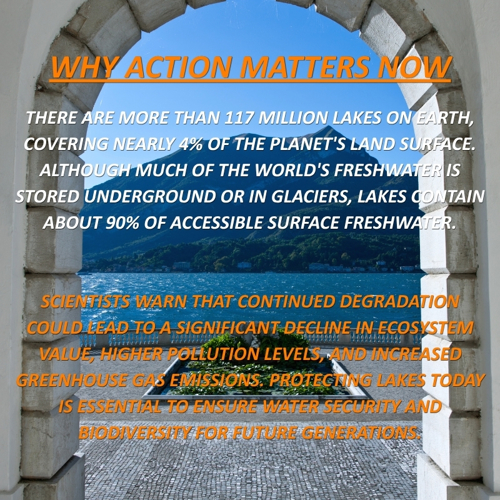
The urgency of protecting lakes has never been greater. According to the United Nations, there are more than 117 million lakes on Earth, covering nearly 4% of the planet’s land surface. Although most freshwater is stored underground or in glaciers, lakes contain about 90% of the world's surface freshwater supply, making them one of the most accessible sources of water available to humanity.
Experts warn that if current pressures continue, the value of lake ecosystems could decline by 20% by 2050, pollution levels could more than double, and methane emissions could increase significantly. Furthermore, freshwater species populations have already declined dramatically over the past five decades, highlighting the need for stronger conservation efforts and sustainable management practices.
RAISING AWARENESS THROUGH WORLD LAKE DAY
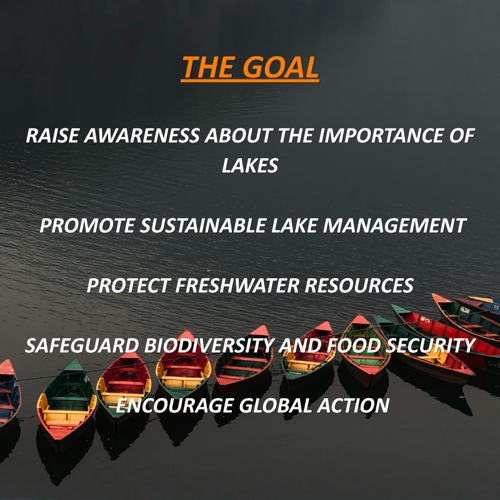
The United Nations established World Lake Day to draw global attention to the importance of lakes and the challenges they face. The observance aims to promote sustainable lake management while protecting freshwater resources, biodiversity, food security, and ecosystem health.
It serves as an opportunity for governments, organizations, researchers, and citizens to work together in preserving these precious ecosystems for future generations. By increasing awareness and encouraging practical action, World Lake Day helps strengthen the global commitment to safeguarding one of Earth's most important natural resources.
CONCLUSION
World Lake Day is more than a celebration of natural beauty; it is a reminder of the essential role lakes play in supporting life, regulating the climate, and sustaining economies and communities. As pollution, overuse, and climate change continue to threaten freshwater ecosystems, protecting lakes has become an urgent global responsibility.
Through greater awareness, sustainable management, and collective action, we can help ensure that lakes remain healthy, resilient, and capable of supporting future generations. Protecting lakes today means protecting life tomorrow.
Source: United Nations