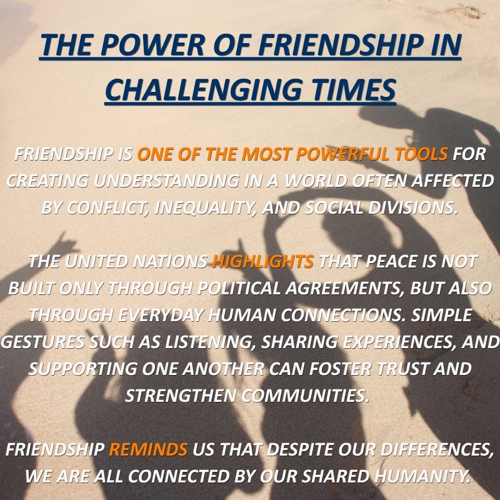
THE POWER OF FRIENDSHIP IN CHALLENGING TIMES
In an era marked by conflict, social divisions, inequality, and uncertainty, friendship remains one of the most powerful forces for creating understanding and unity. The United Nations highlights that friendship does not require political agreements or formal negotiations; instead, it begins with simple human connections, meaningful conversations, and a willingness to see others as equals.
These everyday interactions help strengthen trust between people and foster a sense of shared humanity. As societies face increasing polarization, friendship offers a practical and accessible way to promote peace and mutual respect. The UN emphasizes that genuine peace is not built solely through international treaties but also through the relationships people create and nurture in their daily lives.
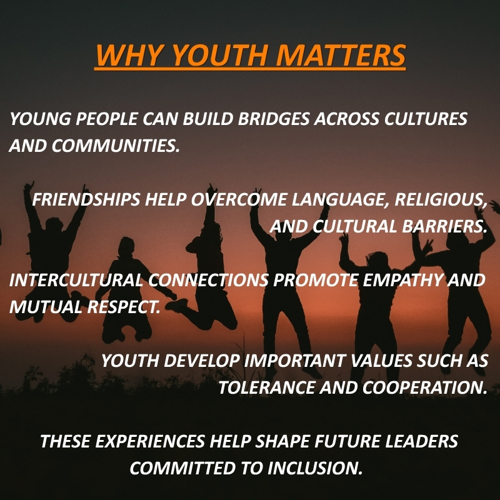
YOUNG PEOPLE AS DRIVERS OF UNDERSTANDING AND INCLUSION
Young people play a particularly important role in promoting friendship across communities and cultures. According to the United Nations, friendships among youth have the unique ability to transcend language barriers, religious differences, and historical divisions. Through these relationships, young individuals learn to listen, empathize, and appreciate diverse perspectives.
Such experiences contribute to the development of future generations that are more open-minded, respectful, and committed to peaceful coexistence. By encouraging intercultural friendships, societies can empower young people to become ambassadors of inclusion and understanding, helping to create stronger and more connected communities.
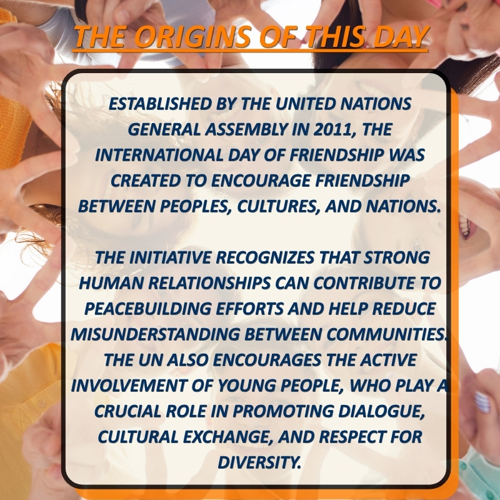
THE ORIGINS OF THE INTERNATIONAL DAY OF FRIENDSHIP
The International Day of Friendship was officially proclaimed by the United Nations General Assembly in 2011. The initiative was founded on the belief that friendship between peoples, countries, cultures, and individuals can contribute significantly to peacebuilding efforts and strengthen connections between communities.
The UN also places special emphasis on involving young people in activities that promote international understanding, cultural exchange, and respect for diversity. By celebrating friendship on a global scale, the organization seeks to encourage cooperation and dialogue among people from different backgrounds, reinforcing the idea that mutual respect is essential for a more peaceful world.
FRIENDSHIP AS A FOUNDATION FOR A CULTURE OF PEACE
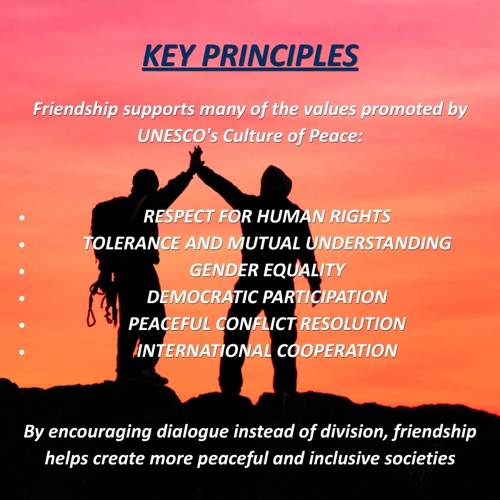
The observance is closely connected to UNESCO’s concept of a “Culture of Peace,” which promotes values, attitudes, and behaviors that reject violence and focus on preventing conflicts by addressing their root causes. The United Nations identifies several key actions that support this vision, including education, sustainable development, respect for human rights, gender equality, democratic participation, tolerance, and international security.
Friendship serves as a practical expression of these principles because it encourages dialogue, empathy, and cooperation. When individuals form meaningful connections across cultural and social boundaries, they help build the foundations of a more peaceful and harmonious society.
PROMOTING GLOBAL SOLIDARITY THROUGH SHARED CONNECTIONS
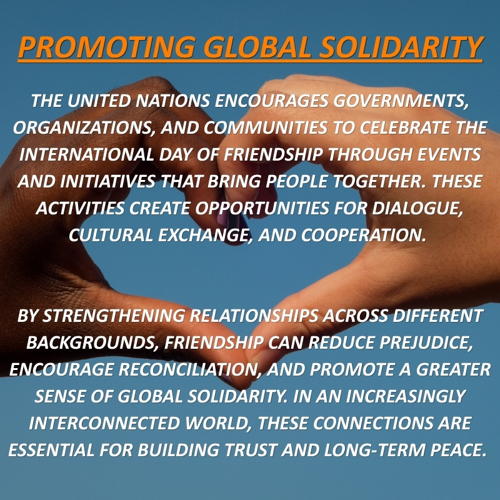
The United Nations encourages governments, international organizations, and civil society groups to celebrate the International Day of Friendship through events and initiatives that promote solidarity, reconciliation, and mutual understanding. These activities provide opportunities for people from diverse backgrounds to come together, exchange experiences, and strengthen interpersonal and intercultural relationships.
In a world where divisions can often seem overwhelming, friendship offers a simple yet transformative way to foster trust and cooperation. By investing in these human connections, communities can create environments where differences are respected and collective progress becomes possible.
CONCLUSION
The International Day of Friendship serves as an important reminder that friendship is far more than a personal bond, it is a powerful tool for peace, inclusion, and social cohesion. By encouraging understanding across cultures and generations, especially among young people, friendship helps build stronger communities and a more united world.
As the United Nations emphasizes, meaningful human connections can overcome barriers, reduce prejudice, and inspire a future founded on respect, trust, and solidarity. In today's increasingly complex global landscape, the simple act of friendship has never been more relevant or more necessary.
Source: United Nations