
THE MEANING BEHIND INTERNATIONAL CHESS DAY
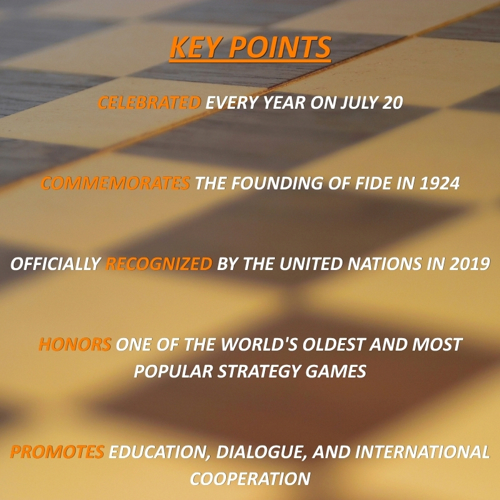
Every year on July 20, millions of people around the world celebrate International Chess Day, a global observance dedicated to one of humanity’s oldest and most influential games.
The date marks the founding of the International Chess Federation (FIDE) in Paris in 1924, an organization that has played a crucial role in promoting chess across continents for more than a century. Recognizing the positive impact of chess on society, the United Nations officially proclaimed July 20 as World Chess Day in 2019.
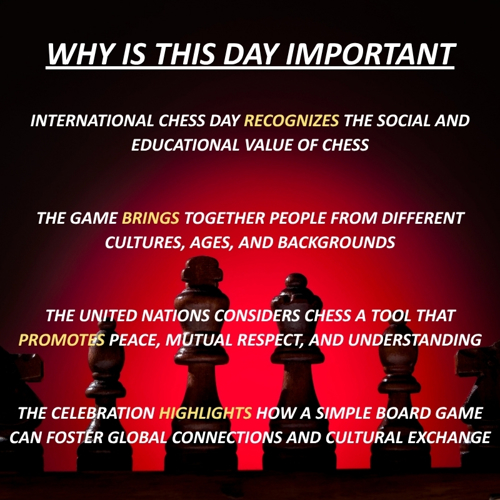
Far from being only a recreational pastime, chess is viewed as a powerful educational and cultural tool that encourages dialogue, understanding, and cooperation among people from different backgrounds and nations.
A GAME THAT PROMOTES LEARNING AND PERSONAL DEVELOPMENT
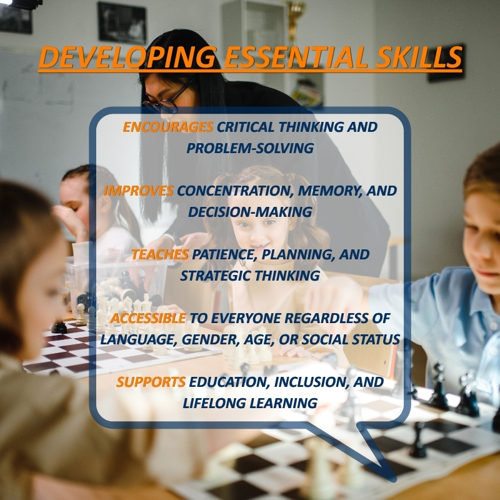
One of the reasons chess has remained relevant for centuries is its ability to develop valuable life skills. The game requires players to think critically, analyze situations, plan ahead, and adapt to changing circumstances.
Every move involves decision-making, patience, and strategic thinking, making chess a unique exercise for the mind. According to the United Nations, chess contributes to education, inclusion, gender equality, and mutual respect. Because it can be played almost anywhere and requires minimal resources, it is accessible to people regardless of their age, language, physical ability, or social status.
This inclusiveness has helped transform chess into a universal activity that connects individuals and communities while fostering lifelong learning and intellectual growth.
THE REMARKABLE JOURNEY OF CHESS THROUGH HISTORY
The history of chess is as fascinating as the game itself. While the exact origins remain uncertain, many historians trace its roots to the ancient Indian game Chaturanga, which was played more than a thousand years ago.
As trade routes expanded, the game spread westward through Persia and later across the Arab world and Europe. Over time, different cultures adapted the rules and pieces, gradually shaping chess into the modern form recognized today.
By the Middle Ages, chess had become associated with knowledge, strategy, and leadership, earning a reputation as a game favored by scholars, nobles, and royalty. The introduction of standardized pieces, official rules, and international competitions further strengthened its popularity, allowing chess to evolve from a regional pastime into a truly global phenomenon.

WHY CHESS CONTINUES TO INSPIRE MILLIONS
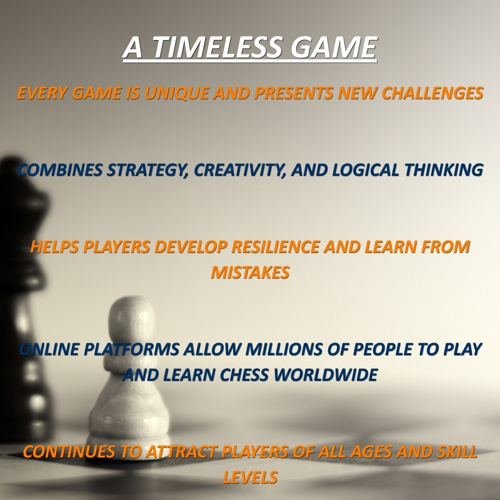
Despite living in an era dominated by technology and fast-paced entertainment, chess continues to attract players of all generations. Its enduring appeal lies in the fact that no two games are ever exactly the same.
Each match presents new challenges, requiring creativity, concentration, and strategic planning. Chess also teaches valuable lessons about resilience and responsibility, as players must learn from both victories and defeats.
Today, digital platforms have made the game more accessible than ever, allowing people to compete with opponents from around the world, watch international tournaments, and improve their skills through online lessons and puzzles.
This combination of tradition and innovation has ensured that chess remains relevant and exciting in the modern world.
CELEBRATING INTERNATIONAL CHESS DAY AROUND THE WORLD
International Chess Day is celebrated in many different ways, reflecting the diversity and global reach of the chess community. Schools organize educational activities to introduce students to the game, while local clubs and organizations host tournaments, workshops, and friendly competitions. Many players use the occasion to learn new strategies, revisit famous matches, or challenge friends and family to a game.
Online platforms also participate in the celebrations by offering special events, lessons, and interactive activities that encourage people of all skill levels to take part. These celebrations reinforce the core values associated with chess, fair play, respect, inclusion, and cultural exchange, while bringing people together through a shared passion.
CONCLUSION
International Chess Day is much more than a celebration of a board game. It is an opportunity to recognize how chess has shaped cultures, connected communities, and inspired generations of players around the world.
Through its emphasis on critical thinking, creativity, discipline, and mutual respect, chess continues to serve as a powerful tool for education and personal development. As people gather every July 20 to celebrate this timeless game, they also celebrate the values of understanding, cooperation, and lifelong learning that chess has represented for centuries.
Sources: United Nations