PRODUCT CLASSIFICATION
Yeast is one of the most important microorganisms used in the global food and beverage industry. For thousands of years, it has played a central role in bread baking, brewing, winemaking, and a growing range of biotechnology applications. Beyond its traditional uses, yeast is increasingly valued for its nutritional properties, including proteins, vitamins, and bioactive compounds used in food supplements and animal feed.
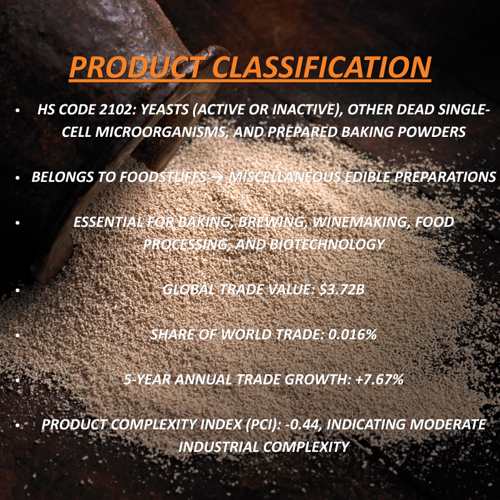
From a trade perspective, yeast belongs to the Foodstuffs section and is classified under HS Chapter 21: Miscellaneous Edible Preparations, specifically under HS4 2102 – Yeasts (active or inactive), other dead single-cell microorganisms, and prepared baking powders. Although yeast is based on a relatively simple biological process, its industrial production requires specialized fermentation technologies, quality control systems, and sophisticated supply chains.
Global trade in yeast is valued at approximately $3.72 billion, accounting for around 0.016% of total world trade. Over the last five years, international trade in this product has expanded at an annualized growth rate of 7.67%, reflecting rising demand from the bakery, food processing, brewing, and health supplement sectors.
Among internationally traded products, yeast ranks 627th worldwide by trade value. According to the Product Complexity Index (PCI), it records a score of −0.44, placing it among products with moderate industrial complexity. While not considered highly advanced from a technological standpoint, yeast production combines biological expertise, industrial-scale fermentation, and strict food safety standards.
EXPORT
The global export market for yeast is concentrated in a mix of large-scale manufacturing economies and countries with strong food-processing industries.
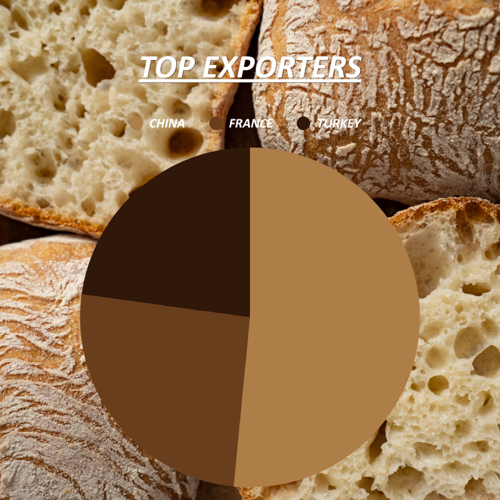
The top exporters are:
• China – $589M
• France – $293M
• Turkey – $261M
Together, these three countries account for roughly 31% of global yeast exports. China leads the market thanks to its vast fermentation capacity, competitive production costs, and extensive distribution networks serving Asia, Africa, and Europe. France benefits from a long-standing tradition in baking and fermentation technologies, supported by internationally recognized yeast manufacturers. Turkey has strengthened its position through strategic geographic access to both European and Middle Eastern markets.
Countries where yeast represents a particularly significant component of national exports include:
• Eswatini – approximately 0.30% of total exports
• Belarus – approximately 0.15%
• Namibia – approximately 0.14%
These figures demonstrate the importance of yeast production for several smaller economies, where specialized manufacturing can create a notable export niche.
The largest trade surpluses are recorded by:
• China – $558M
• Turkey – $233M
• Mexico – $160M
These substantial surpluses highlight the competitiveness of countries that have developed efficient fermentation industries, strong domestic production capacities, and robust export-oriented business models.
IMPORT
Demand for yeast is widespread across developed and emerging economies, reflecting its essential role in food production and industrial fermentation processes.
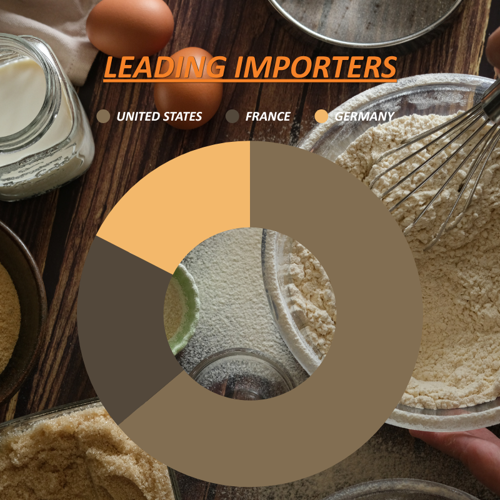
The leading importers are:
• United States – $540M
• France – $158M
• Germany – $148M
The United States alone accounts for approximately 14.5% of global yeast imports, making it the world's largest importing market. Demand is driven by its extensive bakery sector, beverage industry, food manufacturers, and nutritional supplement market. France and Germany also maintain strong import volumes despite being major producers themselves, reflecting integrated European supply chains and specialized product demand.
The largest trade deficits are found in:
• United States
• France
• Germany
These deficits illustrate how large consumer and industrial markets often rely on cross-border trade to secure a diverse range of yeast products, from baker's yeast and brewing strains to nutritional and specialty yeast derivatives.
As consumer demand for packaged foods, artisanal baking, and functional ingredients continues to expand globally, imports are expected to remain an important component of the yeast market.
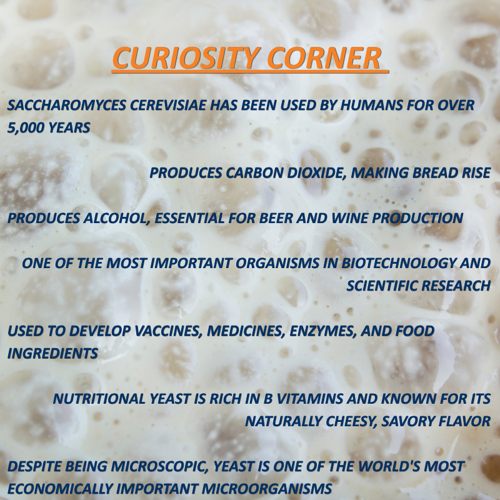
CURIOSITY CORNER: THE INVISIBLE POWERHOUSE OF FOOD PRODUCTION
Yeast may be microscopic, but its impact on human civilization is enormous. In fact, without yeast, many of the foods and beverages we enjoy every day simply would not exist.
One of the most famous species, Saccharomyces cerevisiae, is often called the "world's oldest biotechnology worker." Humans have used it for baking bread and fermenting drinks for more than 5,000 years, long before anyone understood what microorganisms were.
Yeast's remarkable ability comes from fermentation. As it consumes sugars, it releases carbon dioxide and alcohol. In bread making, the carbon dioxide creates the airy structure of dough, while in brewing and winemaking, alcohol becomes the final product.
Beyond food, yeast has become an essential tool in modern science. Researchers use genetically modified yeast to produce medicines, vaccines, enzymes, and various biotechnology products. Because its cells share many characteristics with human cells, yeast is also one of the most widely studied organisms in biology.
Another surprising fact is that nutritional yeast, popular among vegetarians and vegans, is prized for its naturally savory flavor and high concentration of B vitamins. Its taste is often described as cheesy or nutty, making it a popular ingredient in plant-based cooking.
CONCLUSION
The global yeast market demonstrates how a seemingly simple microorganism can generate significant economic value and support industries across the world. With global trade exceeding $3.7 billion and sustained annual growth of nearly 8%, yeast remains an essential ingredient for food production, beverage manufacturing, animal nutrition, and biotechnology.
Leading exporters such as China, France, and Turkey continue to strengthen their positions through advanced fermentation capabilities and efficient international distribution networks, while major importing markets such as the United States, France, and Germany reflect the widespread and growing demand for yeast-based products.
Although yeast has a relatively modest Product Complexity Index, its economic importance extends far beyond its microscopic size. From traditional bread making to cutting-edge biotechnology applications, yeast represents a unique intersection of agriculture, science, industry, and trade. As global demand for processed foods, nutritional supplements, and sustainable bio-based solutions continues to rise, yeast is expected to remain a vital component of international commerce for years to come.
