
OVERVIEW
Venezuela remains one of the most distinctive economies in Latin America, thanks to its vast natural resource wealth and its strategic position in global energy markets. Home to some of the world's largest proven oil reserves, the country has traditionally relied on hydrocarbons as the engine of its economy and international trade.
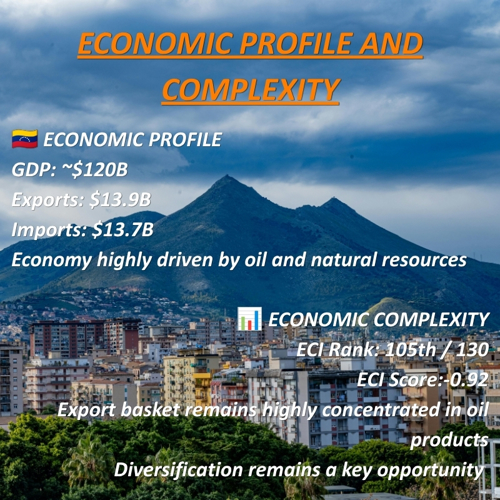
With a GDP of approximately $120 billion, Venezuela ranks among the larger economies in South America, although its economic structure differs significantly from many of its regional peers due to its heavy dependence on petroleum exports.
Trade continues to play a crucial role in the country's economic activity. Venezuela recorded around $13.9 billion in exports and $13.7 billion in imports, creating a relatively balanced trade profile overall.
What makes Venezuela particularly interesting is the contrast between its immense natural wealth and its ongoing efforts to diversify economic activity. While oil remains dominant, sectors such as mining, agriculture, manufacturing, and trade services continue to contribute to the country's evolving economic landscape.
ECONOMIC PROFILE AND COMPLEXITY
Venezuela's economy is characterized by a high concentration of natural-resource-based activities, particularly within the energy sector. The country has historically built its economic identity around oil production, refining, and exports, making energy the primary driver of government revenues and foreign exchange earnings.
According to the Economic Complexity Index (ECI), Venezuela ranks 105th out of 130 economies, reflecting a productive structure that remains concentrated in a limited number of export products rather than a highly diversified portfolio.
This relatively low level of economic complexity highlights both a challenge and an opportunity. On one hand, reliance on a narrow range of commodities can increase vulnerability to fluctuations in global prices. On the other, the country possesses significant potential for diversification through industries linked to petrochemicals, mining, agriculture, logistics, and manufacturing.
The Venezuelan economy is supported by:
• One of the world's largest oil reserve bases.
• Significant mineral resources, including gold and iron.
• A strategic geographic position connecting the Caribbean, North America, and South America.
• Strong trade relationships with major economies such as the United States, China, India, Brazil, and Spain.
These characteristics continue to shape Venezuela's role in international trade and regional economic dynamics.
EXPORTS
Exports are the backbone of Venezuela's economy and remain overwhelmingly dominated by energy products. The country exported approximately $13.9 billion worth of goods, positioning it among the world's key petroleum-exporting nations.
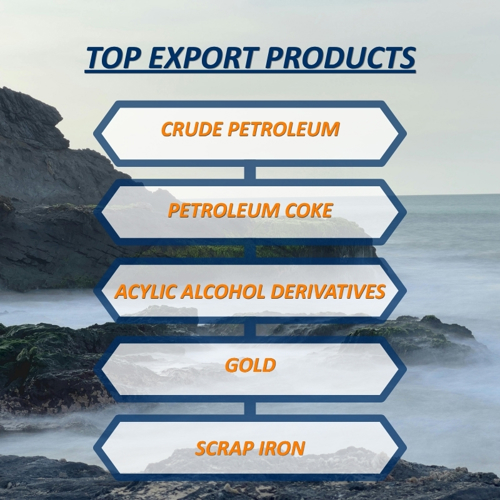
TOP EXPORT PRODUCTS
• Crude Petroleum – $9.81B
• Petroleum Coke – $483M
• Acyclic Alcohol Derivatives – $446M
• Gold – $319M
• Scrap Iron – $311M
Crude petroleum alone accounts for roughly 70% of total exports, highlighting the country's strong specialization in the energy sector.
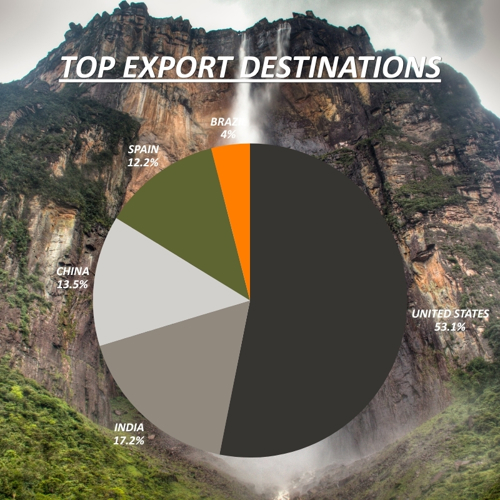
TOP EXPORT DESTINATIONS
• United States – $6.3B
• India – $2.04B
• China – $1.6B
• Spain – $1.45B
• Brazil – $472M
These figures underline the international demand for Venezuelan energy products and demonstrate the country's ability to serve both Western and Asian markets.
One noteworthy aspect of Venezuela's export profile is the gradual emergence of non-oil products such as gold, metals, and chemical derivatives, which could play an increasingly important role in supporting diversification efforts over time.
IMPORTS
While Venezuela is a major exporter of crude oil, its import structure reveals strong demand for industrial products, technology, transportation equipment, and food-related goods.
Total imports reached approximately $13.7 billion, illustrating the country's reliance on foreign suppliers for a variety of consumer and industrial needs.
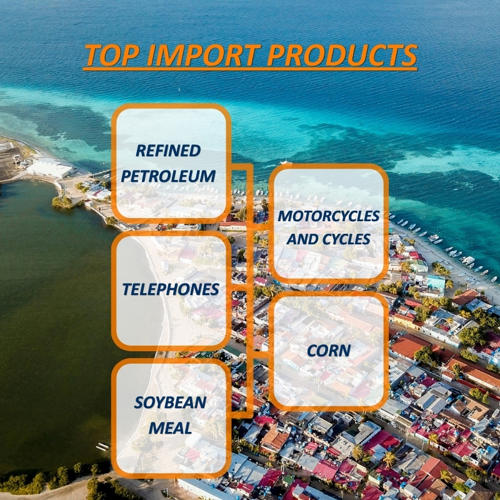
TOP IMPORT PRODUCTS
• Refined Petroleum – $2.32B
• Motorcycles and Cycles – $370M
• Telephones – $366M
• Corn – $313M
• Soybean Meal – $297M
The presence of refined petroleum among the leading imports may appear surprising for an oil-producing nation. However, it reflects the differences between extracting crude oil and having sufficient refining capacity to meet all domestic requirements.
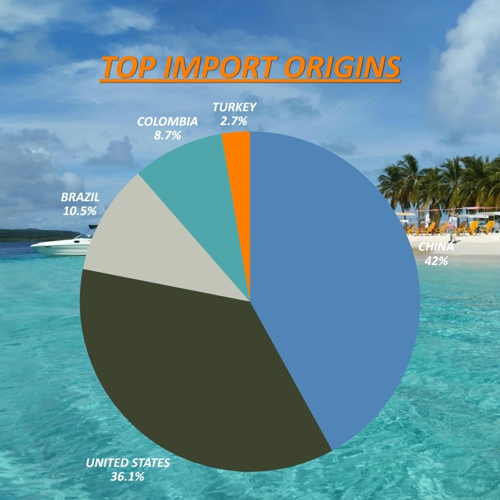
TOP IMPORT ORIGINS
• China – $4.8B
• United States – $4.13B
• Brazil – $1.2B
• Colombia – $1B
• Turkey – $307M
China and the United States together account for a substantial share of Venezuelan imports, demonstrating the importance of both countries as suppliers of manufactured goods, machinery, electronics, and industrial inputs.
TRADE BALANCE
Venezuela maintains a relatively balanced overall trade position, supported primarily by petroleum exports. However, trade balances vary significantly depending on the partner country.
LARGEST TRADE SURPLUSES
• United States – +$2.17B
• India – +$1.82B
• Spain – +$1.22B
• Lebanon – +$316M
• Netherlands – +$184M
LARGEST TRADE DEFICITS
• China –-$3.2B
• Colombia –-$870M
• Brazil –-$728M
• Canada –-$159M
• Peru –-$127M
These figures reveal an interesting pattern: Venezuela tends to generate surpluses with countries purchasing its energy products, while running deficits with manufacturing-oriented economies that supply machinery, electronics, and consumer goods.
This trade structure reinforces the importance of diversification and industrial development as long-term goals for strengthening economic resilience.
CURIOSITY CORNER: FIVE THINGS YOU MAY NOT KNOW ABOUT VENEZUELA
1. AN ENERGY SUPERPOWER
Venezuela possesses some of the largest proven oil reserves on the planet, making energy exports a defining feature of its economy and global trade presence.
2. OIL DOMINATES THE EXPORT BASKET
Few economies are as specialized as Venezuela. Crude petroleum alone represents around seven out of every ten export dollars generated by the country.
3. A BRIDGE BETWEEN REGIONS
Located on the Caribbean coast of South America, Venezuela serves as a geographic link between the Caribbean basin, the Andean region, and major Atlantic trade routes.
4. GOLD IS BECOMING MORE RELEVANT
Although petroleum remains dominant, gold has emerged as one of the country's most valuable non-oil exports, helping broaden its export portfolio.
5. TRADE TIES SPAN MULTIPLE CONTINENTS
Venezuela's main trading partners include countries from North America, Europe, Asia, and Latin America, reflecting a highly international trade network despite its concentrated export structure.

CONCLUSION
Venezuela's economy is a story of extraordinary natural wealth, strategic trade relationships, and significant potential for future diversification. Anchored by its energy sector, the country remains an important supplier of crude oil to international markets while maintaining commercial links with some of the world's largest economies.
Its export strength continues to be driven by petroleum, yet growing contributions from mining and chemical products suggest opportunities to broaden the economic base. At the same time, import patterns reveal the importance of international partnerships for technology, food security, manufacturing inputs, and consumer goods.
As Venezuela continues to leverage its resource advantages and strengthen its position within global trade networks, its ability to balance specialization with diversification will be one of the key factors shaping its long-term economic trajectory.