
OVERVIEW
South Korea stands as one of the world’s most technologically advanced, export‑driven, and globally integrated economies. With a GDP of $1.88T in 2024, the country ranks as the 12th largest economy, the 5th largest exporter, and 37th worldwide in GDP per capita.
In December 2025, South Korea recorded:
- Exports: $69.5B
- Imports: $57.4B
- Positive trade balance: $12.2B
Compared with December 2024, exports surged by 14.2%, while imports rose by 4.57%, reflecting strong demand for Korean semiconductors, vehicles, and manufacturing inputs. The country’s performance is powered by world‑leading industrial clusters in electronics, automotive, petrochemicals, machinery, and shipbuilding.
ECONOMIC PROFILE AND COMPLEXITY
South Korea’s economic strength lies in a powerful combination of:
- cutting‑edge electronics and semiconductor industries,
- globally recognized automotive and shipbuilding sectors,
- advanced machinery and petrochemical production,
- and a highly skilled, innovation‑driven workforce.
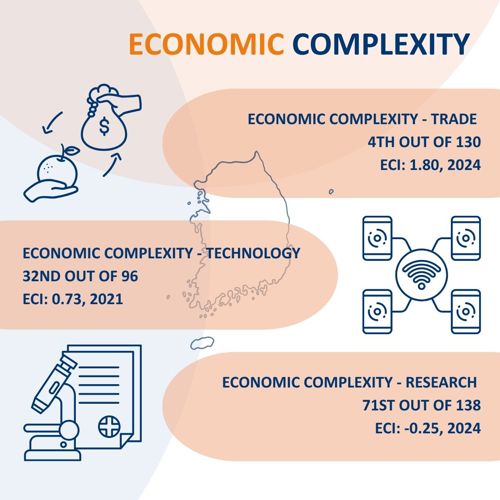
The country’s export basket is among the most technologically complex globally. Semiconductors alone play a decisive role, and Korean integrated circuits are essential to global supply chains in AI, consumer electronics, automotive technology, and telecommunications.
Strategically positioned between China, Japan, and Southeast Asia, South Korea functions as both a manufacturing hub and a global innovation center.
EXPORTS
In 2024, South Korea exported $721B, ranking as the 5th largest exporter in the world. Over the last five years, exports increased by $153B, growing from $568B in 2019, one of the strongest expansions among advanced economies.
Top Export Products (2024)
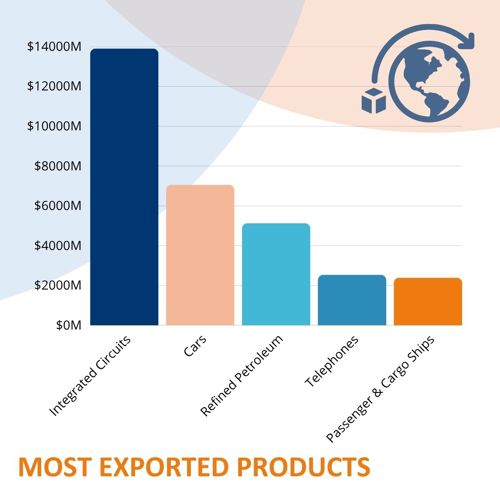
- Integrated Circuits – $139B
- Cars – $70.6B
- Refined Petroleum – $51.3B
- Telephones – $25.4B
- Passenger & Cargo Ships – $23.9B
This mix showcases South Korea’s position as a global manufacturing powerhouse, with world‑leading capabilities in semiconductors and mobility industries.
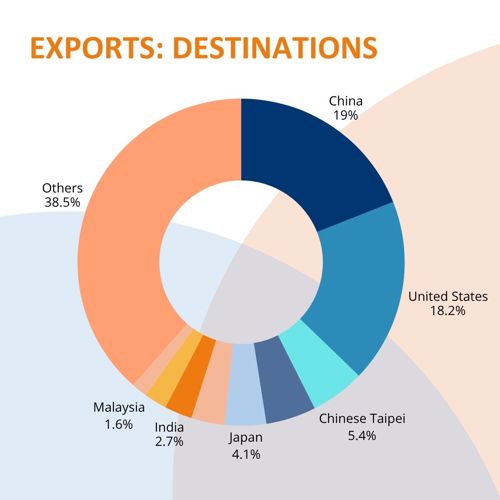
Top Export Destinations (2024):
- China – $137B
- United States – $131B
- Vietnam – $58.3B
- Chinese Taipei – $38.7B
- Hong Kong – $35.7B
These markets form the backbone of South Korea’s export‑oriented strategy, particularly in electronics and machinery.
IMPORTS
In 2024, South Korea imported $621B, ranking as the 10th largest importer globally. Over five years, imports increased by $121B, demonstrating solid domestic demand and industrial expansion.
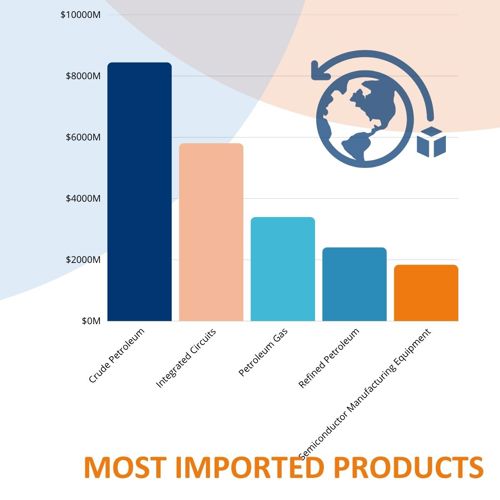
Top Import Products (2024):
- Crude Petroleum – $84.5B
- Integrated Circuits – $58.1B
- Petroleum Gas – $34B
- Refined Petroleum – $24.1B
- Semiconductor Manufacturing Machines – $18.4B
These imports highlight the country’s energy needs and the importance of semiconductor manufacturing equipment in supporting its advanced industries.
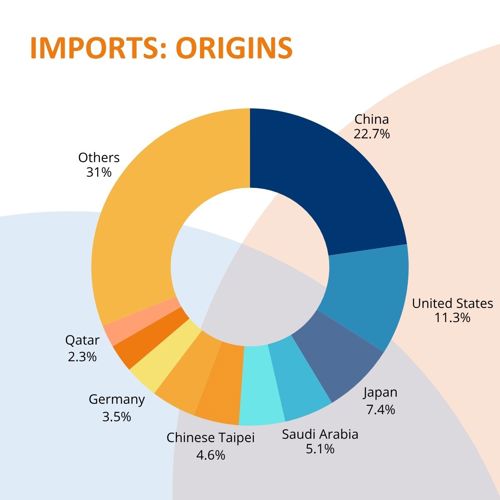
Top Import Origins (2024):
- China – $141B
- United States – $70.2B
- Japan – $45.7B
- Saudi Arabia – $31.5B
- Australia – $29.2B
TRADE BALANCE
In 2024, South Korea’s highest trade surpluses were with:
- United States – +$60.9B
- Hong Kong – +$33B
- Vietnam – +$29.9B
- India – +$13B
- Singapore – +$12.9B
Largest trade deficits:
- Saudi Arabia – –$25.5B
- Japan – –$16.3B
- Qatar – –$13.5B
- United Arab Emirates – –$13B
- Australia – –$12.8B
Korea’s deficits stem largely from energy imports and the high‑value machinery required to sustain semiconductor production.
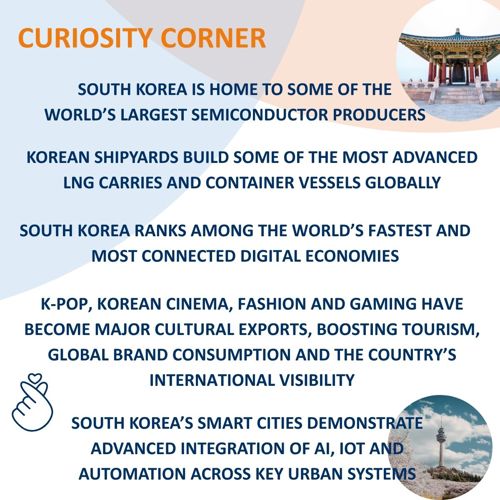
CURIOSITY CORNER: SOUTH KOREA’S INNOVATION POWER
1. A Semiconductor Superpower
South Korea is home to some of the world’s largest semiconductor producers and is responsible for a significant share of the memory chips that power global electronics.
2. A Transportation Innovator
Korean shipyards build some of the most advanced LNG carriers and container vessels globally, making shipbuilding a key industrial pillar alongside cars and electronics.
3. Fastest Internet on the Planet
South Korea consistently ranks among the world’s fastest and most connected digital economies, enabling rapid adoption of new technologies and strengthening its ICT sector.
4. A Culture that Shapes Global Consumption
K‑pop, Korean cinema, fashion, and gaming have become major cultural exports, boosting tourism, global consumption of Korean brands, and the country’s international visibility.
5. Tech‑Driven Urban Living
Smart cities like Seoul and Songdo integrate AI, IoT, and automation into transportation, public services, and environmental management, showcasing Korea’s leadership in future‑city innovation.
CONCLUSION
South Korea’s economic landscape is defined by its technological sophistication, export‑oriented industries, and strong integration into global supply chains. Its dominance in semiconductors, automobiles, ships, and advanced machinery ensures a powerful competitive position in regional and global markets.
With accelerating export growth, expanding digital innovation, and strategic partnerships across Asia and the United States, South Korea remains one of the world’s most dynamic and forward‑looking economies, driving technological progress and shaping the future of global trade.