PRODUCT CLASSIFICATION
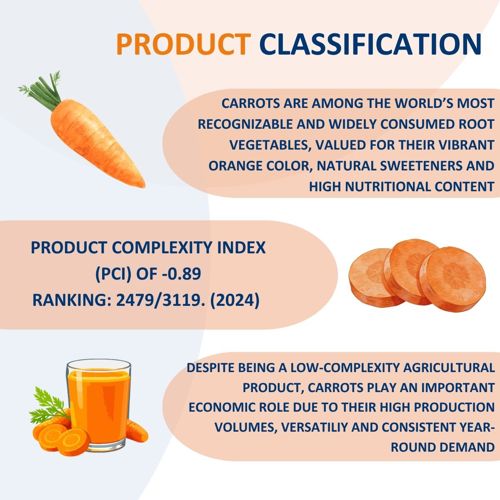
Carrots are among the world’s most recognizable and widely consumed root vegetables, valued for their vibrant orange color, natural sweetness and high nutritional content. Rich in beta‑carotene, fiber, and antioxidants, carrots are a dietary staple across continents and a key ingredient in both fresh and processed food markets. Their hardiness and long shelf life make them an essential crop for global food security and international trade.
From a commercial perspective, carrots fall under the Vegetable Products section, more specifically within HS Chapter 07: Edible vegetables, roots & tubers, categorized under HS4 Root Vegetables. Despite being a low‑complexity agricultural product, carrots play an important economic role due to their high production volumes, versatility, and consistent year‑round demand.
In 2024, global trade of carrots reached $1.72B, marking a 3.63% increase from the previous year’s $1.66B. Over the past five years, carrot trade has grown at an annualized rate of 4.11%, reflecting stable global consumption patterns and improved logistics for fresh produce.
Among the 5,380 products traded globally, carrots ranked 1,660th, representing 0.0075% of world trade. According to the Product Complexity Index (PCI), carrots scored –0.89, placing them 2,479th out of 3,119 products, consistent with their low technological complexity and straightforward cultivation.
EXPORT
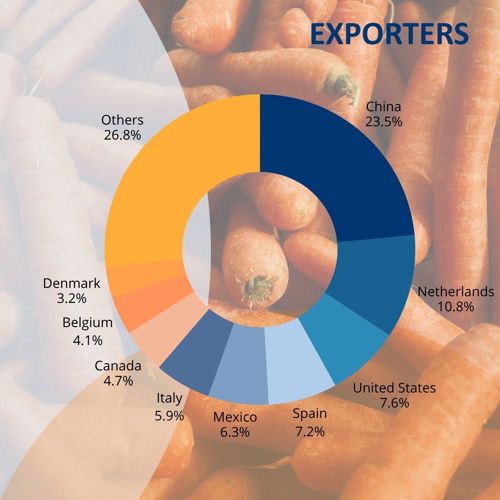
In 2024, carrot exports were led by a combination of major agricultural producers and key European distribution hubs.
The top exporters were:
- China – $406M
- Netherlands – $187M
- United States – $131M
China dominates global carrot exports thanks to its vast production capacity, competitive pricing, and established supply chains feeding Asian and European markets. The Netherlands plays a strategic role as both producer and re‑exporter, leveraging its advanced cold‑chain logistics and central position in European trade routes. The United States contributes significantly with large-scale production and strong distribution networks.
Countries with the highest share of carrots in their overall export portfolios were:
- Syria – 0.29%
- Guatemala – 0.21%
- Uzbekistan – 0.088%
These figures highlight the relevance of carrots as a meaningful export crop for smaller or agricultural‑focused economies.
The largest trade surpluses in 2024 were recorded by:
- China – $405M
- Netherlands – $133M
- Spain – $114M
These surpluses reflect strong production, efficient logistics, and established positions within regional markets.
IMPORT
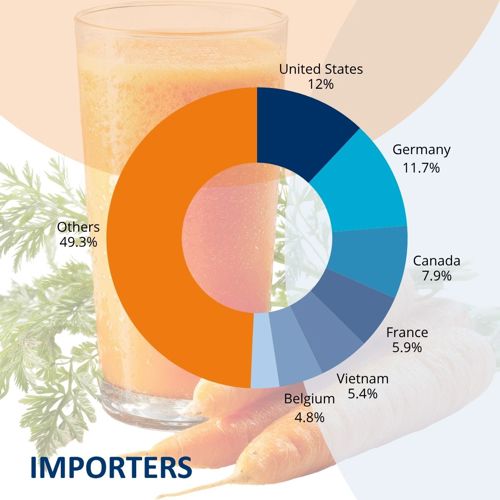
In 2024, global carrot imports were driven by large consumer markets and countries with strong food‑processing industries but limited domestic agricultural capacity.
The top importers were:
- United States – $207M
- Germany – $202M
- Canada – $135M
The United States and Canada, despite being major producers, still import carrots to balance seasonal gaps and meet demand for specific varieties. Germany, with its large population and robust food sector, remains a consistent importer of fresh produce from both EU and non‑EU suppliers.
The largest trade deficits were registered by:
- Germany – –$168M
- Vietnam – –$89M
- United States – –$75.8M
These deficits indicate the reliance of major consumer markets on imported carrots due to climatic constraints, consumption patterns, or seasonal production cycles.
CURIOSITY CORNER: THE HIDDEN STORY BEHIND CARROTS
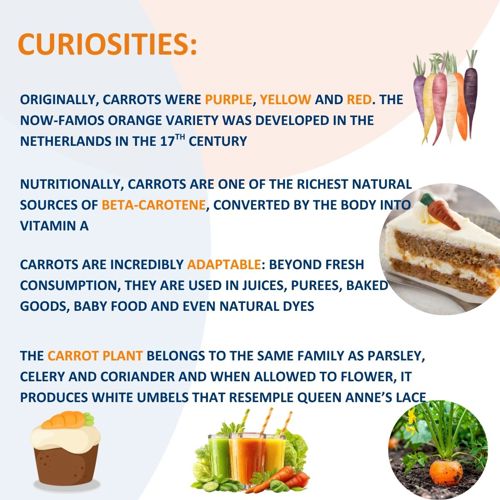
Carrots may seem simple, but their history is surprisingly colorful, literally. Originally, carrots were purple, yellow and red. The now‑famous orange variety was developed in the Netherlands in the 17th century, likely as a tribute to the Dutch royal family, the House of Orange.
Nutritionally, carrots are one of the richest natural sources of beta‑carotene, converted by the body into vitamin A. This has given rise to the enduring (and partially true!) myth that carrots improve vision. While they won’t turn you into a superhero, they do support eye health in a meaningful way.
Carrots are also incredibly adaptable. Beyond fresh consumption, they are used in juices, purees, baked goods, baby food and even natural dyes. In some cultures, carrot seeds have been used for centuries in herbal remedies and aromatic oils.
Finally, the carrot plant has a surprising botanical quirk: it belongs to the same family as parsley, celery, and coriander, and when allowed to flower, it produces delicate white umbels that resemble Queen Anne’s lace.
CONCLUSION
The global carrot trade in 2024 highlights the resilience and importance of this essential root vegetable. With steady growth, expanding international flows, and increasing demand from both fresh markets and food-processing industries, carrots continue to play a meaningful role in global agricultural commerce. Major exporters such as China, the Netherlands, and the United States maintain strong competitive positions, while leading importers, including the United States, Germany, and Canada, reflect widespread and consistent consumption.
Despite their low product complexity, carrots demonstrate how even simple crops rely on efficient logistics, seasonal complementarities, and diversified supply chains. As consumer interest in healthy, natural foods continues to rise, carrots are likely to remain a staple of global trade, rooted in tradition, yet firmly connected to modern dietary trends.