PRODUCT CLASSIFICATION
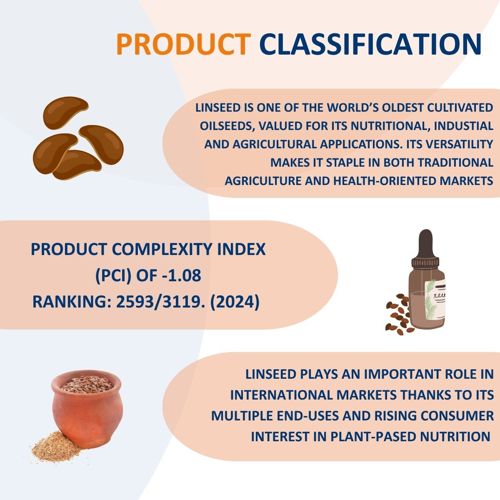
Linseed, also known as flaxseed, is one of the world’s oldest cultivated oilseeds, valued for its nutritional, industrial, and agricultural applications. Rich in omega‑3 fatty acids, fiber, and lignans, linseed is widely used in food products, animal feed, and the production of linseed oil, a key ingredient for paints, coatings, and wood treatments. Its versatility makes it a staple in both traditional agriculture and modern health‑oriented markets.
In global trade terms, linseed falls under the Vegetable Products section, within HS Chapter 12: Oil seeds, oleaginous fruits, grains, straw & fodder, specifically under HS4 Linseed. Despite being an agricultural commodity with relatively low technological complexity, linseed plays an important role in international markets thanks to its multiple end‑uses and rising consumer interest in plant‑based nutrition.
In 2024, global trade of linseed reached $1.26B, representing a 13.4% decrease from 2023, when the total reached $1.45B. Over the past five years, however, the sector has grown at a strong annualized rate of 7.63%, highlighting its long‑term expansion despite short‑term fluctuations.
Among the 5,380 products traded in 2024, linseed ranked 1,991st, accounting for 0.0055% of global trade. According to the Product Complexity Index (PCI), linseed scored –1.08, placing it 2,593rd out of 3,119 products, consistent with its nature as a low‑complexity agricultural input requiring relatively simple cultivation and processing.
EXPORT
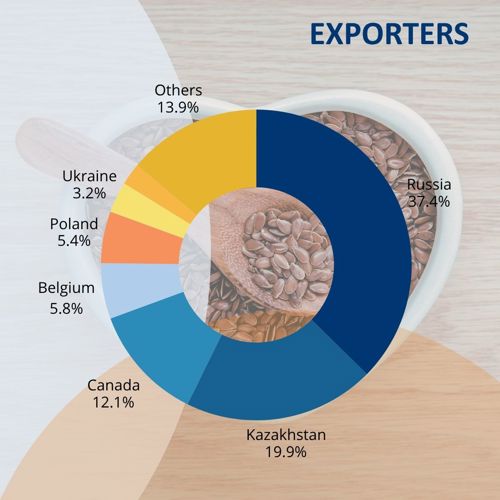
In 2024, the global linseed export landscape was dominated by a small group of leading producers with extensive agricultural capacity and established trade routes.
The top exporters were:
- Russia – $472M
- Kazakhstan – $250M
- Canada – $152M
These countries benefit from vast arable land, favorable climates for oilseed crops, and established infrastructure for bulk commodity exports. Russia and Kazakhstan, in particular, have expanded their linseed production significantly over the past decade, becoming major suppliers to Asian and European markets.
Countries with the highest share of linseed in their overall export portfolios were:
- Kazakhstan – 0.25%
- Russia – 0.13%
- Ukraine – 0.09%
This indicates that for some agricultural economies, especially Kazakhstan, linseed represents a meaningful component of their commodity export mix.
The largest trade surpluses in 2024 were recorded by:
- Russia – $462M
- Kazakhstan – $247M
- Canada – $139M
These surpluses highlight the strong production capacity and export‑oriented nature of major linseed‑growing countries.
IMPORT
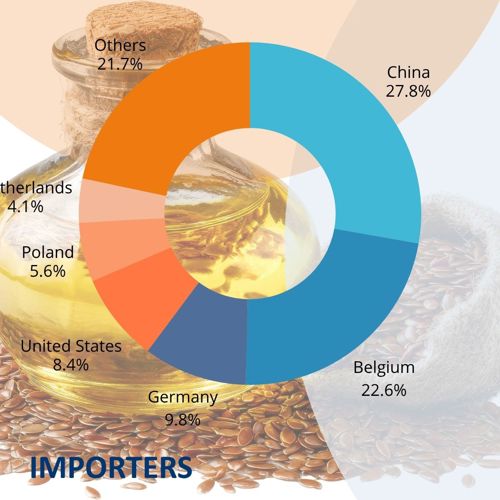
In 2024, global demand for linseed was driven primarily by countries with strong food‑processing industries, health‑oriented consumer markets, and large industrial uses for linseed oil.
The leading importers were:
- China – $350M
- Belgium – $285M
- Germany – $123M
China’s dominant position reflects rising demand for plant‑based ingredients and significant use of linseed in animal feed and food manufacturing. Belgium, acting as a European processing and distribution hub, imports large volumes for re‑export and industrial transformation.
The largest trade deficits were seen in:
- China – –$348M
- Belgium – –$212M
- Germany – –$111M
These deficits reflect the reliance of major consumer and processing markets on foreign supply, as domestic production remains limited.
CURIOSITY CORNER: THE MANY LIVES OF LINSEED
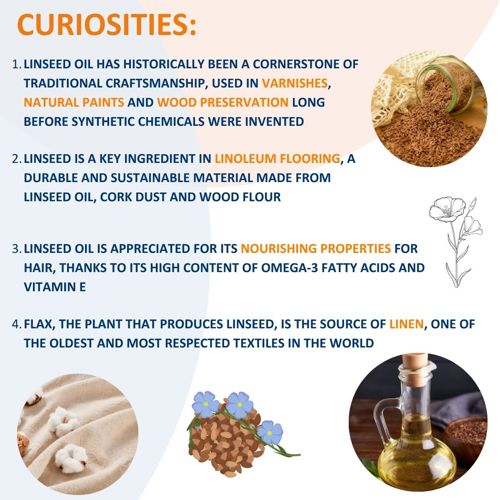
Linseed may appear simple, but it has one of the most fascinating product portfolios among agricultural commodities. Beyond its well‑known nutritional uses, linseed oil has historically been a cornerstone of traditional craftsmanship, used in varnishes, natural paints, and wood preservation long before synthetic chemicals were invented. It remains prized today in eco‑friendly construction and furniture restoration.
Another surprising fact: linseed is also a key ingredient in linoleum flooring, a durable and sustainable material made from linseed oil, cork dust, and wood flour. Once considered old‑fashioned, linoleum has made a comeback in environmentally conscious interior design.
Linseed also has an unexpected place in the world of beauty care. Linseed oil is widely appreciated for its nourishing properties for hair, thanks to its high content of omega‑3 fatty acids and vitamin E. It helps improve shine, reduce frizz, and strengthen dry or damaged strands, making it a natural ally in hair masks, serums, and moisturizing treatments.
Finally, flax, the plant that produces linseed, is also the source of linen, one of the oldest and most respected textiles in the world. Though the linen industry relies on different flax varieties than those used for linseed production, the plant’s dual-purpose heritage reflects its central role in human agriculture for thousands of years.
CONCLUSION
The global linseed market in 2024 demonstrates how a traditional agricultural commodity continues to adapt to modern needs and evolving consumer trends. Despite a decline in trade value compared to the previous year, long‑term growth remains strong, supported by diversified uses in nutrition, industry, and sustainable materials. Major producers such as Russia, Kazakhstan, and Canada maintain a clear competitive advantage, while leading importers like China and Belgium reflect expanding demand across both food and industrial sectors.
Although linseed ranks low in product complexity, its strategic relevance is shaped by health trends, renewable material innovation, and its role as a flexible ingredient across multiple industries. As global markets continue shifting toward plant‑based products and environmentally friendly materials, linseed is likely to remain an important and steadily growing component of international agricultural trade.