
Entering or expanding into the Bangladeshi market requires not only sound financial analysis and robust due diligence, but also a deep appreciation of the cultural context in which business relationships develop.
Navigating the business environment in Bangladesh means immersing yourself in a culture where relationships hold exceptional value and where trust forms the cornerstone of every partnership. This is a country where tradition, community, and faith shape daily life as well as professional interactions. Understanding these dynamics is essential not only to avoid missteps but to build meaningful and lasting connections within a vibrant and welcoming business landscape.
A Culture Where Relationships Come First
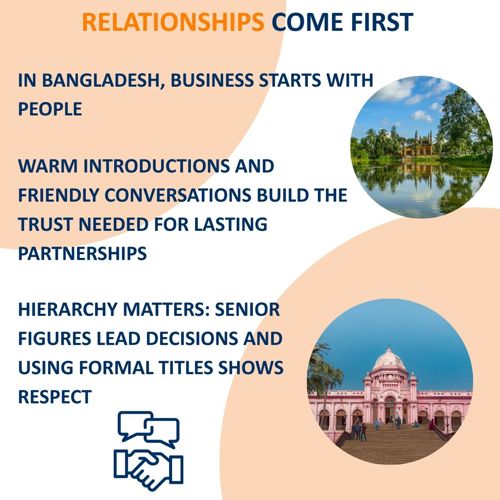
In Bangladesh, business success is rooted in interpersonal relationships. Meetings often begin with extended introductions and friendly conversations designed to build familiarity and rapport. Establishing trust is not a preliminary step but the foundation upon which all business commitments are built. This relational mindset means that foreign partners who invest time in getting to know their counterparts through open dialogue and consistent follow‑up are more likely to build long-term, stable collaborations.
Hierarchy plays an equally important role. Seniority and age command respect, influencing how people communicate and how decisions are made. Using honorifics such as “Mr.” or “Ms.” followed by the first name is the most appropriate way to address business partners. Furthermore, the highest-ranking person typically leads discussions and makes final decisions, a dynamic that international professionals should recognize when structuring proposals or scheduling high‑level meetings.
Religion as a Guiding Influence
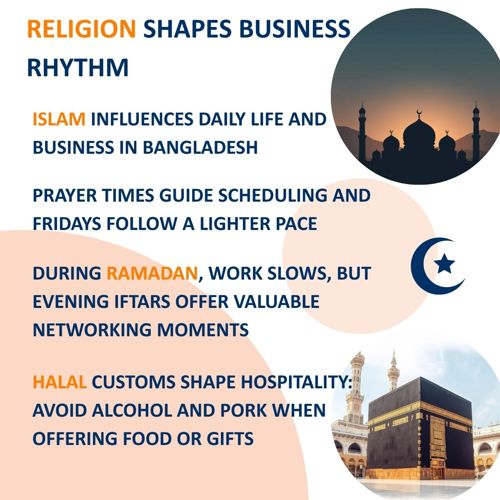
Islam is deeply intertwined with daily life and business practice in Bangladesh. Understanding this cultural framework is essential for effective planning and respectful interaction. Prayer breaks occur several times a day and may influence scheduling, while Fridays are reserved for religious observance and often feature a lighter business agenda.
During Ramadan, work hours may shift, and business activity naturally slows. However, shared evening meals (iftars) become significant opportunities to strengthen relationships and engage with counterparts in a more personal setting. Foreign professionals should also be aware that food, hospitality, and gift-giving customs follow Halal principles, meaning alcohol and pork products should always be avoided.
Communication: Indirect, Respectful, and Contextual
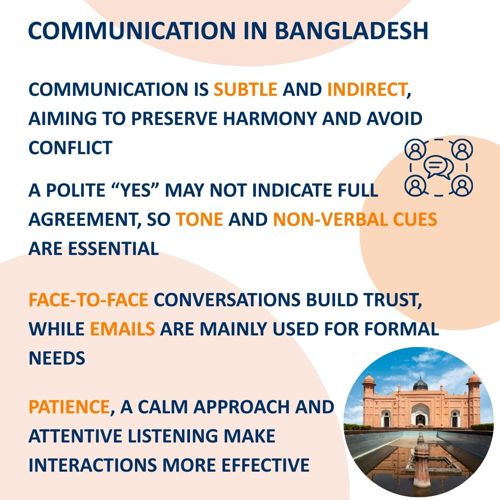
Bangladeshi communication style tends to be subtle and indirect, especially when handling sensitive topics or disagreements. Preserving harmony, often described as helping someone “save face”, is a central cultural value. This means that a lack of direct refusal does not necessarily signal agreement. International partners should pay close attention to tone, pauses, and non-verbal cues, which are often as meaningful as spoken words.
Face-to-face dialogue remains the preferred communication method for building trust, while emails and written communication serve mainly administrative or formal purposes. Maintaining a calm, warm tone and showing patience throughout discussions contributes to a more productive exchange.
First Impressions and Personal Presentation
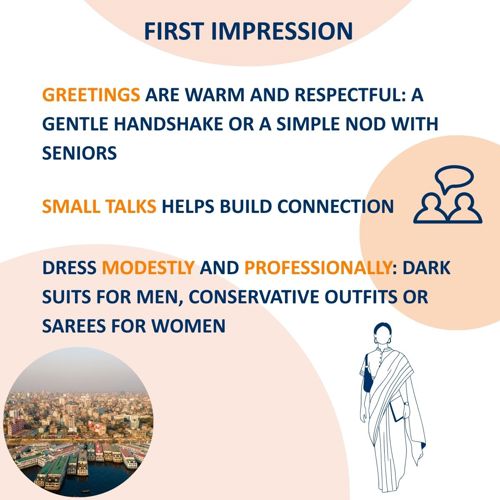
Greetings in Bangladesh are warm yet respectful. A gentle handshake accompanied by a smile is typical, but it is advisable to wait for your counterpart of the opposite gender to initiate physical contact. When in doubt – especially with senior individuals – a slight nod conveys respect without overstepping cultural boundaries. Small talk is not merely a formality but an essential part of relationship-building and expressing appreciation for local culture and traditions is always welcomed.
Dress, too, carries cultural significance. Men typically wear dark suits or formal shirts with ties, while women opt for conservative suits or elegant sarees. Modesty is key. Well-pressed clothing, understated accessories, and a subtle fragrance contribute to a polished and respectful appearance that aligns with local expectations.
Meetings and the Flow of Business
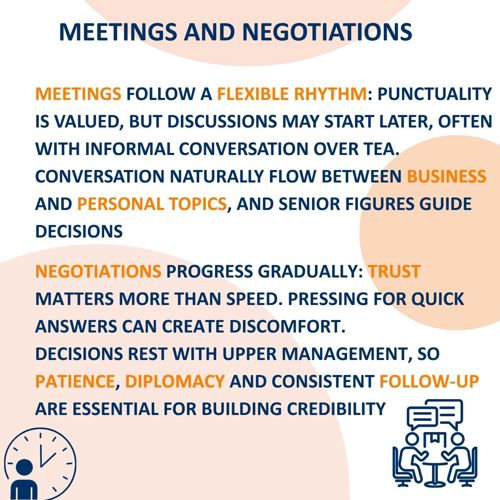
Punctuality is appreciated, though meetings may not begin exactly on time. This flexible approach leaves room for informal conversations and hospitality, often accompanied by tea or coffee. Sharing an agenda beforehand helps guide the discussion, though conversations may naturally shift between business matters and personal anecdotes, reflecting the relational nature of the culture.
Since senior figures generally drive decision-making, it is important to structure communication with this hierarchy in mind. Listening attentively, nodding to demonstrate engagement, and responding with diplomacy reinforce positive interactions.
Negotiation: A Matter of Patience and Trust
Negotiations in Bangladesh unfold gradually. Rushing the process can create discomfort or misunderstandings, as long-term trust and rapport are considered more important than immediate agreement. Bargaining may occur depending on the context, but preserving dignity and allowing all parties to “save face” remain essential. Decisions typically rest with upper management, so multiple meetings and follow-up discussions are common.
Approaching negotiations with patience and consistency helps establish your credibility and commitment to the partnership.
Building Relationships Beyond the Boardroom
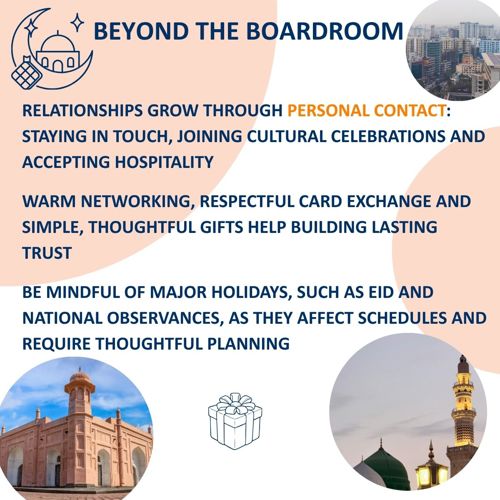
Strong relationships in Bangladesh extend well beyond formal meetings. Staying in touch through friendly calls or thoughtful messages, acknowledging important holidays, and taking part in cultural celebrations such as Pohela Boishakh or Eid contribute to deeper connections. Hospitality is a core cultural value, and accepting invitations for meals or social events is both polite and strategically beneficial.
Networking events are lively and welcoming. Open body language, sincere conversation, and attentive listening help create a positive impression. Business cards are offered with respect – often with both hands – and taking a moment to read the card before putting it away shows consideration.
Gift-giving, when done thoughtfully, enhances goodwill. Simple, high-quality items such as chocolates, notebooks, or small souvenirs from home are appreciated, especially when attractively wrapped. These gestures, coupled with cultural sensitivity, reinforce trust and appreciation.
Navigating Holidays and Planning Ahead
Bangladesh observes numerous public and religious holidays, many of which follow the Islamic lunar calendar. These include major celebrations such as Eid al-Fitr and Eid al-Adha, during which businesses often close for several days and travel peaks as people return to their hometowns. Public holidays such as Independence Day, Victory Day, and International Mother Language Day also shape operational schedules. In 2026, awareness of these dates is crucial for effective planning and smooth business execution.
Conclusion
Thriving in Bangladesh’s business environment means embracing a culture where relationships, respect, and community guide every interaction. From understanding religious practices to communicating with tact, from navigating hierarchical structures to participating in social traditions, success depends on cultural fluency as much as professional expertise. By approaching the Bangladeshi market with openness, curiosity, and a sincere respect for local norms, businesses can build strong partnerships that go far beyond commercial objectives and create connections that last.
Source: Cultural Considerations in Bangladesh , A Guide to Business Etiquette in Bangladesh | ClickUp™