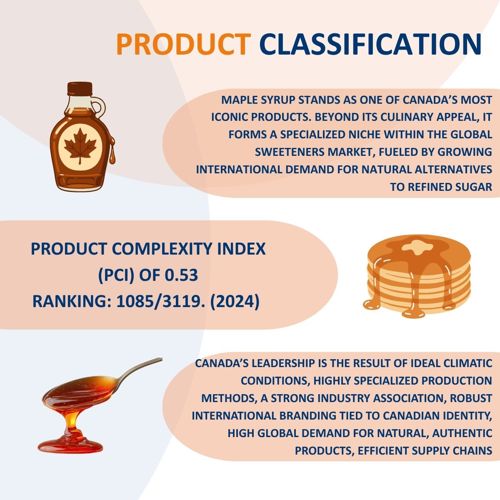
Celebrated worldwide for its rich flavor, natural origins, and deep cultural heritage, maple syrup stands as one of Canada’s most iconic products. Beyond its culinary appeal, maple sugar and maple syrup form a specialized niche within the global sweeteners market, fueled by growing international demand for natural alternatives to refined sugar.
From a trade classification standpoint, maple sugar and maple syrup fall under the broader category of Other Sugars, reflecting their status as a sweetener derived directly from agricultural production. With a Product Complexity Index (PCI) of 0.53, they rank 1,085th out of 3,119 in 2024, identifying them as a moderately complex product requiring specialized harvesting, processing, and quality‑control practices.
In 2024, global trade in maple sugar and maple syrup reached $632 million, marking a 12.4% increase from 2023. Over the past five years, the category has expanded steadily at an annualized rate of 9.6%, supported by rising enthusiasm for natural, premium, and origin‑specific food products.
EXPORTS
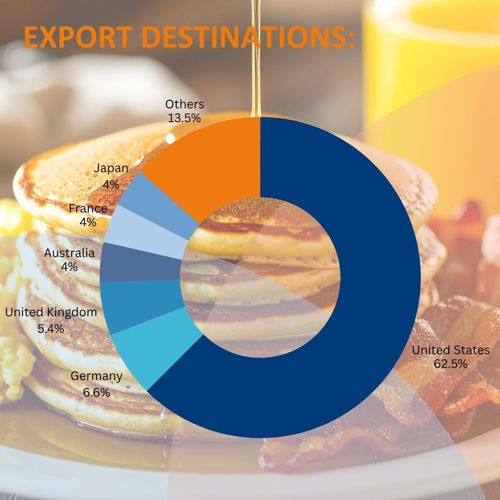
In 2024, Canada exported $527 million of maple sugar and maple syrup, making it the largest exporter in the world among 110 countries. The product ranked as Canada’s 147th most exported item out of 5,096, highlighting its strong economic relevance alongside its cultural significance.
Canada’s top export destinations were:
- United States – $329M
- Germany – $35M
- United Kingdom – $28.3M
- Australia – $21.2M
- France – $21.1M
These markets reflect a global appetite for premium specialty foods and Canada’s position as the undisputed leader in maple production.
Fastest‑growing export markets (2023–2024)
- United States – +$50.6M (+18.2%)
- United Kingdom – +$5M
- Netherlands – +$3.93M
The sharp increase in US imports shows the continued expansion of maple syrup consumption in North America, driven by natural‑food preferences and product diversification.
Fastest‑declining export market (2023–2024)
- Slovenia – –$3.52M (–51.2%)
IMPORTS
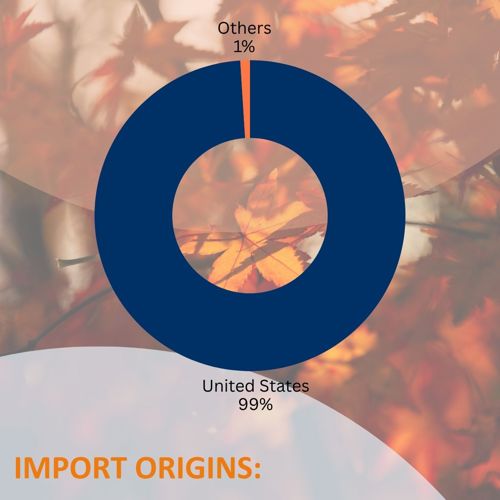
In 2024, Canada imported $15.2M of maple sugar and maple syrup, ranking as the 9th largest importer globally out of 188 countries. However, despite these imports, the country maintains a significant positive trade balance due to its massive export volumes.
Canada’s main import origins were:
- United States – $15.1M
- Netherlands – $105k
- France – $17k
- China – $12.1k
- South Korea – $6.81k
These relatively small volumes largely represent specialty or processed maple products rather than primary syrup production.
Fastest‑growing import origins (2023–2024)
- United States – +$3.07M
- Netherlands – +$105k
- China – +$10.1k
TRADE OVERVIEW
In total, Canada recorded in 2024:
- Exports: $527M
- Imports: $15.2M
- Net trade balance: +$512M
This positive trade balance underscores Canada’s role as the global hub of maple production, with the country accounting for 83.4% of all worldwide exports.
Monthly data for November 2025 provides additional insights:
- Exports: C$89.2M
- Imports: C$192k
- Trade surplus: C$89M
Between October and November 2025, exports increased by 15.9%, while imports decreased by 31.6%. The main November export destinations mirrored annual trends: the United States (C$62.1M), Germany, the United Kingdom, Australia, and France.
Year‑on‑year, November 2025 exports grew by 35.8%, driven mainly by:
- United States (+C$19.4M, +45.3%)
- Germany (+C$2.79M, +73.7%)
- United Kingdom (+C$1.24M, +33.4%)
Imports fell by 75%, largely due to a decline in purchases from the United States.
Canada’s closest competitor in 2024 was the United States, which exported $50.5M, well below Canada’s dominant volume.
CANADA’S GLOBAL POSITION
Canada’s leadership in the maple syrup market is the result of several structural advantages:
- Ideal climatic conditions for sugar maple forests
- Highly specialized production methods refined over generations
- A strong industry association that ensures consistency and quality standards
- Robust international branding tied to Canadian identity
- High global demand for natural, authentic products
- Efficient supply chains enabling large‑scale export distribution
Even as the product ranks modestly in global trade value (2,798th out of 5,380 products), its cultural and commercial relevance remains exceptionally high.
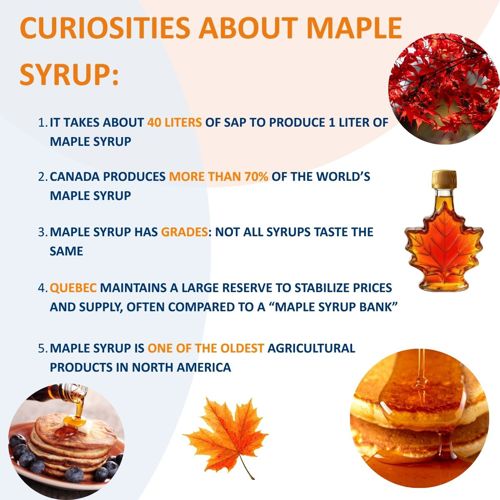
Curiosity Corner: Fun Facts About Maple Syrup
- It takes about 40 liters of sap to produce just 1 liter of maple syrup.
This ratio highlights the resource‑intensive nature of true maple production. - Canada produces more than 70% of the world’s maple syrup.
Most of it comes from Québec. - Maple syrup has grades: not all syrups taste the same.
From Golden Delicate to Very Dark, each grade offers different flavor notes. - The industry has its own “strategic reserve.”
Québec maintains a large reserve to stabilize prices and supply, often compared to a “maple syrup bank.” - Maple syrup is one of the oldest agricultural products in North America.
Indigenous peoples were the first to harvest and boil maple sap centuries ago.
CONCLUSIONS
In 2024, Canada solidified its position as the world’s leading exporter of maple sugar and maple syrup, accounting for more than 83% of global exports. With strong demand from the United States, Germany, and the United Kingdom, and continued growth in markets across Europe and Asia, maple syrup remains a dynamic and expanding category.
A unique blend of climate, tradition, and industrial expertise underpins Canada’s dominance. As consumer interest in natural sweeteners and premium regional products continues to rise, the country is well positioned to maintain – and even strengthen – its leadership in the global maple syrup trade.