PRODUCT CLASSIFICATION
Glass bottles are an essential part of modern supply chains, quietly supporting industries ranging from beverages and food to pharmaceuticals and cosmetics. Recognizable for their transparency, durability, and recyclability, they play a crucial role in packaging, preserving, and transporting goods across global markets. Their ability to protect contents while maintaining quality has made them a preferred solution in both traditional and high value industries.
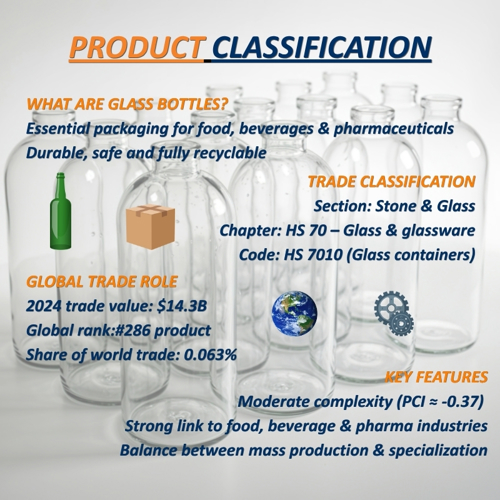
From a trade perspective, glass bottles fall under the Stone and Glass section, specifically within HS Chapter 70: Glass & glassware, classified under HS Code 7010, which includes containers such as bottles, jars, flasks, and ampoules used for packaging and conveyance.
In 2024, global trade in glass bottles reached $14.3B, despite a 9.22% decrease from 2023 ($15.8B), reflecting fluctuations in demand and industrial cycles. Over the past five years, however, the sector has maintained a solid annual growth rate of 5.57%, indicating sustained long-term demand.
Among globally traded goods, glass bottles ranked 286th, accounting for approximately 0.063% of world trade. In terms of complexity, they sit at a moderate level, with a Product Complexity Index (PCI) of –0.37, reflecting a balance between standardized manufacturing and industrial specialization.
EXPORT
In 2024, glass bottle exports were driven by a combination of large-scale manufacturing hubs and countries with strong industrial and packaging sectors.
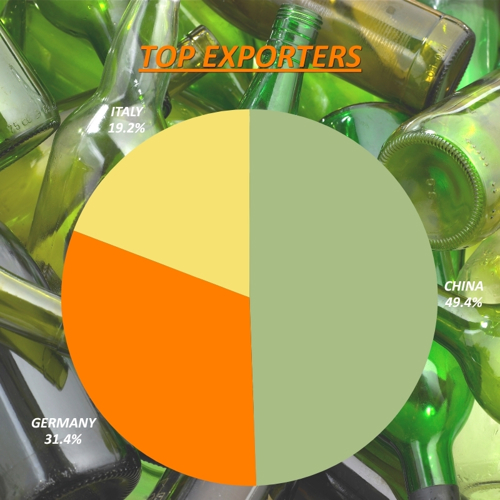
The top exporters were:
• China – $2.6B
• Germany – $1.65B
• Italy – $1.01B
China leads the global market thanks to its massive production capacity, cost competitiveness, and ability to supply a wide range of industries. Germany stands out for its high-quality glass manufacturing and strong presence in premium packaging markets, particularly for beverages and pharmaceuticals. Italy, meanwhile, plays a key role in supplying specialized glass bottles, especially for wine, spirits, and luxury goods.
Countries with the highest share of glass bottles in their export portfolios tend to be economies with strong manufacturing bases or specialized packaging industries, where glass production is closely linked to food, beverage, and cosmetic sectors.
The largest trade surpluses in 2024 were recorded by:
• China – $2.54B
• Germany – $1.07B
• Mexico – $544M
These surpluses highlight the importance of manufacturing scale, logistics efficiency, and proximity to key export markets.
IMPORT
On the import side, demand for glass bottles is closely tied to large consumer markets and countries with strong beverage, food-processing, and pharmaceutical industries.
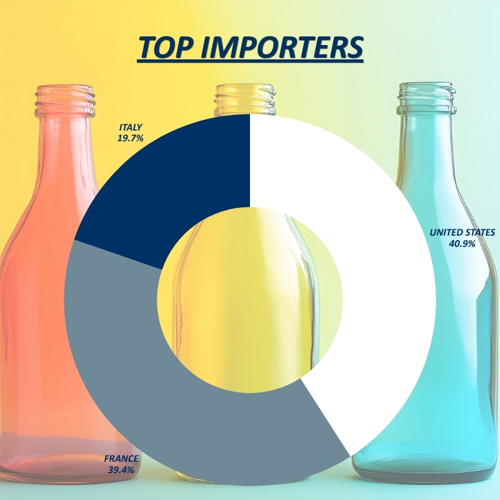
The top importers in 2024 were:
• United States – $1.85B
• France – $1.78B
• Italy – $892M
The United States leads global imports due to its large consumer base and significant demand from beverage, cosmetics, and food industries. France and Italy, both major wine and spirits producers, import glass bottles to complement domestic production and meet specific quality or design requirements.
The largest trade deficits were observed in countries with high consumption but relatively lower production capacity, particularly in advanced economies where demand for specialized or premium packaging is strong.
CURIOSITY CORNER: THE STORY BEHIND GLASS BOTTLES
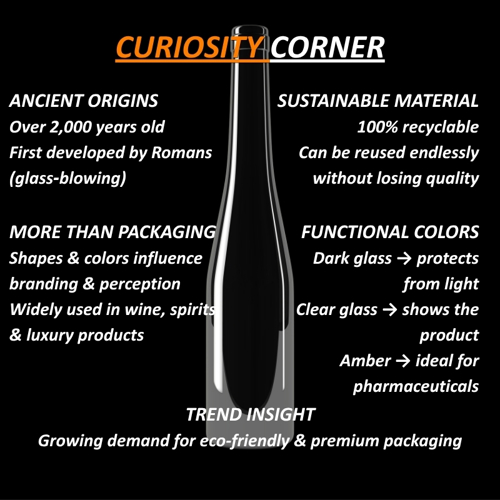
Glass bottles might seem like a simple packaging solution, but their history dates back over 2,000 years to ancient civilizations, including the Romans, who were among the first to develop glass-blowing techniques. This innovation revolutionized storage and transportation, laying the foundation for the modern container industry.
One of the most remarkable features of glass is that it is 100% recyclable without loss of quality; a glass bottle can be melted down and remade endlessly, making it one of the most sustainable packaging materials available today.
Glass bottles also play a key role in branding and perception; from wine to perfume, the shape, color, and texture of a bottle often communicate quality, heritage, and identity, turning packaging into a powerful marketing tool.
Interestingly, different colors of glass serve functional purposes:
• Dark glass protects contents from light (e.g. wine, beer)
• Clear glass showcases the product
• Amber glass is widely used in pharmaceuticals to preserve sensitive compounds
Finally, despite the rise of plastic alternatives, glass is experiencing a renewed interest, particularly among consumers seeking sustainable and premium packaging options.
CONCLUSION
The global trade of glass bottles in 2024 highlights the importance of packaging in modern economies. While often overlooked, glass bottles are a fundamental component of supply chains across industries, from food and beverages to pharmaceuticals and luxury goods.
Leading exporters such as China, Germany, and Italy demonstrate the strength of industrial production and specialization, while major importers like the United States and European countries reflect strong and diversified demand.
Although classified as a moderately complex product, glass bottles illustrate how manufacturing, design, and sustainability intersect in global trade. As environmental awareness grows and demand for recyclable materials increases, glass bottles are likely to strengthen their position, combining tradition, functionality, and sustainability in an increasingly competitive global market.