PRODUCT CLASSIFICATION
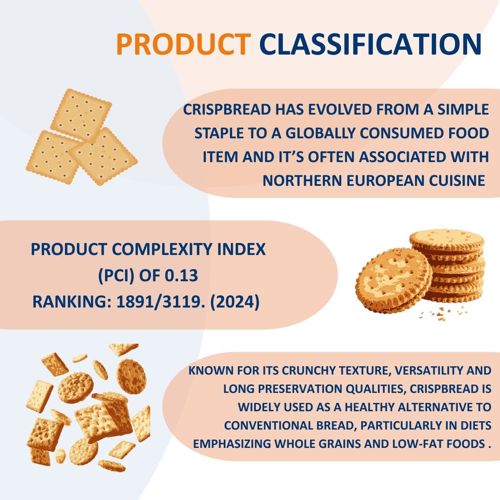
Crispbread, a light and shelf‑stable baked product traditionally associated with Northern European cuisine, has evolved from a simple staple to a globally consumed food item. Known for its crunchy texture, versatility, and long preservation qualities, crispbread is widely used as a healthy alternative to conventional bread, particularly in diets emphasizing whole grains and low‑fat foods. Its popularity has expanded beyond its Scandinavian roots, supported by rising consumer interest in convenient, nutritious, and fiber‑rich snacks.
In international trade, crispbread falls under the Foodstuffs section, within HS Chapter 19: Preparations of cereals, flour, starch or milk, specifically categorized under HS4 Baked Goods. Despite being a low‑complexity processed food, its diverse consumer base and expanding global distribution have made it a relevant product for both traditional and emerging markets.
In 2024, global trade of crispbread reached $571M, representing a slight 1.62% decrease from the $580M recorded in 2023. However, over the past five years, trade has grown at an annualized rate of 3.47%, highlighting steady long‑term demand.
Among the 5,380 products traded globally, crispbread ranked 2,928th, accounting for less than 0.005% of world trade. According to the Product Complexity Index (PCI), it scored –0.13, placing it 1,891st out of 3,119 products, a reflection of its low technological complexity yet consistent manufacturing and packaging requirements.
EXPORT
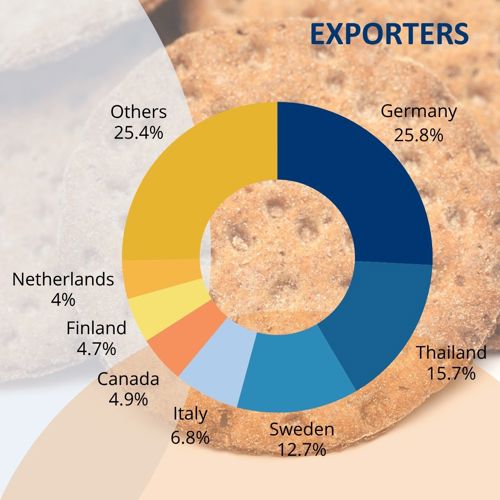
In 2024, the global crispbread export market was led by countries known for both advanced food industries and strong consumer demand for baked goods.
The top exporters were:
· Germany – $147M
· Thailand – $89.6M
· Sweden – $72.6M
Germany’s leadership reflects its long‑established bakery sector and large manufacturing capacity, allowing it to supply both European and international markets. Thailand’s notable export performance highlights its expanding food-processing industry and its ability to competitively manufacture packaged baked products for global distribution. Sweden, the traditional home of crispbread, continues to be a reference point for quality and heritage brands.
Countries with the highest share of crispbread in their export portfolios were:
· Andorra – 0.56%
· Honduras – 0.059%
· Sweden – 0.038%
These percentages indicate the relative importance of crispbread in smaller or specialized export economies.
The largest trade surpluses in 2024 were recorded by:
· Germany – $114M
· Thailand – $88.1M
· Sweden – $31.8M
These surpluses underscore these countries’ strong position in crispbread production and their established export channels.
IMPORT
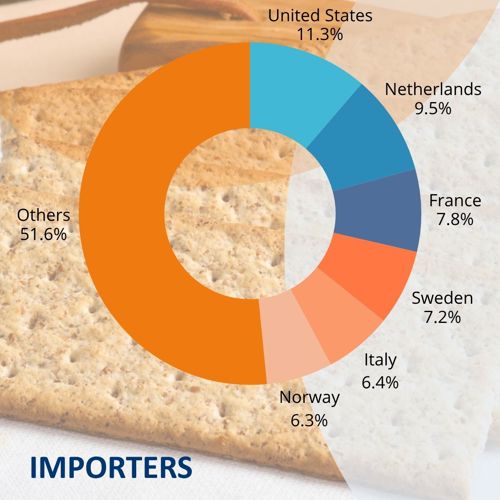
In 2024, import demand for crispbread was driven by markets with strong retail distribution networks and consumer preferences for healthy, packaged food products.
The top importers were:
· United States – $64.3M
· Netherlands – $54.1M
· France – $44.6M
The United States leads global crispbread imports due to its large, health‑focused consumer base and the strong presence of Scandinavian and European brands in specialty and mainstream supermarkets. The Netherlands functions as both a major consumer and a re‑export hub for Europe, while France combines high domestic consumption with robust retail distribution.
The largest trade deficits were registered by:
· United States – –$57.8M
· Netherlands – –$31.4M
· France – –$28.7M
These deficits highlight strong internal demand and limited domestic production, making these markets highly reliant on foreign suppliers.
CURIOSITY CORNER: CRISPBREAD’S SURPRISING GLOBAL JOURNEY
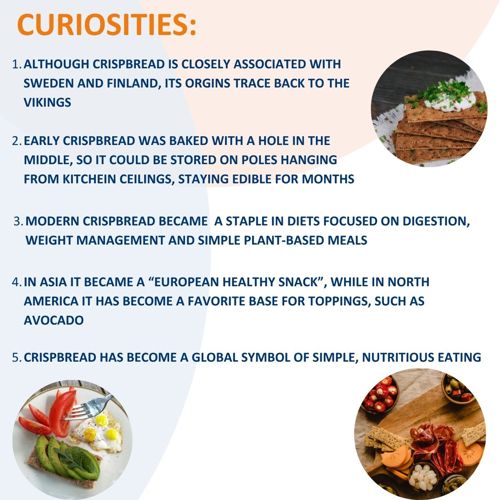
Although crispbread is closely associated with Sweden and Finland, its origins trace back to the Vikings, who needed lightweight, long‑lasting food for long journeys. Early crispbread was baked with a hole in the middle so it could be stored on poles hanging from kitchen ceilings, staying edible for months.
Modern crispbread has also benefitted from the wellness movement: its high fiber content and whole grain base have made it a staple in diets focused on digestion, weight management, and simple plant‑based meals. Many varieties now include seeds, oats, legumes, and even ancient grains, reflecting growing consumer interest in functional foods.
Interestingly, crispbread has found a niche role outside traditional markets. In Asia, for example, it is increasingly marketed as a “European healthy snack”, while in North America it has become a favorite base for toppings such as avocado, nut butters or protein spreads.
Despite its humble origins, crispbread has become a global symbol of simple, nutritious eating, proof that even a modest baked product can adapt to contemporary tastes and lifestyles.
CONCLUSION
The global crispbread market in 2024 reflects a resilient and steadily expanding product category, supported by long‑term consumer trends toward healthier and more convenient food options. Although trade saw a slight decline compared to 2023, the overall five‑year growth rate remains positive, indicating robust underlying demand.
Major exporters such as Germany, Thailand, and Sweden continue to dominate production, while the United States, the Netherlands, and France drive import demand through strong retail markets and diverse consumer preferences. With its low production complexity and high adaptability to health‑focused trends, crispbread is well-positioned to remain a staple in global trade, bridging traditional Nordic food culture with modern, international consumption patterns.