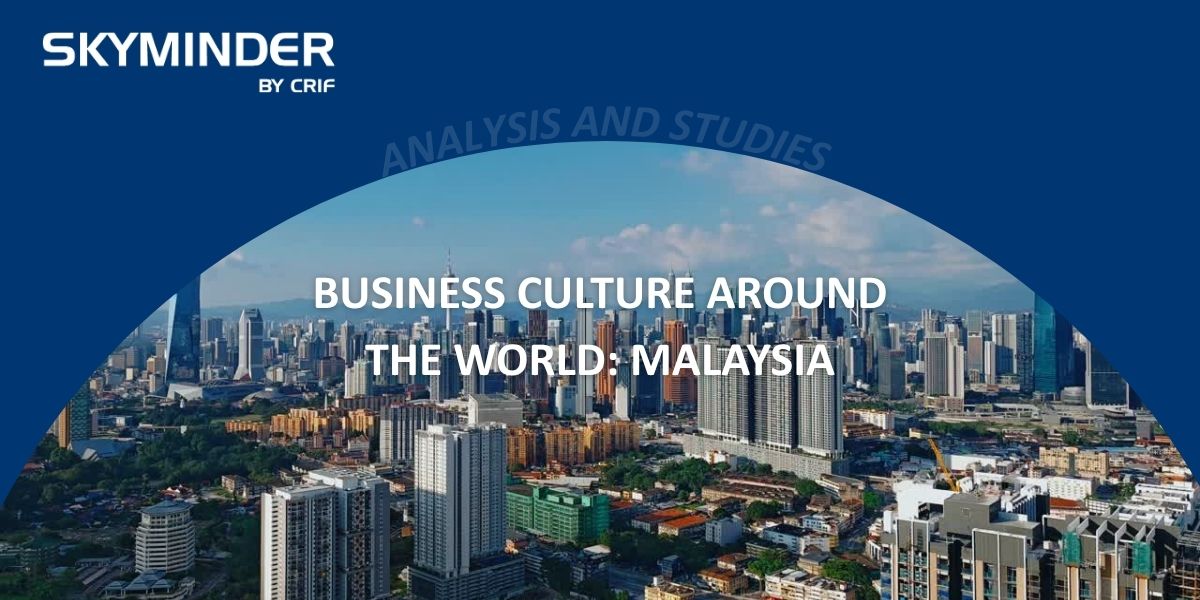
Understanding Multicultural Dynamics in a Strategic Southeast Asian Hub
(Business Insight – 2026)
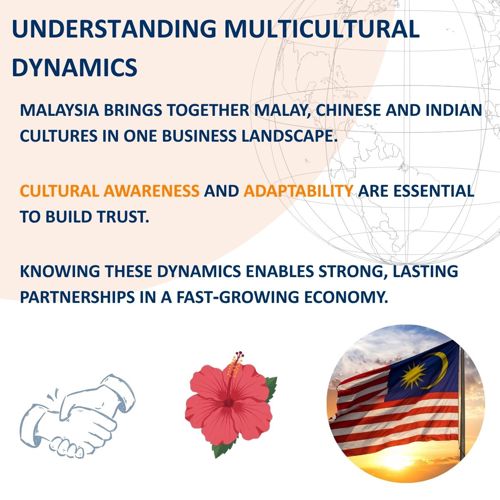
Malaysia offers one of the most culturally diverse business environments in Southeast Asia. Its professional landscape is shaped by the coexistence of three major cultural groups (Malay, Chinese, and Indian) each contributing distinct values, communication styles, and business expectations. Navigating this environment successfully requires cultural sensitivity, adaptability, and an appreciation of the country’s unique social fabric. Understanding these nuances is essential not only to avoid misunderstandings, but to build trust and establish enduring business partnerships in a fast-growing, outward‑looking economy.
A Multicultural Business Environment
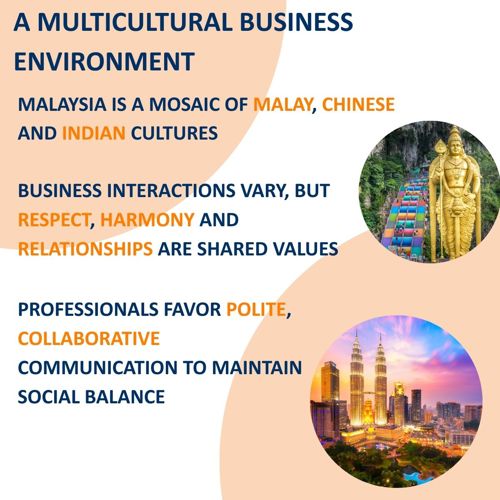
Malaysia is a mosaic of cultures, languages, and traditions. Malays form the majority of the population and strongly influence national identity, while Chinese and Indian communities add significant economic and cultural diversity.
This multicultural setting means that business interactions can vary depending on the background of the counterpart, but some common values, such as respect, harmony and relationship-building, run through all groups.
In practice, professionals in Malaysia tend to favor polite, collaborative interactions where preserving harmony is key. Decisions may be influenced by cultural norms specific to each group, but a general appreciation for courtesy and professionalism is shared across the business environment.
The Role of Religion and Cultural Norms
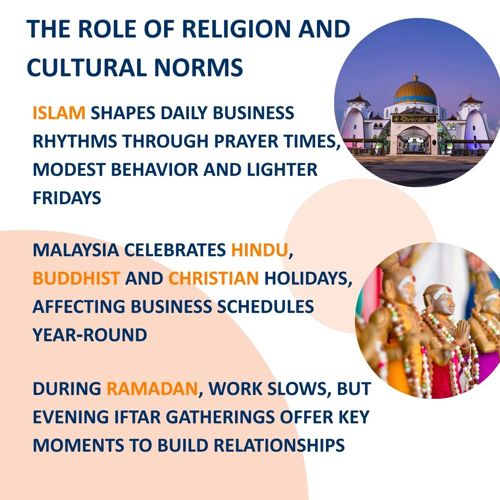
Religion plays an important role in shaping business customs and schedules. Islam, practiced by the Malay majority, influences daily rhythms through designated prayer times and a preference for modest behavior. Friday afternoons are reserved for congregational prayers, often resulting in lighter business activity.
Malaysia also embraces religious diversity, celebrating major Hindu, Buddhist, and Christian holidays. This multicultural calendar can affect business schedules throughout the year, and being aware of these observances demonstrates respect and cultural intelligence.
During Ramadan, working hours may shift and some business activities naturally slow down. However, evening gatherings such as breaking fast (iftar) offer valuable opportunities to strengthen relationships in a more personal and relaxed context.
Hierarchy and Leadership Styles
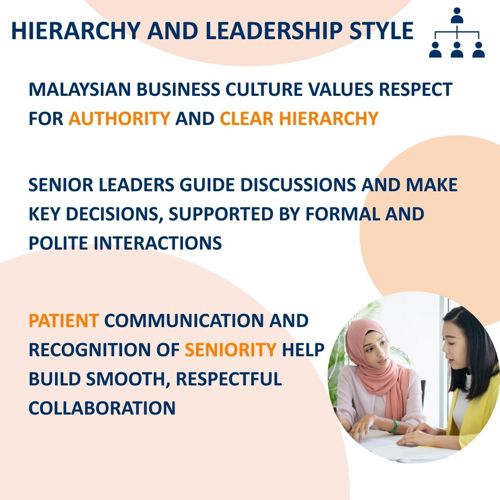
While the degree of hierarchy varies across cultural groups, respect for authority is a common thread in Malaysian business life. Senior leaders are expected to guide discussions and make key decisions, and their position is acknowledged through formal greetings, polite language, and deference in meetings.
This emphasis on hierarchy means that international professionals should be mindful of the decision-making chain. Communications and proposals often need to be validated at higher levels, and rushing for immediate outcomes may be seen as inconsiderate. Demonstrating patience and recognition of seniority helps create smoother, more respectful interactions.
Communication: Polite, Diplomatic, and Nuanced
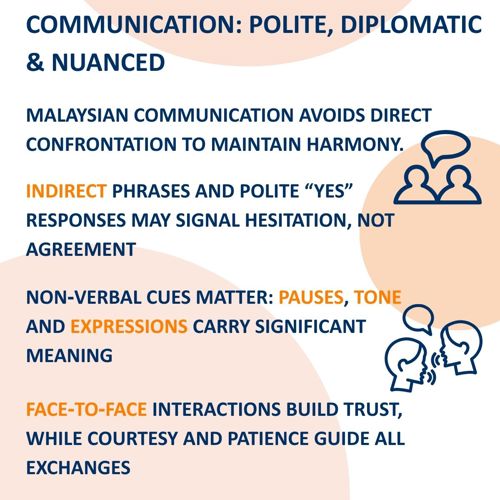
Malaysian communication tends to be diplomatic and considerate. Direct confrontation is generally avoided, as maintaining harmony is highly valued. Professionals may use indirect phrasing when expressing disagreement, and a polite “yes” or “we will consider it” may signal hesitation rather than full endorsement.
Non-verbal cues such as pauses, tone, or facial expressions often carry significant meaning. Maintaining a respectful, calm tone is essential, as abruptness may be perceived as disrespectful.
Face‑to‑face interactions remain central to building trust, although digital communication is widely used for practical coordination. Regardless of the channel, courtesy and patience are expected in all exchanges.
The Concept of Face
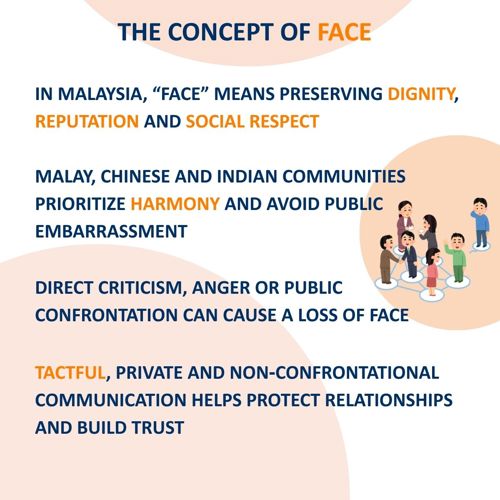
In Malaysia, the idea of “face” plays a central role in social and professional life. Across Malay, Chinese, and Indian communities, preserving dignity, honor, and the respect of others is essential. “Face” reflects a person’s reputation, integrity, and social standing, but it also extends to the family, organization, and even larger community. Because of this, Malaysians naturally prioritize harmony in their interactions and avoid situations that may cause embarrassment or public tension.
Actions that could undermine someone’s dignity, such as openly pointing out mistakes, challenging authority figures in front of others, showing visible anger or forcing someone into a direct refusal, can be perceived as causing a “loss of face.” For this reason, communication often takes a more indirect or tactful form. Sensitive issues are handled privately, disagreements are softened or expressed through non-verbal cues, and care is taken to allow everyone to exit a difficult situation without discomfort. By helping others maintain face, professionals show respect, strengthen relationships, and create an environment where cooperation can flourish.
Meetings and Professional Etiquette
Punctuality is appreciated, though meetings may not always start exactly on time. Opening conversations typically include light, friendly topics that help create rapport before addressing business matters. Hospitality, such as offering tea or refreshments, is a standard sign of respect.
Business attire tends to be formal and modest. Men usually wear suits or long-sleeve shirts, while women opt for conservative outfits that align with local expectations of professionalism and modesty. Observing these norms signals attentiveness and cultural awareness.
Negotiation and Decision-Making
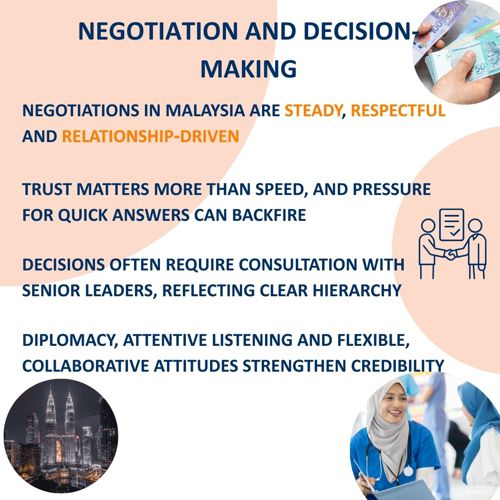
Negotiations in Malaysia are generally steady, respectful, and relationship‑oriented. Establishing trust is considered more important than securing quick results. Pressuring counterparts for immediate answers can be counterproductive, as decisions often require consultation within the established hierarchy.
Maintaining diplomacy, listening attentively, and presenting proposals clearly and respectfully contribute to a positive negotiation atmosphere. Flexibility is appreciated, and a collaborative attitude helps reinforce credibility.
Building Relationships: Hospitality and Social Interaction
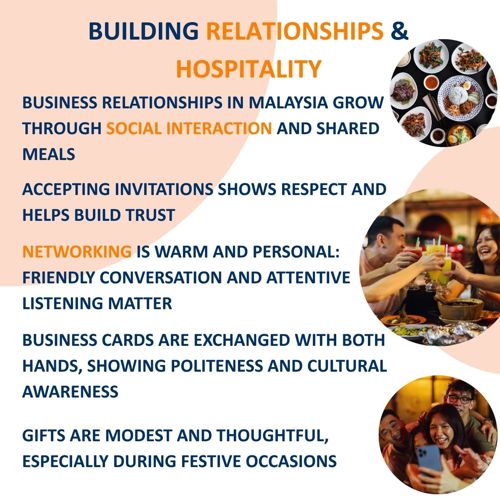
Business relationships in Malaysia extend naturally into social and informal settings. Shared meals, whether at lunch, dinner, or during special occasions, play a central role in building deeper connections. Accepting invitations is not only courteous but often contributes to strengthening trust between partners.
Networking events are warm and welcoming, with professionals placing strong value on friendly conversation, mutual respect, and attentive listening. Exchanging business cards is a formal gesture; presenting and receiving them with both hands reflects politeness and cultural sensitivity.
Gift-giving, when appropriate, is typically modest. Bringing small, thoughtful items, especially when visiting an office or meeting counterparts during festive seasons, is a gesture of goodwill.
Festivals, Holidays, and Planning Considerations
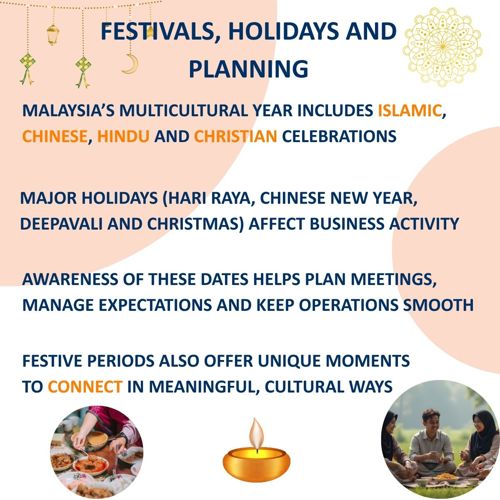
Malaysia’s multicultural calendar includes Islamic, Chinese, Hindu, and Christian celebrations, each with its own customs and periods of reduced business activity. Major holidays such as Hari Raya Aidilfitri, Chinese New Year, Deepavali, and Christmas influence scheduling, travel, and availability.
Awareness of these key dates is essential for planning meetings, managing expectations, and ensuring smooth operations. The diversity of observances also offers unique opportunities to engage with partners in culturally rich and meaningful ways.
Conclusion
Thriving in Malaysia’s dynamic business environment requires an appreciation of its multicultural identity, respect for hierarchy, and an understanding of subtle communication styles. By embracing local customs, recognizing religious and cultural rhythms, and cultivating genuine relationships, international professionals can build strong, resilient partnerships in this fast‑evolving Southeast Asian market.
Source: Malaysian - Business Culture — Cultural Atlas , Malaysia - Language, Culture, Customs And Etiquette