WHY THE INTERNATIONAL DAY FOR TOLERANCE MATTERS
Every year on November 16, people around the world observe the International Day for Tolerance, a global occasion dedicated to promoting mutual respect, understanding, and peaceful coexistence among individuals and communities. The day was proclaimed by the United Nations General Assembly in 1996 following the adoption of UNESCO’s Declaration of Principles on Tolerance in 1995, which defines tolerance as respect, acceptance, and appreciation of the rich diversity of human cultures and ways of life. Rather than simply putting up with differences, tolerance encourages people to recognize diversity as a source of strength and enrichment for society.
In a world that is becoming increasingly interconnected, the ability to understand and value different perspectives is more important than ever. People from different cultural, religious, and social backgrounds interact daily, creating opportunities for learning, collaboration, and innovation. At the same time, misunderstandings and prejudice can still divide communities. The International Day for Tolerance serves as a reminder that peaceful societies are built through dialogue, empathy, and a commitment to protecting the rights and dignity of all people.
UNDERSTANDING THE TRUE MEANING OF TOLERANCE
Tolerance is often misunderstood as simple acceptance of opinions or behaviors we disagree with. However, UNESCO emphasizes that tolerance is neither indulgence nor indifference. Instead, it is an active attitude based on the recognition of universal human rights and fundamental freedoms. It means respecting the rights of others to express themselves, practice their beliefs, and live according to their own identities, provided that these rights do not infringe upon those of others.
Practicing tolerance requires openness, curiosity, and a willingness to engage with people whose experiences may differ from our own. It encourages individuals to move beyond stereotypes and assumptions, replacing fear and prejudice with understanding and respect. By embracing diversity, societies become more inclusive and resilient, creating environments where everyone has the opportunity to contribute and thrive.
EDUCATION AS A POWERFUL TOOL AGAINST INTOLERANCE
One of the key messages associated with the International Day for Tolerance is the importance of education. According to UNESCO, intolerance is often rooted in ignorance, fear, and misinformation. Because attitudes and perceptions begin to form at a young age, education plays a crucial role in teaching respect for human rights, cultural diversity, and different ways of life.
However, learning tolerance is not limited to the classroom. It is a lifelong process that takes place at home, in workplaces, through media, and within local communities. Reading about different cultures, listening to diverse voices, participating in community events, and engaging in respectful conversations can all help individuals broaden their perspectives. By encouraging critical thinking and intercultural understanding, education helps build societies that are better equipped to reject discrimination and embrace inclusion.
TAKING ACTION THROUGH INDIVIDUAL AND COLLECTIVE RESPONSIBILITY
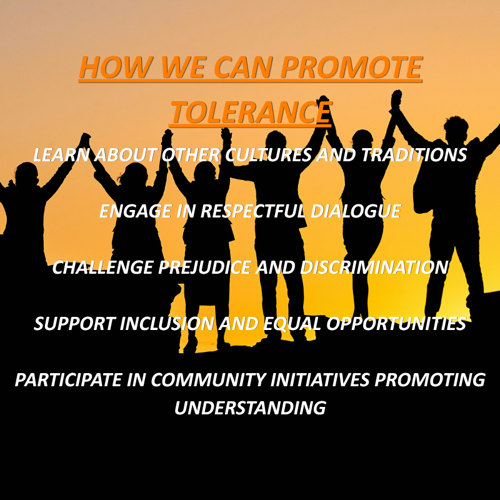
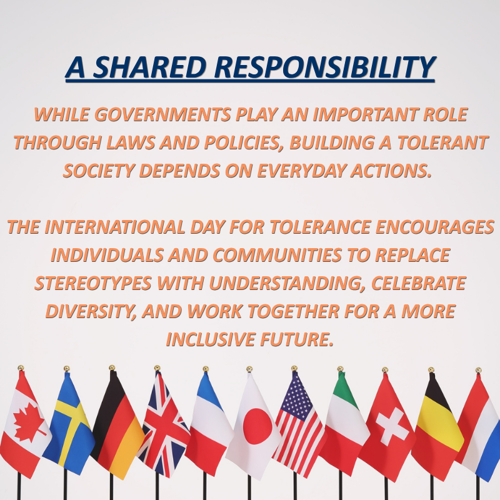
While governments and international organizations play an important role in combating discrimination through laws and policies, promoting tolerance is ultimately a shared responsibility. UNESCO highlights that intolerance often appears in everyday forms such as stereotyping, stigmatization, insults, and exclusion. Small actions and attitudes can contribute either to a cycle of division or to a culture of respect and understanding.
The International Day for Tolerance encourages people to reflect on their own behaviors and consider how they can actively support inclusion. This can mean standing up against discrimination, supporting marginalized communities, engaging in meaningful dialogue, or simply making an effort to learn from people with different backgrounds and experiences. Local initiatives and individual actions may seem small, but collectively they have the power to create lasting positive change.
A GLOBAL CALL FOR UNITY AND RESPECT
The continued relevance of the International Day for Tolerance demonstrates that building more inclusive societies is an ongoing effort. Although significant progress has been made in advancing human rights and promoting equality, intolerance, prejudice, and discrimination remain challenges in many parts of the world. By dedicating a day to these issues, the international community reinforces the importance of cooperation, understanding, and mutual respect.
The observance is not only about recognizing differences but also about celebrating the values that unite humanity. It reminds us that diversity enriches our communities and that peaceful coexistence depends on our ability to respect one another despite our differences. In this way, tolerance becomes not only a moral principle but also a practical foundation for a more harmonious and sustainable future.
CONCLUSION
The International Day for Tolerance is a powerful reminder that respect, empathy, and understanding are essential for building peaceful and inclusive societies. By promoting education, encouraging dialogue, and challenging prejudice, individuals and communities can help create a world where diversity is celebrated rather than feared. While tolerance is honored on November 16, its message extends far beyond a single day.
It is a value that should guide our actions throughout the year, helping foster a future marked by greater unity, equality, and mutual respect.
Sources: United Nations
