PRODUCT CLASSIFICATION
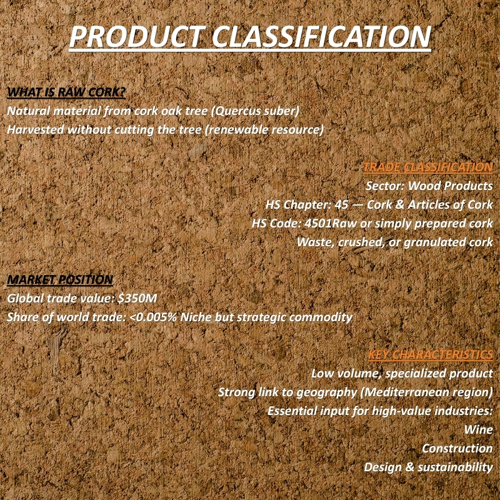
Raw cork is a unique natural material harvested from the bark of the cork oak tree (Quercus suber), primarily grown in Mediterranean regions. Known for its elasticity, impermeability, and sustainability, cork has been used for centuries in a wide range of applications, from wine stoppers to insulation, flooring, and design products.
From a trade perspective, raw cork belongs to the Wood Products category, specifically within HS Chapter 45: Cork and articles of cork, and is classified under HS Code 4501: Natural cork, raw or simply prepared; waste cork; crushed, granulated or ground cork.
Despite being a niche and relatively low-volume commodity compared to major raw materials, raw cork plays a strategic role in global supply chains due to its specialization and connection to high-value industries like wine production, construction, and eco-design.
Global trade in raw cork amounts to roughly $350M annually, representing a very small share of world trade (below 0.005%) and ranking among the lower-tier traded products globally.
Over the past years, however, the sector has shown moderate long-term growth, reflecting rising demand for natural, renewable, and sustainable materials.
EXPORT
The global export landscape for raw cork is highly concentrated, reflecting the geographic specificity of cork oak forests.
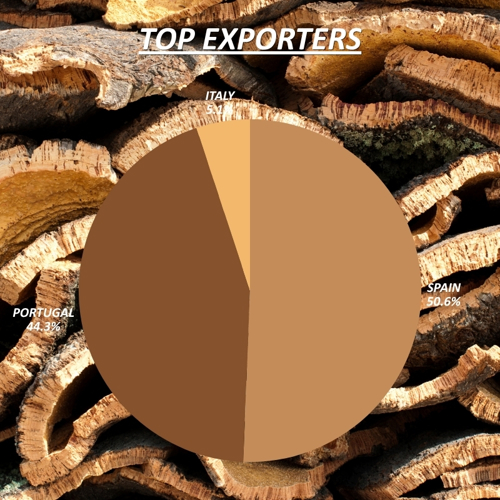
The top exporters are:
• Spain – around $160M
• Portugal – around $140M
• Italy – around $16M
Spain and Portugal dominate the market thanks to their ideal climate conditions and centuries-old expertise in cork harvesting and processing. Portugal, in particular, is responsible for a significant share of global cork production, supported by extensive cork oak forests and a highly developed industrial ecosystem.
Other exporters, including Morocco and Tunisia, play smaller but regionally important roles, contributing to supply diversification.
The countries with the largest trade surpluses highlight this concentration:
• Spain
• Italy
• Morocco
These surpluses are closely tied to natural resource availability rather than industrial complexity, making cork a textbook example of geography-driven trade specialization.
IMPORT
On the demand side, raw cork flows into countries with strong processing industries or downstream manufacturing sectors.
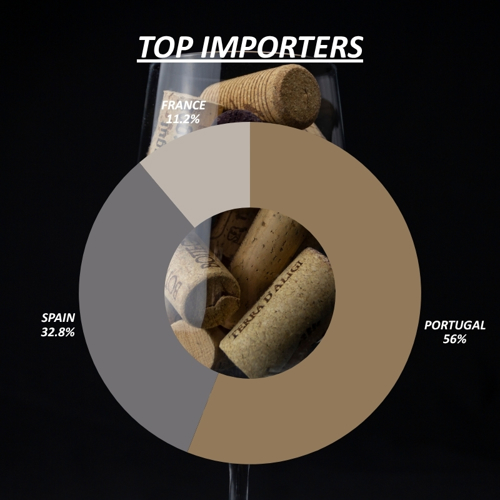
The top importers are:
• Portugal – around $150M
• Spain – around $88M
• France – around $30M
Interestingly, Portugal appears as both a leading exporter and the largest importer. This reflects its role as a global processing hub, where raw cork is imported, refined, and transformed into higher-value products such as wine stoppers and agglomerated cork materials.
France and Germany import raw cork primarily for industrial applications, including wine production, construction materials, and specialized manufacturing.
The largest trade deficits are found in:
• France
• Portugal
• Germany
These deficits underline the reliance of industrial economies on imported raw cork to feed their value-added production chains.
CURIOSITY CORNER: THE SECRET LIFE OF CORK
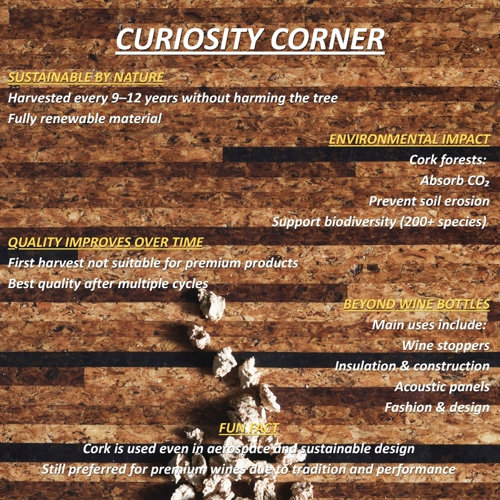
Cork is one of the most sustainable materials on the planet and its harvesting process is surprisingly gentle. Unlike most raw materials, cork is collected without cutting down the tree. The bark is carefully stripped every 9–12 years, allowing the tree to regenerate naturally.
Cork oak forests are environmental powerhouses. They help absorb CO₂, prevent soil erosion, and support biodiversity, hosting hundreds of animal and plant species.
Another fascinating aspect is that cork improves with time. The first harvest is usually too rough for high-quality applications, but after several cycles, the bark becomes ideal for premium products like wine stoppers.
Speaking of wine, cork remains deeply tied to global wine culture. Despite competition from synthetic and screw caps, natural cork is still widely preferred for premium wines due to its breathability and tradition.
Finally, cork’s versatility goes far beyond bottles; it’s used in aerospace engineering, fashion accessories, acoustic insulation, and even as a natural alternative to plastics in sustainable design.
CONCLUSION
The global raw cork market may appear small in scale, but it is highly strategic and deeply rooted in geography, tradition, and sustainability. Dominated by Mediterranean producers like Spain and Portugal, the sector reflects a strong link between natural resources and specialized industrial ecosystems.
Trade flows reveal a clear pattern: raw cork is exported mainly by producing countries and imported by processing hubs and manufacturing economies. This dynamic highlights the importance of value chains, where raw materials are transformed into high-value finished goods.
As global demand continues to shift toward eco-friendly and renewable materials, cork is uniquely positioned to expand its relevance. Its combination of sustainability, versatility, and cultural heritage ensures that, even in a highly modernized global economy, this ancient material remains remarkably relevant and future-facing.