OVERVIEW
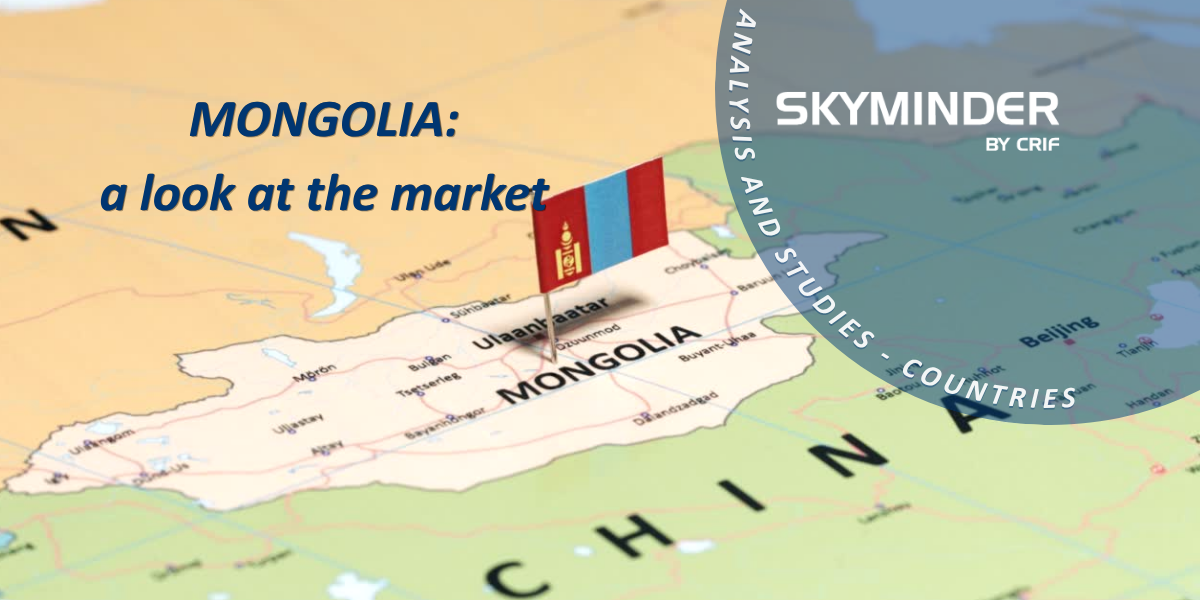
Mongolia is one of Asia's most fascinating emerging economies. Positioned between China and Russia, the country combines vast mineral wealth, strategic geographic importance, and a growing role in global commodity supply chains. Despite its relatively small population, Mongolia has become a significant exporter of coal, copper, gold, and other natural resources, making international trade a critical pillar of its economic development.
The country's economic performance is deeply influenced by global demand for raw materials, particularly from neighboring China, which absorbs the overwhelming majority of Mongolian exports. This close trade relationship has transformed Mongolia into an important supplier of minerals essential for industrial production, infrastructure projects, and the global energy transition.
Key trade indicators highlight Mongolia's strong export-oriented profile:
• Exports: $14.8B
• Imports: $8.38B
• Trade Surplus: Approximately $6.4B
The country continues to maintain a positive trade balance thanks to robust mineral exports, which significantly exceed the value of imported goods.
ECONOMIC PROFILE AND COMPLEXITY
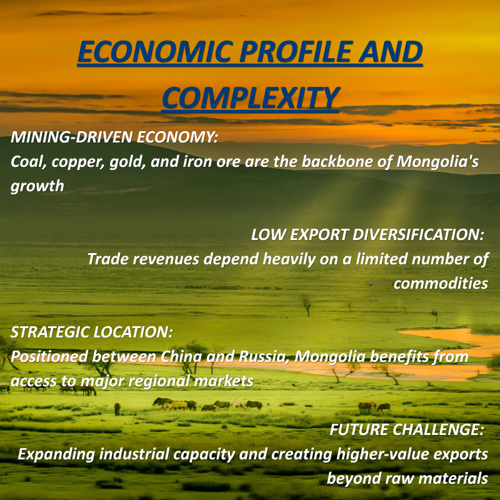
Mongolia's economy is characterized by a high concentration in the mining sector. The country's vast reserves of coal, copper, gold, iron ore, and rare minerals have made resource extraction the primary engine of growth and the dominant source of export revenues.
While the nation ranks among the world's leading exporters of several mineral commodities, its Economic Complexity Index remains relatively low due to the limited diversification of its export basket. A substantial share of export earnings comes from only a handful of products, making economic performance particularly sensitive to commodity prices and external demand fluctuations.
At the same time, Mongolia is investing in infrastructure, logistics, and industrial development to strengthen domestic value creation. The long-term challenge for the country is transforming its natural resource wealth into a broader industrial base capable of generating more sophisticated exports and greater economic resilience.
For businesses and investors, Mongolia presents an interesting combination of opportunities: abundant natural resources, proximity to major Asian markets, and growing integration into regional supply chains.
EXPORTS
Mongolia exported approximately $14.8 billion worth of goods, confirming its position as one of the world's most resource-dependent export economies. Over the past several years, exports have grown significantly, driven by rising demand for minerals and energy-related commodities.
TOP EXPORT PRODUCTS
The country's export structure is heavily concentrated around mining:
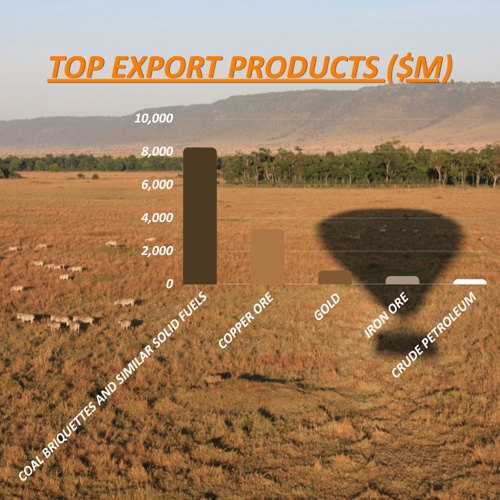
• Coal briquettes and similar solid fuels: $8.27B
• Copper Ore: $3.33B
• Gold: $849M
• Iron Ore: $508M
• Crude Petroleum: $322M
Together, coal and copper alone account for the vast majority of Mongolia's export earnings, underlining the strategic importance of its mining industry.
TOP EXPORT DESTINATIONS
Mongolian exports are highly concentrated geographically:
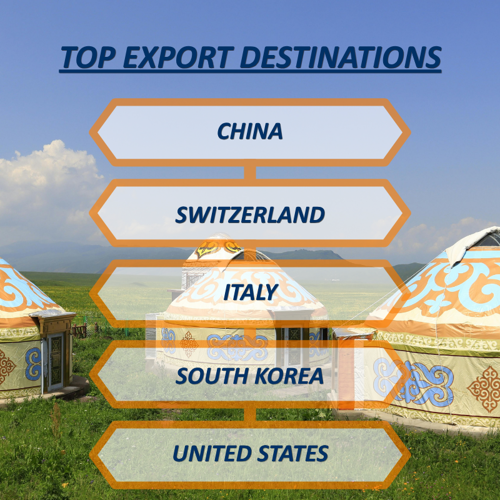
• China: $13.6B
• Switzerland: $857M
• Italy: $64.5M
• South Korea: $35.4M
• United States: $24.3M
China's dominance is particularly striking, receiving more than 90% of Mongolia's exports. This reflects not only geographic proximity but also China's enormous demand for coal, copper, and industrial raw materials.
WHAT MAKES MONGOLIA'S EXPORT SECTOR UNIQUE?
The country's export model is built around supplying essential inputs for manufacturing, construction, energy generation, and infrastructure development. As the global transition toward electrification and renewable technologies accelerates, commodities such as copper are expected to remain strategically important, placing Mongolia in an advantageous position within international supply chains.
IMPORTS
Although Mongolia is a major exporter of raw materials, it relies heavily on imports for vehicles, machinery, technology, and industrial equipment needed to support economic growth and mining activities.
TOP IMPORT PRODUCTS
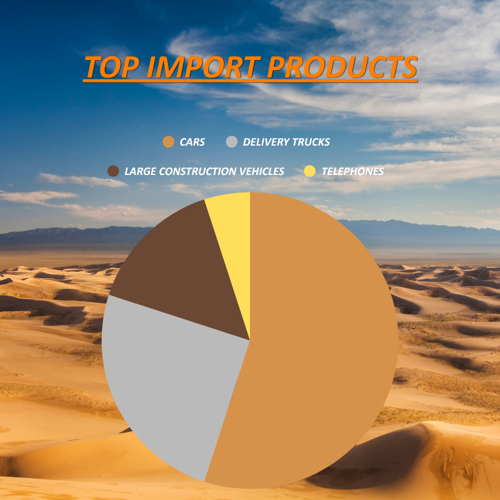
The most significant imported goods include:
• Cars: $1.03B
• Delivery Trucks: $594M
• Large Construction Vehicles: $280M
• Telephones: $215M
• Aircraft and Helicopters: $199M
These imports illustrate the country's ongoing investment in infrastructure, transportation networks, mining operations, and telecommunications.
TOP IMPORT ORIGINS
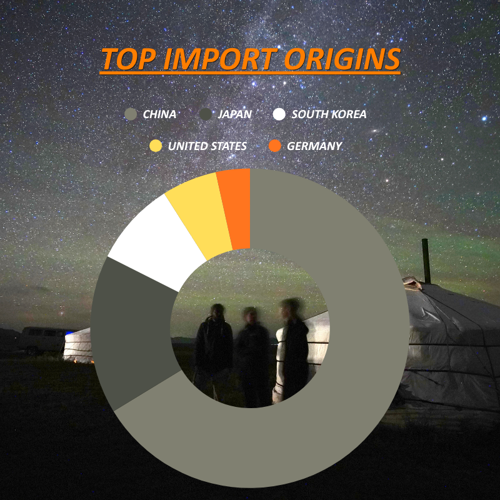
Mongolia sources most of its imports from regional and industrial powerhouses:
• China: $4.52B
• Japan: $1.1B
• South Korea: $582M
• United States: $380M
• Germany: $235M
China serves as Mongolia's largest supplier due to well-established transport links and strong commercial integration. Meanwhile, Japan, South Korea, Germany, and the United States provide vehicles, machinery, advanced equipment, and technology-intensive products.
A GROWING DEMAND FOR CAPITAL GOODS
One of the most interesting aspects of Mongolia's import structure is the prominence of machinery and transport equipment. This suggests that a significant portion of imports is directed toward productive investment rather than pure consumption, supporting future growth in mining, logistics, and industrial development.
TRADE BALANCE
Mongolia enjoys a substantial trade surplus, with exports significantly exceeding imports. The country's positive balance is largely the result of strong international demand for coal, copper, gold, and iron ore.
However, this surplus is closely tied to commodity cycles. When global mineral prices rise, export revenues increase rapidly. Conversely, fluctuations in demand from major trading partners can have an immediate impact on economic growth and public finances.
The concentration of exports toward a single destination, China, also represents both an opportunity and a challenge. While it provides Mongolia with access to one of the world's largest markets, it also increases exposure to changes in Chinese industrial activity and economic policy.
From a strategic perspective, diversification of both products and export destinations remains one of Mongolia's key long-term economic objectives.
CURIOSITY CORNER: FOUR THINGS YOU MAY NOT KNOW ABOUT MONGOLIA'S ECONOMY
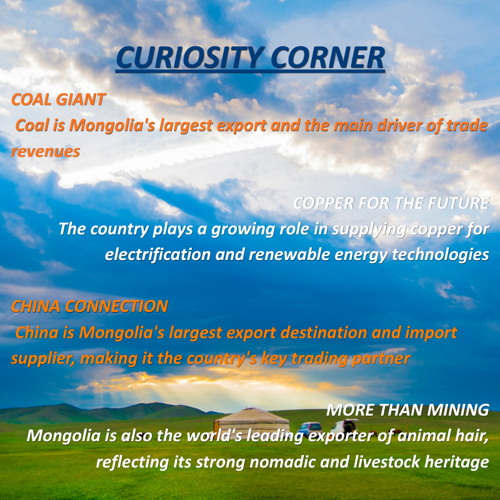
1. MONGOLIA IS A GLOBAL COAL POWERHOUSE
Coal is by far the country's most valuable export product, generating billions of dollars in annual trade and making Mongolia an essential supplier to Asian industrial markets.
2. COPPER IS BECOMING INCREASINGLY STRATEGIC
As electrification, renewable energy projects, and electric vehicles expand worldwide, copper demand continues to grow. Mongolia's large copper reserves position the country as an increasingly important player in the future of the green economy.
3. CHINA DOMINATES TRADE FLOWS
Few countries have a trade relationship as concentrated as Mongolia's. China is simultaneously the country's largest customer and largest supplier, creating one of the strongest economic interdependencies in Asia.
4. MONGOLIA IS THE WORLD'S LEADING EXPORTER OF ANIMAL HAIR
Beyond mining, Mongolia holds a unique global position in the export of animal hair products, reflecting the continued importance of traditional livestock and pastoral activities within the national economy.
CONCLUSION
Mongolia represents a compelling example of how natural resources can drive economic growth and international trade. Rich mineral deposits, expanding export revenues, and a strong trade surplus have transformed the country into a strategically important supplier of coal, copper, gold, and other key commodities.
While the economy remains highly dependent on the mining sector and on demand from China, ongoing investments in infrastructure and industrial development are creating opportunities for diversification and long-term resilience.
For companies monitoring global commodity markets, energy supply chains, and emerging Asian economies, Mongolia is a market worth watching closely. Its unique combination of natural wealth, strategic location, and growing international relevance continues to strengthen its position in global trade.