Introduction
On 30 March, the international community observes the International Day of Zero Waste, a United Nations initiative established to inspire action toward more sustainable production and consumption patterns. As the environmental, economic, and social impacts of waste become increasingly evident, this annual observance invites governments, businesses and citizens to rethink how resources are used, valued, and conserved.
For 2026, the spotlight is placed on one of the most urgent challenges of our time: food waste. Although food is essential for human survival, global systems continue to allow vast quantities of edible products to be lost or discarded. The consequences affect not only the environment but also food security, supply chain resilience, and progress toward the Sustainable Development Goals (SDGs). Addressing food waste is therefore not simply a matter of environmental responsibility, it is central to building circular, efficient and equitable economies.
A Global Crisis: Understanding the Scale of Food Waste
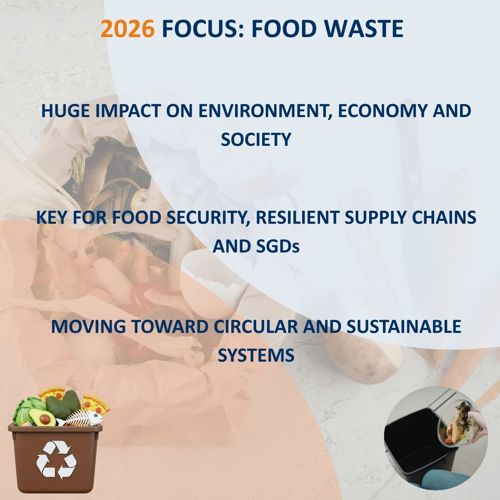
Food waste is a global problem of staggering dimensions. Each year, approximately 1 billion tonnes of edible food, close to 20% of what is available to consumers, is thrown away. This happens while millions of people worldwide face hunger or limited access to nutritious food. The paradox highlights severe inefficiencies in how food is produced, distributed and consumed.
Beyond the social implications, the environmental impacts are profound. Food waste contributes significantly to climate change, as decomposing food in landfills generates methane, a powerful greenhouse gas. Moreover, the resources used to produce wasted food (energy, land, water and labour) are themselves lost, amplifying pressure on ecosystems and natural capital.
What is particularly striking is that 60% of food waste occurs at the household level. Improper meal planning, over-purchasing, misunderstanding of expiration labels, and lack of proper storage are among the main causes. The remaining 40% originates from food services, retail, production inefficiencies and distribution gaps, reflecting systemic issues across the entire supply chain.
This complex picture reinforces a crucial point: reducing food waste requires a multi-layered approach, one that not only empowers consumers but also drives structural reform across industries and public institutions.
Government Action: Building the Policy Foundations for Circular Food Systems
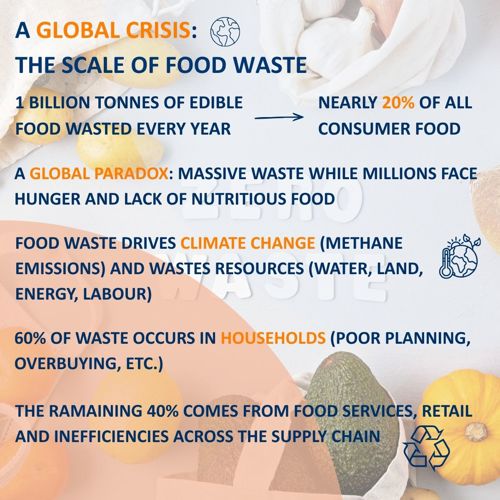
Public institutions play a critical role in setting the direction for waste reduction and sustainable consumption. Governments at national and local levels can embed food waste prevention into broader frameworks such as zero-waste strategies, climate action plans and biodiversity conservation policies. Creating measurable targets aligned with SDG 12.3 (halving global food waste) and SDG 11.6 (reducing environmental impact of cities) helps ensure accountability and long-term progress.
In addition, governments can invest in:
- data collection systems to track food waste more accurately and identify priority areas;
- public education campaigns that inform citizens about mindful consumption and proper food management;
- infrastructure improvements such as composting facilities, food recovery centres, and logistics support for surplus redistribution;
- policy incentives encouraging circular business models and responsible production.
By fostering collaboration among public agencies, private stakeholders, and civil society, governments can accelerate the transition toward resilient, low-waste food systems.
The Private Sector’s Responsibility: Innovation, Transparency and Circularity
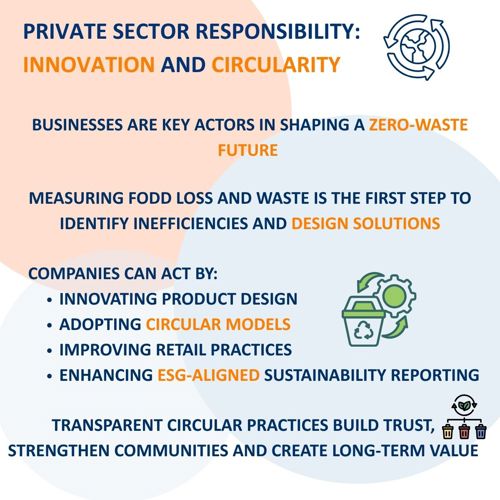
Businesses are essential actors in shaping a zero‑waste future. From agriculture to retail, each step of the food supply chain offers opportunities to prevent loss and promote sustainability.
Companies can start by measuring food loss and waste within their operations, a crucial first step toward identifying inefficiencies and designing targeted interventions. Enhanced supply chain visibility, supported by data, analytics and digital tools, can help reduce waste in distribution and storage.
The private sector can also make substantial contributions by:
- reimagining product design to extend shelf life or minimize packaging;
- adopting circular business models, including food donation, surplus redistribution and upcycling initiatives;
- improving retail practices, such as dynamic pricing for products nearing expiration or clearer labelling for consumers;
- enhancing sustainability reporting, aligning with ESG frameworks and demonstrating commitment to responsible resource use.
Transparent and fair circular models not only reduce waste but also strengthen relationships between companies and communities, establishing trust and long-term value creation.
Consumers as Catalysts: Small Actions, Big Impact
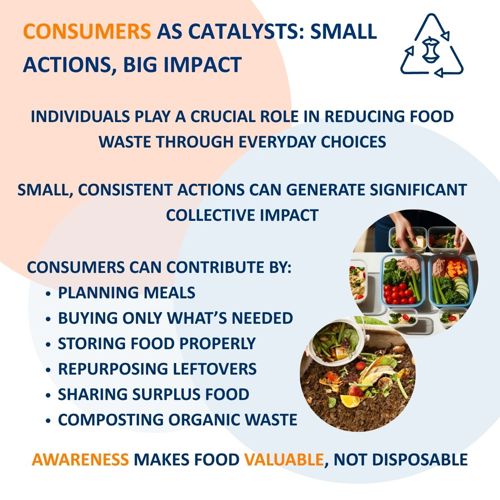
While systemic transformation requires institutional and corporate commitment, individuals play an equally significant role in reducing food waste. Everyday choices can collectively generate substantial change.
Consumers can contribute by:
- planning meals ahead, which reduces unnecessary purchases;
- buying only what is needed, prioritizing fresh, local or seasonal products;
- storing food correctly to extend its lifespan;
- repurposing leftovers into new meals rather than discarding them;
- sharing surplus food with neighbours or community networks;
- composting organic waste, converting it into a valuable resource for soil regeneration.
Increasing awareness about the resources required to produce food (water, energy, land, transportation) helps shift the perception of food from a disposable commodity to a valuable asset. When consumers value food more consciously, waste naturally decreases.
Conclusion: A Shared Commitment for a Sustainable Future
The International Day of Zero Waste is a reminder that reducing food waste is a shared responsibility. Achieving meaningful change requires collaboration between governments, businesses and consumers, each contributing unique strengths and perspectives.
By rethinking our relationship with food, redesigning systems for greater efficiency, and embracing a circular economy approach, we can significantly reduce waste and mitigate environmental impacts. A future where food is respected, valued and efficiently used is not just an environmental necessity, it is a pathway to resilient communities, healthier ecosystems and a more sustainable global economy.
On 30 March, and every day, we are called to take part in this transformation. A zero‑waste world is possible when we all work together.