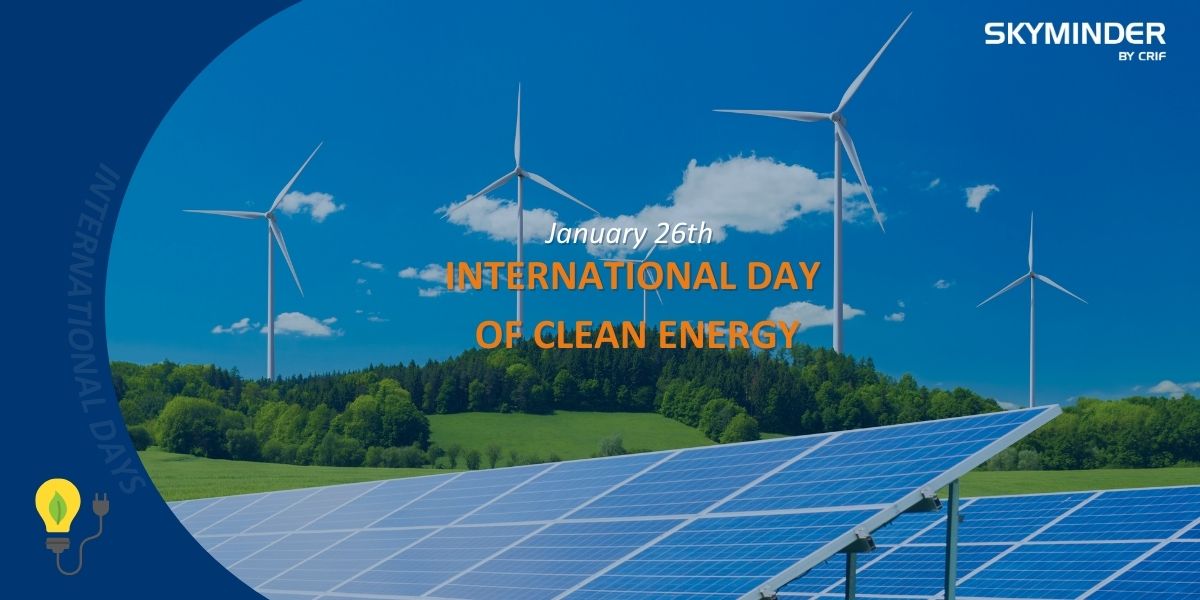
INTERNATIONAL DAY OF CLEAN ENERGY: POWERING A JUST AND SUSTAINABLE FUTURE
Every year on 26 January, the world observes the International Day of Clean Energy, a United Nations initiative that highlights the essential role of clean, affordable, and sustainable energy in shaping a healthier planet and a fairer society. Far from being a symbolic date, this day serves as a global call to accelerate the transition toward energy systems that protect the environment, support economic development, and improve people’s lives.
HISTORICAL BACKGROUND
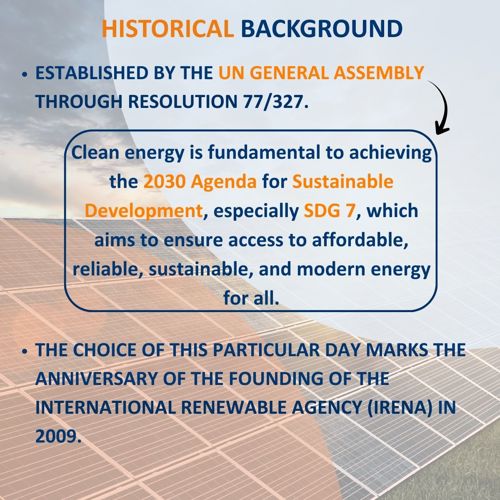
The International Day of Clean Energy was established by the UN General Assembly through resolution 77/327, recognizing that clean energy is fundamental to achieving the 2030 Agenda for Sustainable Development, especially SDG 7, which aims to ensure access to affordable, reliable, sustainable, and modern energy for all.
The choice of 26 January marks the anniversary of the founding of the International Renewable Energy Agency (IRENA) in 2009, an institution that has become a key driver of global cooperation on renewable energy.
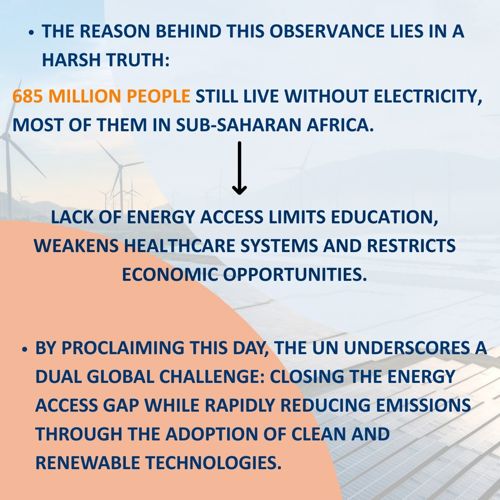
The need for this observance is rooted in a stark reality: 685 million people still live without electricity, most of them in sub‑Saharan Africa. Lack of energy access limits education, weakens healthcare systems and restricts economic opportunities. At the same time, global energy production – still heavily dependent on fossil fuels – remains one of the largest contributors to greenhouse gas emissions.
By proclaiming this day, the UN underscores a dual global challenge: closing the energy access gap while rapidly reducing emissions through the adoption of clean and renewable technologies.
CLEAN ENERGY: A GLOBAL PRIORITY
Energy lies at the heart of sustainable development. Clean energy solutions (solar, wind, hydro, geothermal, and modern bioenergy) offer a pathway to address climate change while improving quality of life worldwide.
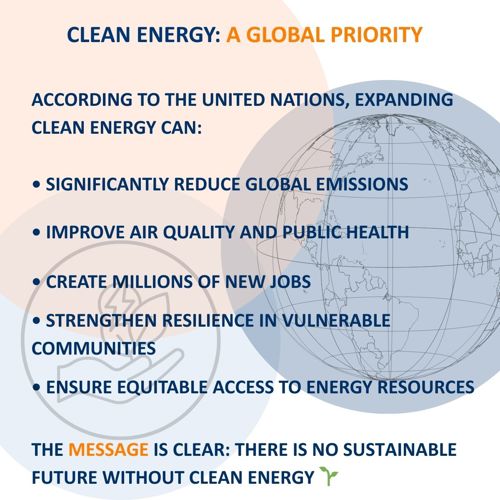
According to the United Nations, expanding clean energy can:
- significantly reduce global emissions
- improve air quality and public health
- create millions of new jobs
- strengthen resilience in vulnerable communities
- ensure equitable access to energy resources
The message is clear: there is no sustainable future without clean energy.
PATHWAYS TO CHANGE
The International Day of Clean Energy is not only a reminder for governments; it is an invitation for businesses, institutions, and individuals to take part in the global energy transition. Achieving a clean energy future requires coordinated policies, technological innovation, and everyday choices.
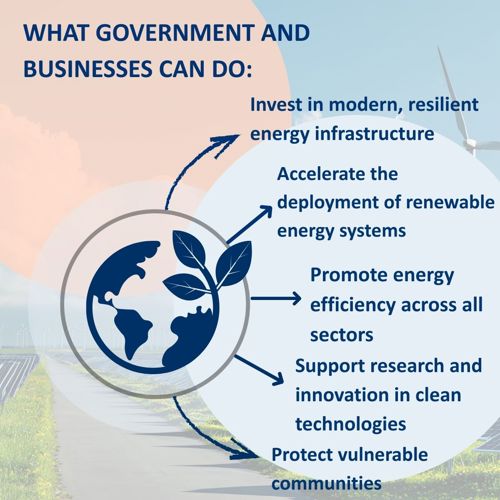
What governments and businesses can do
- Invest in modern, resilient energy infrastructure
- Accelerate the deployment of renewable energy systems
- Promote energy efficiency across all sectors
- Support research and innovation in clean technologies
- Ensure a just transition that protects vulnerable communities
What individuals can do
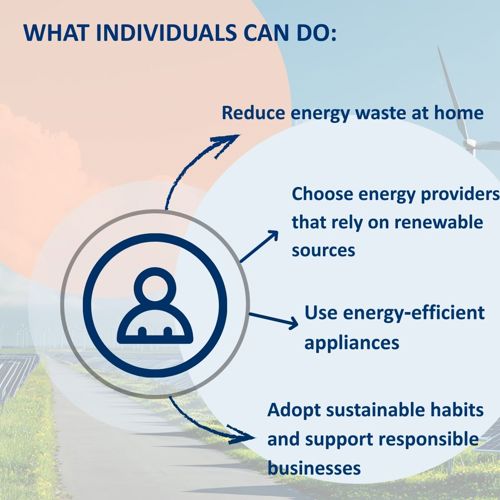
The UN highlights that personal actions also contribute to reducing emissions and supporting clean energy adoption:
- Reduce energy waste at home
- Choose energy providers that rely on renewable sources
- Use energy‑efficient appliances
- Adopt sustainable habits such as reducing food waste, repairing and reusing goods, and supporting responsible businesses
These actions align with the UN’s ActNow campaign, which encourages everyday climate‑friendly behaviors.
A CALL FOR GLOBAL SOLIDARITY
The UN Secretary‑General has emphasized that the energy transition must be swift, inclusive, and fair, ensuring that every person, regardless of geography or income, can benefit from clean energy and the opportunities it creates.
The coming years will be decisive. Renewable energy is projected to become the world’s largest source of electricity, marking a historic shift but also highlighting the need for continued commitment and investment.
CONCLUSION
The International Day of Clean Energy reminds us that energy is more than a commodity: it is a driver of development, a foundation for human well‑being, and a key to addressing the climate crisis. Celebrating this day means recognizing the transformative power of clean energy and committing, collectively and individually, to building a future that is more equitable, resilient, and sustainable.
Every policy matters. Every investment matters. Every choice matters. And above all, every person matters in the journey toward a clean‑energy world.
Source: List of International Days and Weeks | United Nations