INTERNATIONAL DAY OF BANKS: STRENGHTENING FINANCE FOR SUSTAINABLE DEVELOPMENT
On December 4th, the world observes the International Day of Banks, established by the United Nations General Assembly in 2019 to recognize the vital role banks play in advancing sustainable development and ensuring global financial stability. This day highlights how financial institutions can mobilize resources, foster resilience, and support societies in achieving the UN’s 2030 Agenda.
WHY BANKS MATTER
Banks are central to modern economies and are important because they:
- Mobilize investment for infrastructure, education, and healthcare.
- Provide credit to small and medium-sized enterprises, driving innovation and job creation.
- Support governments and communities in responding to economic shocks and emergencies.
- Enable long-term financing for climate action and sustainable energy transitions.
By strengthening financial systems, banks contribute directly to the Sustainable Development Goals (SDGs), ensuring progress is inclusive and resilient.
HISTORICAL BACKGROUND
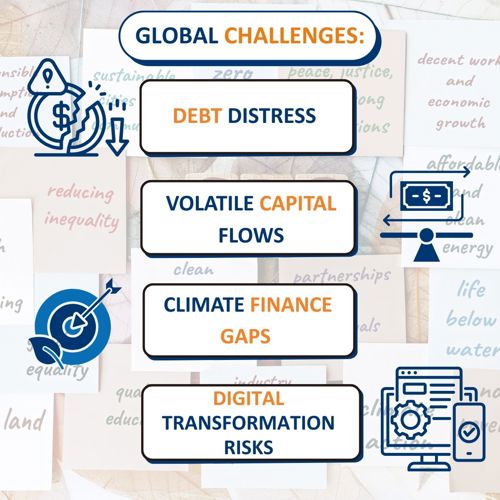
The International Day of Banks is a relatively new observance, but it is deeply connected to the broader journey of global cooperation for sustainable development. In 2015, the United Nations adopted the 2030 Agenda for Sustainable Development, setting out 17 ambitious goals to tackle poverty, inequality, and climate change. Achieving these goals required not only political will but also strong financial systems capable of mobilizing resources and channeling them where they are most needed.
Recognizing this, in 2019 the UN General Assembly officially proclaimed December 4th as the International Day of Banks. The resolution highlighted the importance of both national and multilateral development banks in supporting investment, stabilizing economies, and ensuring that financial flows align with sustainable priorities.
Since then, the day has served as a reminder that banks are more than custodians of capital: they are partners in building resilience, especially in times of crisis. Whether responding to economic downturns, financing climate action, or supporting small businesses, banks have become essential actors in shaping a future where financial stability and sustainable development go hand in hand.
GLOBAL CHALLENGES
The observance also draws attention to pressing financial challenges:
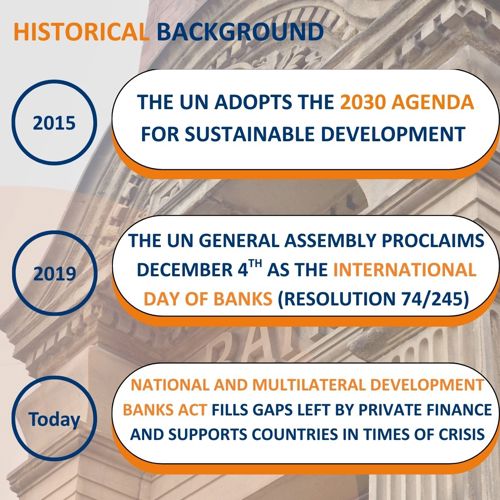
- Debt distress: Many developing countries face unsustainable debt levels, limiting investment in social and environmental priorities.
- Volatile capital flows: Instability in global markets can deepen inequalities.
- Climate finance gaps: Despite progress, trillions are still needed annually to meet climate goals.
- Digital transformation risks: While offering opportunities, digital finance can also lead to exclusion and concentration of power.
RECENT STATISTICS AND ACHIEVEMENTS
- In 2024, multilateral development banks (MDBs) delivered a record $137 billion in climate finance, a 10% increase from the previous year.
- Of this, $85 billion was directed to low- and middle-income economies, highlighting the focus on vulnerable regions.
- MDBs also mobilized 33% more private finance, showing their ability to leverage resources beyond public funds.
- Looking ahead, MDBs aim to scale climate finance to $170 billion annually by 2030, reinforcing their role in shaping sustainable financial frameworks.
PRINCIPLES FOR RESPONSIBLE BANKING
Over 190 banks worldwide have joined the Principles for Responsible Banking, committing to:
- Align portfolios with the SDGs and the Paris Agreement.
- Report transparently on social and environmental impacts.
- Build trust with citizens and businesses through accountability.
2025 THEME: FINANCE FOR GLOBAL RESILIENCE
This year’s focus is on resilient finance in times of multiple crises (economic, climate, and social).
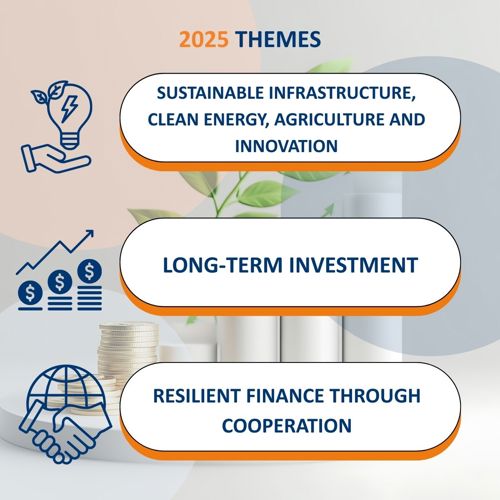
- Development banks are called to expand support for sustainable infrastructure, clean energy, agriculture, and innovation.
- Integrated financial frameworks are needed to reduce uncertainty and encourage long-term investment.
- Collaboration between national and multilateral banks can amplify resources and expertise, strengthening resilience in fragile economies.
CONCLUSIONS
The International Day of Banks reminds us that finance is not neutral. It can perpetuate inequality or become a powerful tool for progress. Governments, banks, businesses, and citizens all share responsibility in shaping financial systems that are fair, inclusive, and sustainable.
By recognizing the role of banks in sustainable development, December 4th becomes more than a date on the calendar, but a call to build financial systems that serve people and planet alike.
Source: List of International Days and Weeks | United Nations