INTERNATIONAL ANTI-CORRUPTION DAY: A CALL FOR INTEGRITY AND JUSTICE
Every year on December 9th, the world comes together to confront one of its most pervasive threats: corruption. Known as International Anti-Corruption Day, this occasion is more than a symbolic date on the calendar: it is a rallying point for governments, civil society, businesses, and international organizations to reaffirm their commitment to integrity, transparency, and accountability.
Corruption is the abuse of entrusted power for private gain and is a complex social, political and economic phenomenon that affects every country, eroding trust, weakening democracy, hindering economic development and deepening inequality and poverty. Its consequences are profound:
- Democratic institutions are undermined, as corruption distorts electoral processes and weakens the rule of law;
- Economic development is stunted, discouraging foreign investment and suffocating small businesses under the weight of illicit “start-up costs”;
- Governmental stability is compromised, creating bureaucratic systems that thrive on bribes rather than service.
In sort: corruption robs societies of fairness, opportunity and trust.
ORIGINS AND RECOGNITION OF ANTI-CORRUPTION DAY
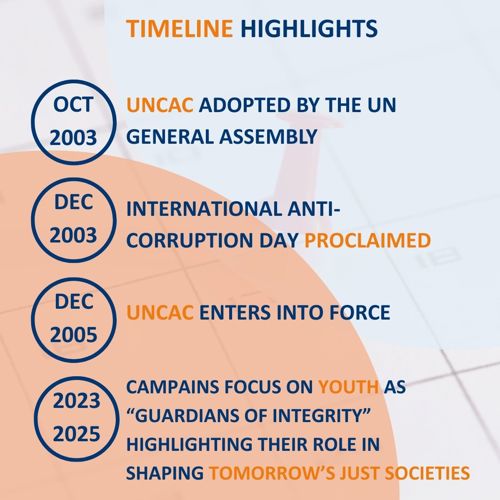
International Anti-Corruption Day was established following the adoption of the United Nations Convention against Corruption (UNCAC) on 31 October 2003, the first legally binding global instrument to fight corruption. Soon after, on December 9, 2003, the UN General Assembly officially proclaimed International Anti-Corruption Day to raise awareness of corruption’s devastating impact and to promote the Convention’s role in combating and preventing it.
The Convention entered into force in December 2005, and today, with 190 parties, it represents near-universal recognition of the importance of good governance and collective action. Over the years, campaigns have increasingly highlighted the role of youth and civil society organizations, amplifying voices of integrity and demanding accountability.
WHY FIGHTING CORRUPTION IS IMPORTANT
Corruption is not just a crime, it is a systemic threat that:
- Undermines democracy by distorting elections and weakening institutions
- Slows economic development by discouraging investment and stifling entrepreneurship
- Creates instability by eroding trust in government and fueling inequality
- Blocks sustainability by diverting resources from essential services like health, education, and infrastructure
By tackling corruption, societies can build resilient economies, strengthen the rule of law, and ensure that resources serve the public good rather than private interests.
WHAT MAKES INTERNATIONAL ANTI-CORRUPTION DAY SIGNIFICANT
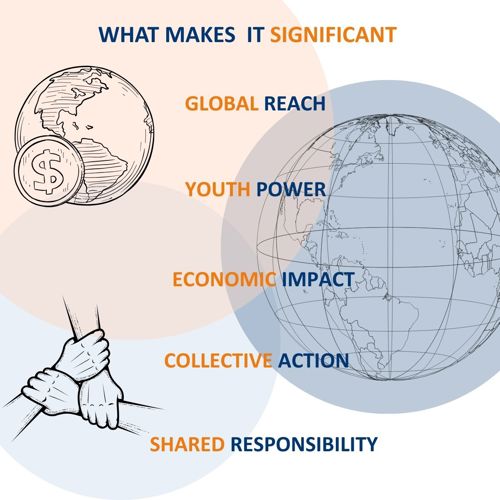
International Anti-Corruption Day reflects a truly global commitment: with 190 parties to the UN Convention against Corruption, it is one of the most widely adopted treaties in history.
Central to this effort is the power of youth, with 1.9 billion young people worldwide whose voices are vital in shaping transparent and accountable societies.
The economic cost of corruption is staggering, draining trillions from economies and widening inequality, which makes fighting it both a moral and economic necessity.
Progress depends on collective action, led by organizations such as UNODC and UNDP, but requiring governments, businesses, and civil society to work together.
Above all, the day underscores a sense of shared responsibility, reminding us that integrity must be upheld by everyone if we are to build fairer and more resilient communities.
WHY THIS DAY IS IMPORTANT
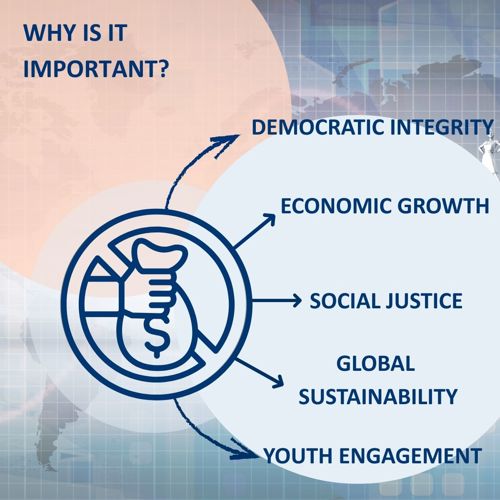
International Anti-Corruption Day matters because corruption undermines the very foundations of society. By protecting democratic integrity, it ensures elections remain fair and institutions strong. Tackling corruption also fuels economic growth, encouraging investment and entrepreneurship, while promoting social justice by directing resources to communities that need them most.
On a global level, the fight against corruption supports sustainability, aligning with the UN’s vision for peace, justice, and strong institutions under SDG 16. Just as importantly, it highlights the role of youth engagement, empowering the next generation to lead with transparency and integrity, and to build societies rooted in accountability and trust.
CONCLUSIONS
International Anti-Corruption Day is a powerful reminder that corruption is not inevitable, it is preventable. On December 9th, the world celebrates progress while renewing its commitment to transparency, accountability, and justice. By uniting against corruption, we lay the foundation for societies that are fairer, more resilient, and more sustainable, ensuring that integrity becomes the cornerstone of global development.
Source: List of International Days and Weeks | United Nations