
OVERVIEW
Tanzania, located on the eastern coast of Africa, is a country of vast savannas, tropical coastlines, and cultural diversity. From the Serengeti’s sweeping plains to Mount Kilimanjaro’s snow-capped peak and the spice-scented streets of Zanzibar, Tanzania embodies natural wonder and heritage. Its culture blends Swahili traditions with Arab, Indian, and European influences, expressed through music, colorful fabrics, and a cuisine rich in seafood, rice, and tropical fruits.
Since independence in 1961, Tanzania has pursued steady development, relying on agriculture, mining, and tourism. In recent years, the economy has diversified, with growing sectors in manufacturing and services. Dar es Salaam, the commercial capital, is a bustling port city and gateway to trade, while Dodoma serves as the political capital. Arusha thrives as a hub for tourism and diplomacy, hosting international organizations and conferences.
In 2023 Tanzania ranked:
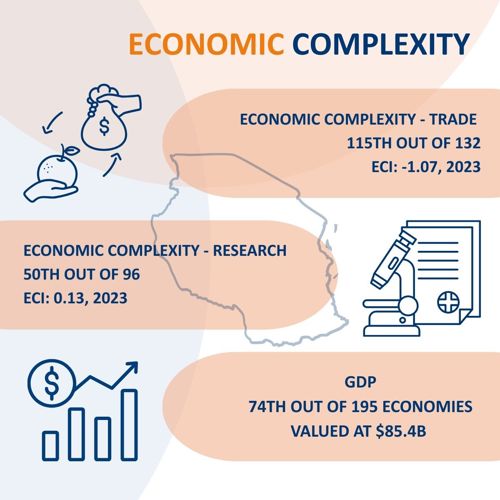
- 74th in terms of GDP, valued at $85.4B out of 195 economies
- 99th in terms of total exports, worth $7.9B, out of 226 countries
- 152nd in terms of GDP per capita, with current US$, out of 196 economies
- 99th in Economic Complexity Index (Trade)
ECONOMIC COMPLEXITY RATE
EXPORT
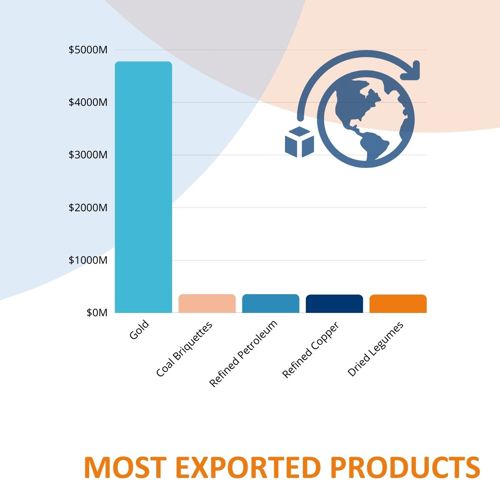
In 2023, Tanzania’s principal exports were:
- Gold – $4.78B
- Coal Briquettes – $358M
- Refined Petroleum – $355M
- Refined Copper – $348M
- Dried Legumes – $348M
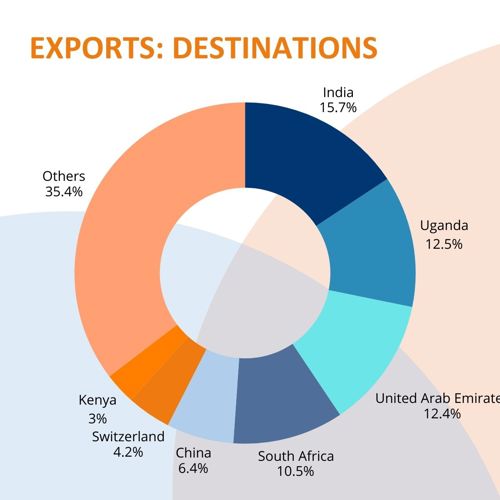
Top destinations for Tanzanian exports:
- India – $1.77B
- United Arab Emirates – $1.36B
- South Africa – $1.01B
- Kenya – $617M
- China – $457M
Tanzania was among Africa’s largest exporters of gold and tobacco, reflecting its resource-driven economy.
IMPORT
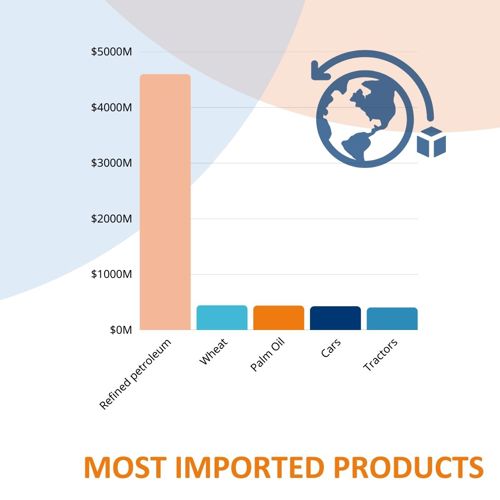
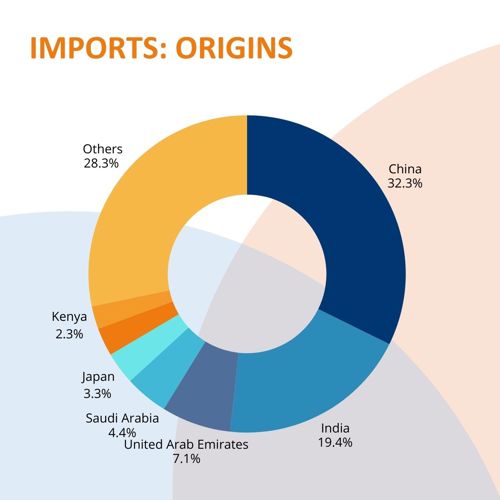
In 2023, Tanzania imported a total of $15.5B, ranking 92nd globally. Main imports included:
- Refined Petroleum – $4.6B
- Wheat – $466M
- Palm Oil – $349M
- Cars – $426M
- Tractors – $406M
Key suppliers were:
- China – $6.77B
- India – $4.06B
- United Arab Emirates – $1.49B
- Saudi Arabia – $924MB
- Japan – $691M
YEARLY TRADE
Between 2018 and 2023, Tanzania’s exports grew from $5.1B to $7.9B, an increase of $2.8B. From 2022 to 2023, exports rose by 12.5% (+$878M), driven largely by gold and petroleum products.
CURIOSITY CORNER
Beyond minerals and agriculture, Tanzania’s cultural exports are distinctive. The country is famous for Tanzanite, a rare gemstone found only near Mount Kilimanjaro, prized worldwide for its deep blue-violet hues. Tanzania is also known for its Swahili culture, which has influenced art, literature, and music across East Africa. These exports highlight how Tanzania’s natural resources and cultural heritage resonate globally.
CONCLUSIONS
In 2023, Tanzania stood out as a growing East African economy, balancing resource exports with agricultural and cultural strengths. Its trade profile reflected reliance on gold and petroleum, but also diversification into tobacco, coffee, and fisheries. Long-term opportunities lie in renewable energy, infrastructure, and tourism, leveraging its strategic location and natural assets.
Culturally, Tanzania’s tanzanite, Swahili traditions, and vibrant arts showcase how heritage and modernity coexist, reinforcing the nation’s appeal to investors, partners, and visitors alike.