OVERVIEW
Slovakia is a landlocked country in Central Europe, distinguished by its dramatic mountain ranges, medieval castles, and vibrant cultural traditions. From the snow-capped peaks of the High Tatras to the rolling vineyards of the Tokaj region, the nation offers a landscape that is both rugged and enchanting. Its culture blends Slavic roots with Austro-Hungarian influences, expressed through lively folk festivals, wooden churches, and a cuisine that ranges from hearty bryndzové halušky (potato dumplings with sheep cheese) to sweet trdelník.
Since gaining independence in 1993, Slovakia has transformed into one of Europe’s most dynamic industrial economies, particularly renowned for its automotive sector. Membership in the European Union and the Eurozone has further strengthened its economic integration, attracting foreign investment and fostering rapid modernization. Yet, beyond industry, Slovakia remains deeply connected to its rural heritage, where crafts, traditions, and community life continue to thrive.
Bratislava, the capital, pulses with contrasts: baroque palaces and Gothic cathedrals stand beside modern glass towers, while the Danube River links the city to Vienna and Budapest. Beyond the capital, Košice shines as a cultural hub with its Gothic St. Elisabeth Cathedral, Žilina thrives as a center of commerce, and Banská Bystrica reflects the country’s mining heritage. Together, these cities embody Slovakia’s spirit of resilience, creativity, and tradition at the crossroads of Europe.
IN 2023 SLOVAKIA RANKED
- 61st in terms of GDP, valued at $133B out of 195 economies
- 38th in terms of total exports, worth $119B out of 226 countries
- 51st in terms of GDP per capita, out of 196 economies
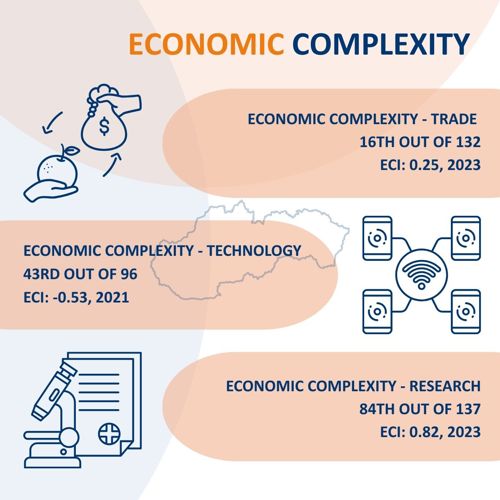
- 16th in Economic Complexity Index (Trade), highlighting its advanced industrial base
ECONOMIC COMPLEXITY RANKING
EXPORT
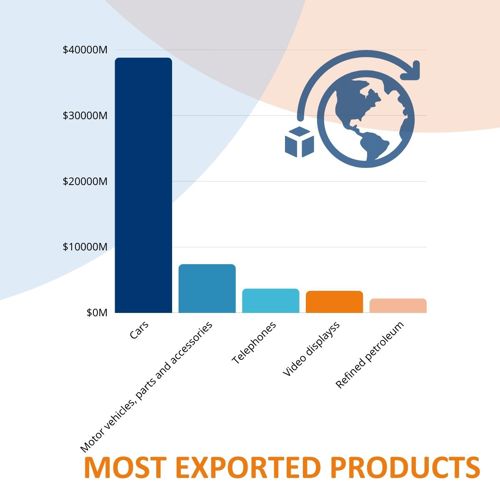
In 2023, Slovakia’s principal exports included:
- Cars – $28.7B
- Motor vehicle parts – $11.3B
- Computers – $5.6B
- Broadcasting equipment – $4.9B
- Electrical transformers – $3.2B
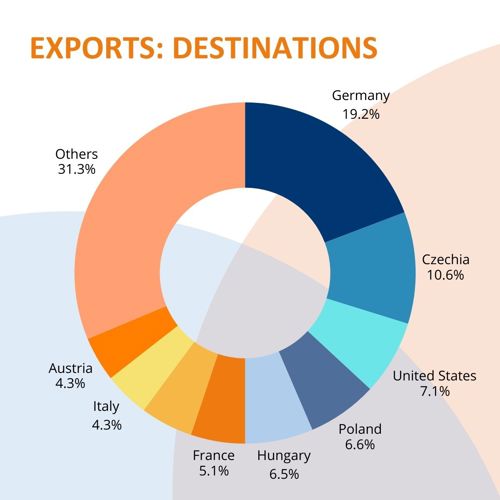
Main destinations for Slovak exports were:
- Germany – $23.9B
- Czech Republic – $12.4B
- Poland – $9.7B
- France – $8.6B
- Hungary – $7.1B
Slovakia ranked among the world’s largest exporters of cars and automotive components, confirming its role as a European automotive powerhouse.
IMPORT
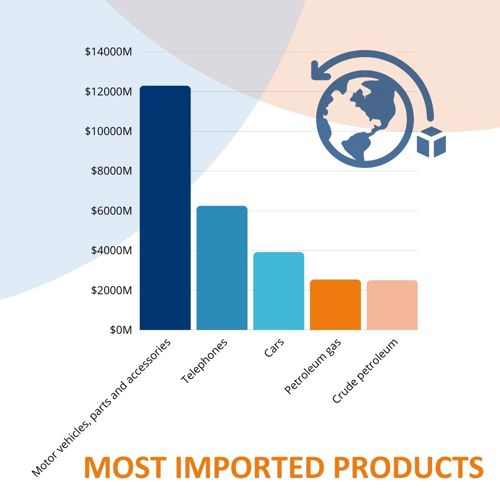
In 2023, Slovakia imported a total of $113B, ranking 39th globally. Key imports included:
- Cars – $8.5B
- Motor vehicle parts – $7.9B
- Crude Petroleum – $6.7B
- Refined Petroleum – $5.9B
- Computers – $4.1B
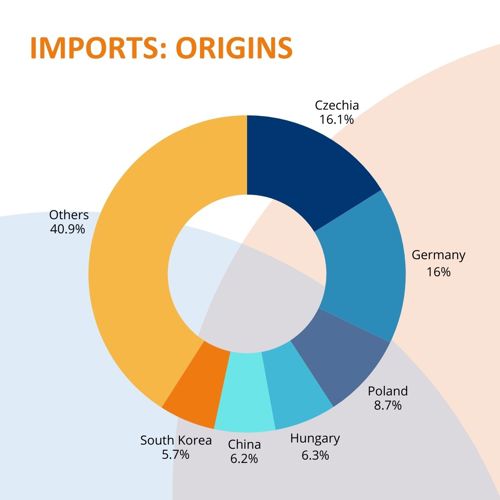
These goods were mainly supplied by:
- Germany – $20.7B
- Czech Republic – $13.8B
- Poland – $11.2B
- China – $10.5B
- Hungary – $7.6B
YEARLY TRADE
Between 2018 and 2023, Slovak exports grew steadily, rising from about $111B to $119B. The automotive sector remained the backbone of trade, while electronics and machinery consolidated their share. Imports followed a similar trajectory, reflecting Slovakia’s deep integration into European supply chains.
CURIOSITY CORNER
Beyond cars and electronics, Slovakia is renowned for its crystal glassware and wooden folk crafts, which embody centuries of artisanal tradition. Another cultural export is Slovak wine, particularly from the Tokaj region, prized for its sweet and aromatic character. These products highlight how Slovakia balances industrial strength with cultural heritage, offering a distinctive identity on the global stage.
CONCLUSIONS
In 2023, Slovakia confirmed its role as a dynamic industrial hub in Central Europe, with the automotive sector driving exports and imports closely tied to European partners. Its trade profile reflects both high economic complexity and reliance on regional supply chains. Looking ahead, opportunities lie in green technologies, digitalization, and renewable energy, while cultural exports such as wine and crafts continue to showcase the country’s heritage.
Slovakia’s blend of industrial modernity and cultural tradition makes it an attractive market for investors and a fascinating destination for visitors, embodying resilience and creativity at the crossroads of Europe.