
OVERVIEW
The Philippines is an archipelago in Southeast Asia, distinguished by its dazzling coastlines, layered history, and the warmth of its people. From the emerald rice terraces of Luzon to the turquoise waters of Palawan, the country offers a mosaic of natural wonders. Its culture blends indigenous traditions with Spanish, American, and Asian influences, expressed through lively festivals, soulful music, and a cuisine that ranges from savory adobo to sweet halo-halo.
Rich in resources, the Philippines has the potential to build a strong industrial economy, but the country remains largely agricultural. Toward the end of the 20th century, rapid industrial expansion was spurred by a high degree of domestic and foreign investment and that growth, simultaneously, contributed to severe degradation of the environment. The Philippines also emerged as a regional leader in education during the late 20th century, with a well-established public school and university system, and by the early 21st century the country had one of the highest literacy rates in Asia.
Manila, the capital, pulses with energy and contrasts. Colonial-era walls of Intramuros stand beside modern skyscrapers, while bustling markets and jeepneys reflect everyday life. Beyond the capital, Cebu thrives as a hub of commerce and heritage, Davao is known for its durian and Mount Apo, and Iloilo showcases graceful architecture and vibrant arts. Together, these cities embody the Philippines’ spirit of resilience, creativity, and community.
In 2023 Philippines ranked:
- 33rd in terms of GDP, valued at $437B out of 195 economies in the world
- 43rd in terms of total exports, with exports worth $95.4B, out of 226 countries
- 133rd in terms of GDP per capita, valued with current US$, out of 196 economies in the world
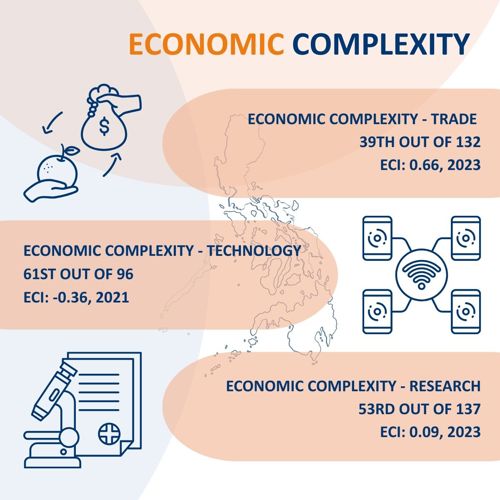
ECONOMIC COMPLEXITY RANKING
EXPORT
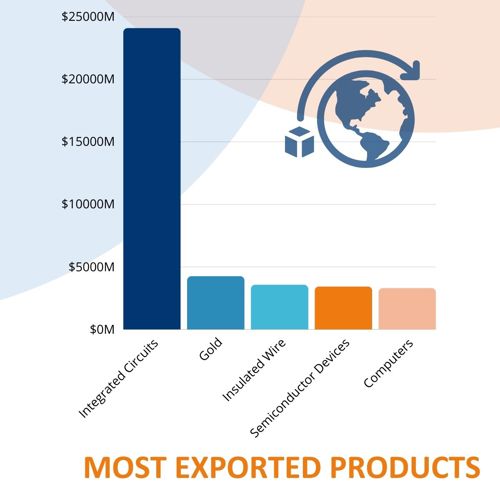
In 2023 it was estimated that the principal products exported from the Philippines were:
- Integrated Circuits – $24.1B
- Gold – $4.26B
- Insulated Wire – $3.58B
- Semiconductor Devices – $3.44B
- Computers – $3.31B
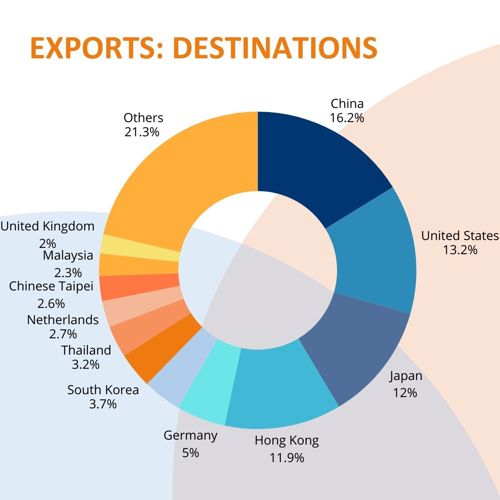
On the other hand, the commonest destinations for Philippine exports were:
- China – $15.5B
- United States – $13.2B
- Japan – $11.4B
- Hong Kong – $11.4B
- Germany – $4.78B
Lastly, it was revealed that, in the latest year, the Philippines was among the world’s largest exporters of:
- Integrated Circuits – $18.1B
- Gold – $1.77B
IMPORT
In 2023, the Philippines imported a total of $143B, making it the number 34 importer in the world.
During the last five reported years, the exports of the Philippines have increased by $17.8B, from $126B in 2018 to $143B in 2023.
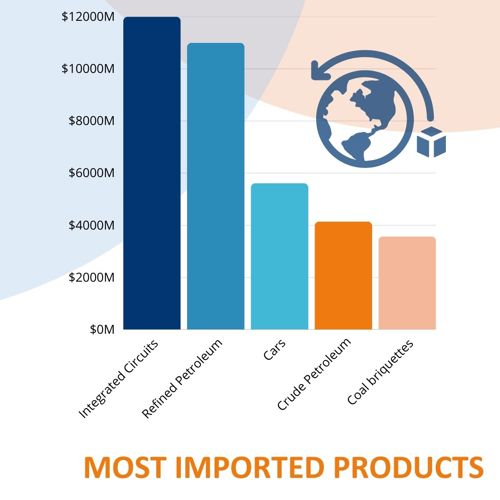
The most recent imports are led by:
- Integrated Circuits – $12B
- Refined Petroleum – $11B
- Cars – $5.61B
- Crude Petroleum – $4.14B
- Coal Briquettes – $3.57B
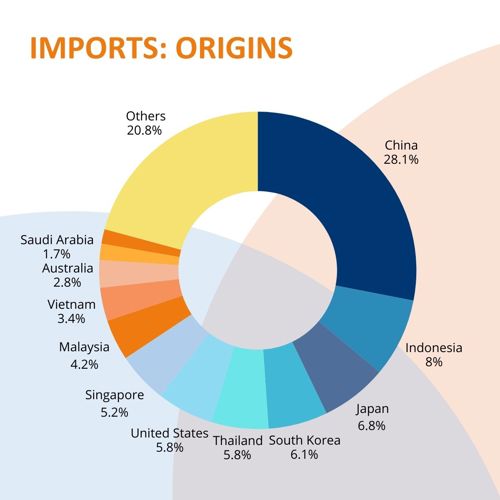
These goods were mainly supplied by:
- China – $41.2B
- Indonesia – $11.8B
- Japan – $9.94B
- South Korea – $8.88B
- Thailand – $8.53B
YEARLY TRADE
During the last five reported years, the exports of Philippines have increased by $2.39B from $93B in 2018 to $95.4B in 2023.
The most recent exports are led by:
- Integrated Circuits – $24.1B
- Gold – $4.26B
- Insulated Wire – $3.58B
- Semiconductor Devices – $3.44B
- Computers – $3.31B
They were exported primarily to:
- China – $15.5B
- United States – $13.2B
- Japan – $11.4B
- Hong Kong – $11.4B
- Germany – $4.78B
CURIOSITY CORNER
Beyond electronics and energy, one fascinating cultural export of the Philippines is dried mangoes. Known for their vibrant sweetness and chewy texture, Philippine mangoes, especially those from Cebu, are considered among the best in the world.
They are so iconic that they’ve become a popular souvenir for travelers and a beloved snack across Asia and North America.
This product reflects not only the country’s fertile tropical climate but also its ability to turn a traditional fruit into a globally recognized delicacy.
CONCLUSIONS
In 2023, the Philippines stood out as a dynamic and resilient market in Southeast Asia, with its electronics sector, energy imports, and growing services industry continuing to expand. The country’s trade profile reflected both its role as a manufacturing hub and its reliance on global supply chains, positioning it as an increasingly important player in the region.
Its market also offered promising prospects for long‑term development, particularly in technology, infrastructure, and renewable energy, while the youthful population and strong diaspora connections added to its global competitiveness. Beyond industry, the Philippines’ cultural exports, such as the world‑renowned dried mangoes from Cebu, highlighted how traditional products can achieve international recognition, symbolizing the blend of heritage and modernity that keeps the nation attractive to investors and visitors alike.