OVERVIEW
Lithuania, the southernmost of the Baltic states, is a land of forests, lakes, and a proud cultural heritage. Its landscapes range from the Curonian Spit’s shifting dunes to the medieval castles of Trakai, while its history reflects centuries of resilience at the crossroads of Europe. Lithuanian identity is deeply rooted in ancient pagan traditions, later shaped by Christianity and European influences, expressed today through folk songs, vibrant festivals, and a cuisine that celebrates rye bread, potatoes, and cepelinai dumplings.
Emerging from Soviet rule in 1990, Lithuania rapidly integrated into Western institutions, joining the EU and NATO in 2004. Its economy transitioned from agriculture and heavy industry to a diversified structure with strong services, manufacturing, and technology sectors. Education and literacy rates remain high, and Vilnius, the capital, has become a hub for fintech and startups, blending baroque architecture with modern innovation. Beyond Vilnius, Kaunas thrives as a cultural capital, Klaipėda connects the nation to the sea, and Šiauliai is known for the Hill of Crosses, a symbol of faith and endurance.
In 2023 Lithuania ranked:
- 78th in terms of GDP, valued at $79.8B out of 195 economies
- 63rd in terms of total exports, worth $43B, out of 226 countries
- 49th in terms of GDP per capita, with current US$, out of 196 economies
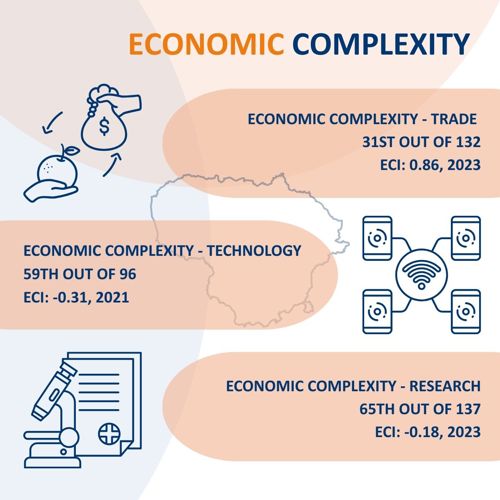
ECONOMIC COMPLEXITY RANKING
EXPORT
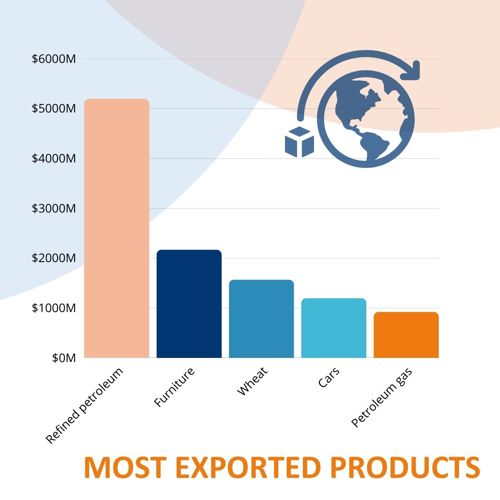
In 2023, Lithuania’s principal exports were:
- Refined Petroleum – $5.2B
- Furniture – $2.17B
- Wheat – $1.57B
- Cars – $1.2B
- Petroleum Gas – $923M
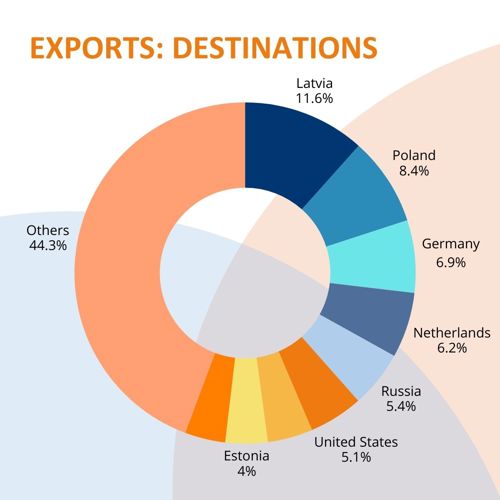
Top destinations for Lithuanian exports:
- Latvia – $5B
- Poland – $3.61B
- Germany – $2.96B
- Netherlands – $2.59B
- Russia – $2.32B
IMPORT
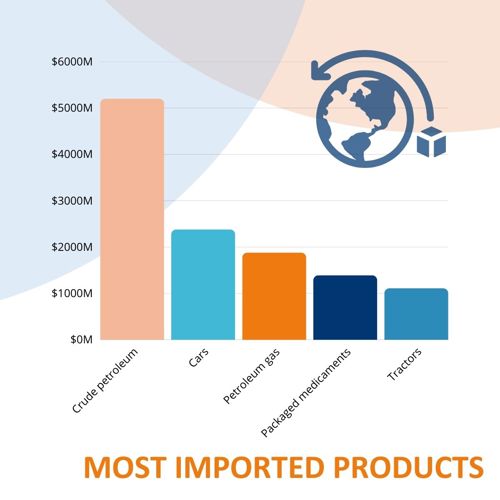
In 2023, Lithuania imported a total of $46.5B, ranking 60th globally. Main imports included:
- Crude Petroleum – $5.2B
- Cars – $2.38B
- Petroleum Gas – $1.88B
- Packaged Medicaments – $1.39B
- Tractors – $1.11B
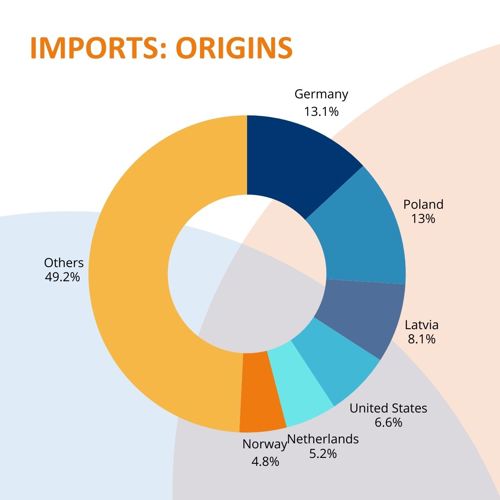
Key suppliers were:
- Germany – $6.04B
- Poland – $6B
- Latvia – $3.75B
- United States – $3.05B
- Netherlands – $2.42B
YEARLY TRADE
Between 2018 and 2023, Lithuania’s exports grew from $31.4B to $43B, an increase of $11.6B. Despite a slight contraction in 2022–2023 (-8.96%), the country maintained strong trade flows, particularly in energy and manufacturing.
CURIOSITY CORNER
Beyond petroleum and machinery, Lithuania’s cultural exports are remarkable. The country is renowned for its amber jewelry, often called “Baltic gold,” prized worldwide for its warm hues and historical significance. Lithuania also has a thriving creative industries sector, from contemporary opera (Sun & Sea, winner of the Golden Lion in Venice) to video game development and design startups. These exports highlight how Lithuania blends tradition with modern creativity, making its cultural footprint as notable as its economic one.
CONCLUSION
In 2023, Lithuania stood out as a dynamic Baltic economy, balancing industrial exports with a growing services and technology sector. Its trade profile reflected both reliance on energy imports and strength in manufacturing, positioning it as a competitive EU member state. Long-term prospects lie in renewable energy, digital innovation, and logistics, leveraging its strategic location between Western Europe and Eastern markets.
Culturally, Lithuania’s amber, folk traditions, and creative industries showcase how heritage and modernity coexist, reinforcing the nation’s appeal to investors, partners, and visitors alike.