KETCHUP SPEAKS ITALIAN: WHY ITALY IS THE WORLD’S LEADING EXPORTER
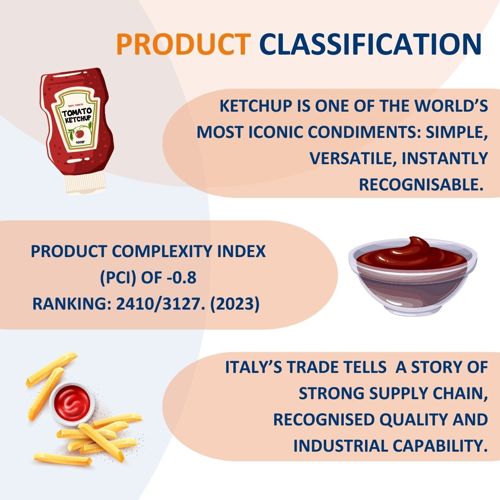
Ketchup is one of the world’s most iconic condiments: simple, versatile, instantly recognizable. Born as a fermented Asian sauce and transformed into a tomato-based condiment in the United States, it has become a global staple found on tables across every continent. Yet there is a surprising fact that often goes unnoticed: Italy is the world’s largest exporter of ketchup and other tomato-based sauces.This leadership reflects far more than a global taste preference: it tells a story of strong supply chains, recognized quality, and industrial capability.
ITALY LEADS THE GLOBAL KETCUP MARKET
In 2023 Italy confirms its dominant position:
- Italian exports: $464M
- Global market share: 17.3%
- World ranking: #1 exporter
- Main competitors: United States ($386M) and the Netherlands ($371M)
- Italian trade surplus: +$419M, the highest worldwide
Ketchup ranks as the 283rd most exported product from Italy, demonstrating how even non-traditional categories can become strategic assets for the country’s agri-food sector.
KEY DESTINATION MARKETS
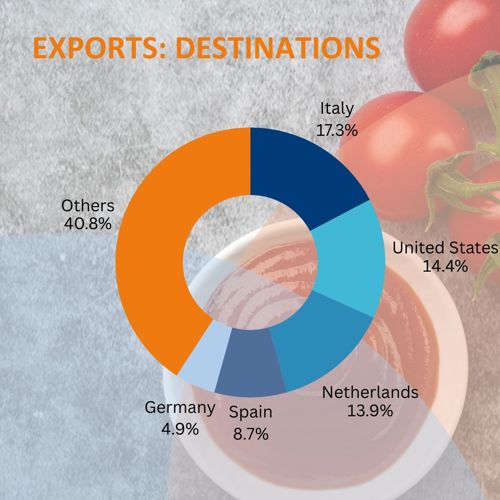
The main export destinations are:
- Italy: $518M
- United States: $419M
- Netherlands: $405M
- Spain: $250M
- Germany: $137M
Fastest-growing markets (2022–2023)
- France: +$16.7M
- United Kingdom: +$8.57M
- Germany: +$7.02M
These trends highlight increasing demand in Italy’s key European partners.
IMPORTS:
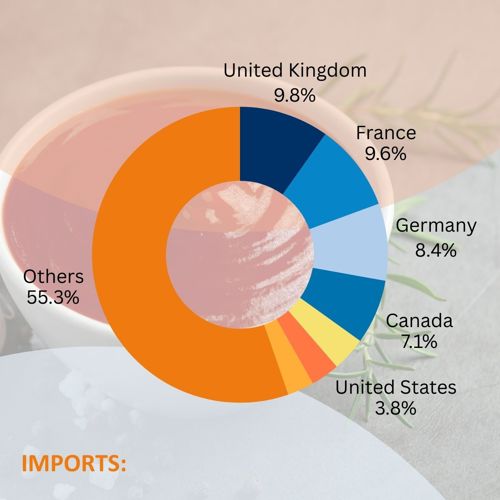
In 2024 the main importers of ketchup were:
- United Kingdom: $293M
- Germany: $265M
- France: $263M
- Canada: $210M
- United States: $115M
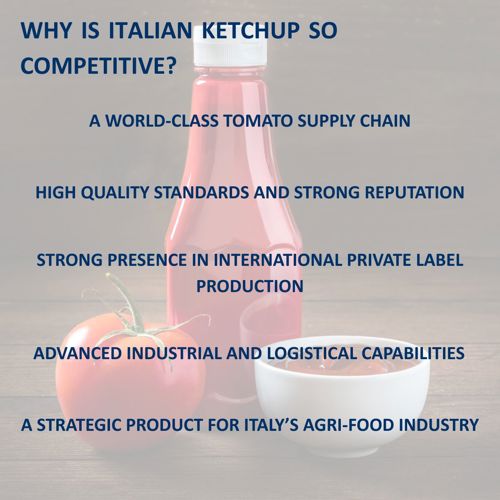
WHY IS ITALIAN KETCHUP SO COMPETITIVE?
1. A world-class tomato supply chain
Italy is a global leader in tomato processing, with highly specialized production districts capable of ensuring quality, traceability, and consistent volumes.
2. High quality standards and strong reputation
“Made in Italy” remains a powerful global brand, even in categories outside traditional cuisine. Italian producers invest heavily in R&D, food safety, and product innovation.
3. Strong presence in international private label production
A significant share of the ketchup sold in European supermarkets is produced in Italy for major retail chains, often without consumers realizing it.
4. Advanced industrial and logistical capabilities
Efficient logistics, industrial know-how, and high-quality raw materials make Italian ketchup particularly competitive on global markets.
5. A Strategic Product for Italy’s Agri-Food Industry
Ketchup is a perfect example of how Italy excels even in sectors not typically associated with its culinary heritage. This leadership reflects:
- the strength of Italy’s tomato-processing supply chain
- the global competitiveness of Italian agri-food companies
- the growing importance of processed foods in Italy’s export portfolio
- the resilience of the sector in volatile global markets
With 17.3% of global exports, Italy stands as a key player in the international trade of tomato-based sauces.
CONCLUSION
Ketchup may be a global product, but its industrial leadership is unmistakably Italian. OEC data confirms a position built on quality, innovation, and industrial strength. For Italy, this success is more than an economic achievement, it demonstrates that the country can excel even in unexpected categories, thanks to one of the most advanced agri-food supply chains in the world.