OVERVIEW
Iceland, a remote island nation in the North Atlantic, stands out for its dramatic landscapes, geothermal energy, and exceptionally high standard of living. Known for active volcanoes, vast glaciers, and the mesmerizing Northern Lights, the country blends natural extremes with modern economic resilience. Although small in population and geographically isolated, Iceland has built a highly developed economy with strong specialization in energy‑intensive industries, high‑quality seafood production, and advanced medical and technological niches.
Its strategic location between North America and Europe, coupled with abundant renewable energy resources, has shaped a unique economic profile: highly productive, export‑oriented, and deeply integrated into global value chains. Reykjavík, the capital, acts as the country’s cultural and economic hub, fostering growth in tourism, creative industries, and emerging tech services.
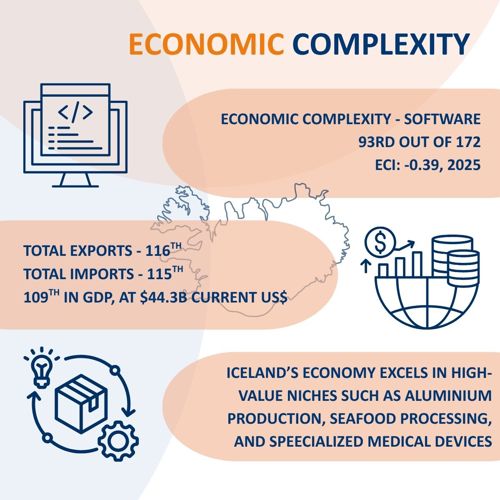
In 2024, Iceland ranked:
- 109th in GDP, at $33.3B current US$
- 116th in total exports
- 115th in total imports
- 8th in GDP per capita, one of the highest globally
Despite its modest size, Iceland’s economic structure reveals an impressive combination of specialization, innovation, and resource efficiency.
ECONOMIC PROFILE AND COMPLEXITY
Although Iceland’s economy is not highly diversified by global standards, it excels in high‑value niches such as aluminum production, seafood processing, and specialized medical devices. These industries leverage the country’s natural advantages, abundant renewable energy and rich marine ecosystems, to achieve strong global competitiveness. The country’s focus on sustainability, resource management, and innovation contributes to its resilience, even in the face of external shocks.
EXPORT
In 2024, Iceland exported $7.69B, making it the 116th largest exporter worldwide.
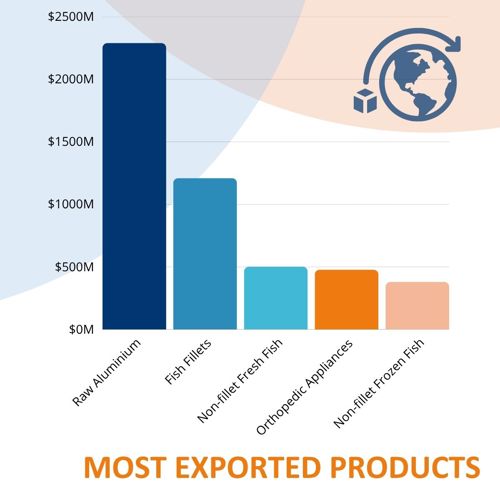
Its top export products were:
- Raw Aluminium – $2.29B
- Fish Fillets – $1.21B
- Non‑fillet Fresh Fish – $502M
- Orthopedic Appliances – $478M
- Non‑fillet Frozen Fish – $380M
These figures showcase Iceland’s dual export pillars: energy‑intensive aluminum production and a sophisticated seafood sector renowned for quality and sustainability. Orthopedic appliances highlight the presence of a growing medical technology niche.
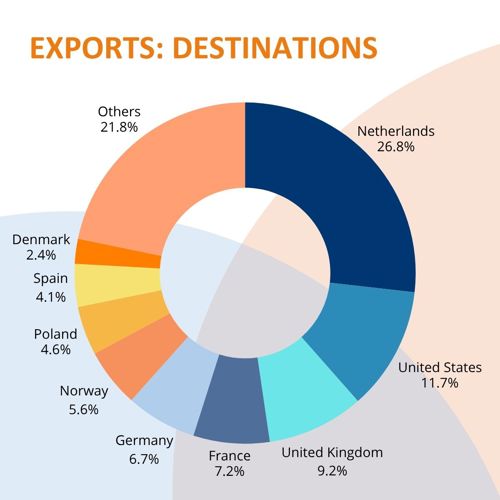
The main destinations for Icelandic exports were:
- Netherlands – $2.06B
- United States – $901M
- United Kingdom – $706M
- France – $555M
- Germany – $516M
The Netherlands’ leading position is linked to its role as a logistics hub distributing Icelandic aluminum and seafood across Europe.
Over the last five years, Iceland’s exports increased from $6.01B in 2019 to $7.69B in 2024, a rise of $1.69B, reflecting steady growth in core industries.
IMPORT
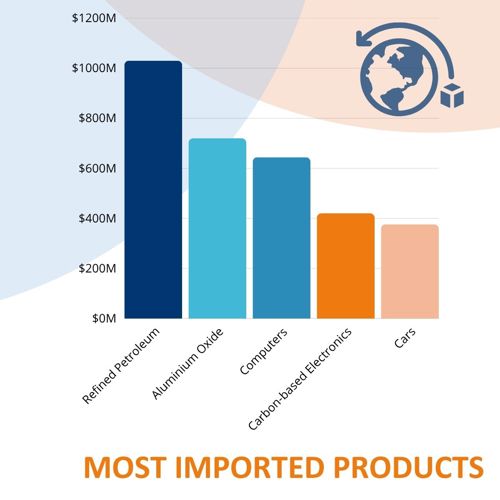
In 2024, Iceland imported $9.91B, ranking it as the 115th largest importer globally.
Its main imports were:
- Refined Petroleum – $1.03B
- Aluminium Oxide – $720M
- Computers – $644M
- Carbon‑based Electronics – $420M
- Cars – $376M
These figures mirror the country’s structural needs: energy inputs for aluminum production (aluminum oxide), essential consumer and technological goods, and transportation.
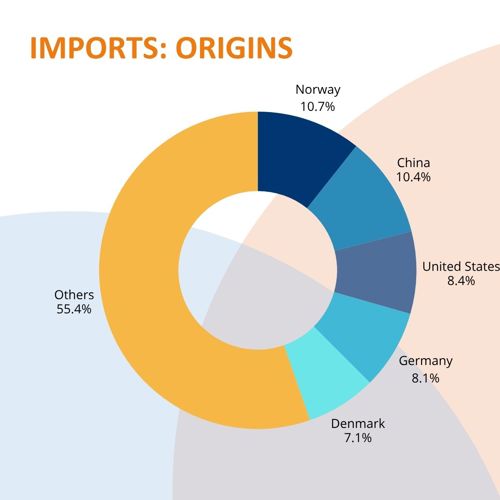
The leading origins of Iceland’s imports were:
- Norway – $1.05B
- China – $1.02B
- United States – $825M
- Germany – $796M
- Denmark – $703M
Over the past five years, imports grew significantly, from $6.91B in 2019 to $9.91B in 2024, an increase of $3.01B, driven by rising energy inputs and demand for technology and consumer goods.
TRADE BALANCE
In 2024, Iceland recorded its highest positive trade balances with:
- Netherlands – $1.4B
- France – $316M
- United Kingdom – $289M
- Spain – $127M
- Poland – $81.9M
Major trade deficits were registered with:
- China – –$872M
- Norway – –$625M
- Denmark – –$522M
- Sweden – –$359M
- Brazil – –$304M
These deficits reflect Iceland’s dependence on imported industrial inputs and manufactured goods.
CURIOSITY CORNER: ICELAND’S UNIQUE ECONOMIC ECOSYSTEM
One of Iceland’s most intriguing economic traits is how its natural environment directly shapes its industries and innovation. For example, the country’s volcanic landscape is not only a tourist magnet but also an economic asset: magma‑heated groundwater powers an extensive geothermal network that heats homes, drives industry, and even supports geothermal greenhouses. These greenhouses allow Iceland to grow vegetables and herbs year‑round so efficiently that the country produces, for instance, almost all of its own tomatoes despite sub‑arctic conditions.
Another fascinating aspect is Iceland’s approach to sustainability and circular economy. In the fishing sector, almost 100% of each fish is used: beyond fillets, by‑products become collagen, omega‑rich supplements, pet food, cosmetics, or biomedical ingredients. This practice not only reduces waste but transforms the seafood industry into a high‑value innovation platform.
Finally, Iceland has developed a reputation as an unlikely digital hub. Thanks to its cool climate, stable energy supply, and low electricity costs, the island has become an attractive location for data centers. International companies leverage Iceland’s natural cooling and renewable power to reduce their environmental impact, turning the island into one of the world’s greenest data‑processing environments.
CONCLUSION
Iceland’s economic profile demonstrates how a small nation with limited population and geographic constraints can leverage natural advantages to build a resilient and internationally competitive economy. Driven by its renewable energy resources, specialized export industries, and a highly skilled population, Iceland continues to strengthen its position within global trade networks. Its strong performance in aluminum production and seafood exports, coupled with a growing medical-technology niche, highlights the country’s ability to turn local strengths into high‑value global assets.
At the same time, Iceland’s dependence on imported industrial inputs and technological goods underscores the structural realities of a small, open economy. Yet its commitment to sustainability, innovation, and efficient resource management positions it well for long‑term stability. As Iceland further integrates into advanced global supply chains and continues to invest in renewable energy and high-tech capabilities, it stands as a compelling example of economic adaptability and strategic specialization in the modern world.
Source: Iceland (ISL) Exports, Imports, and Trade Partners | The Observatory of Economic Complexity