PRODUCT CLASSIFICATION
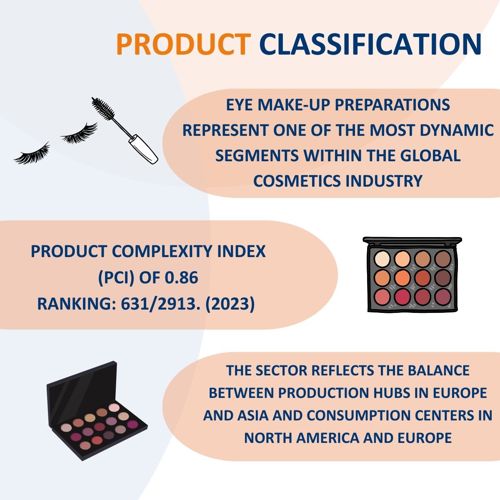
Eye make-up preparations represent one of the most dynamic segments within the global cosmetics industry. From mascaras and eyeliners to eyeshadows and brow products, they are not only tools of beauty but also cultural symbols, reflecting trends in fashion, identity, and self-expression. Their evolution spans centuries: from the use of kohl in Ancient Egypt to today’s high-tech formulations that promise waterproof performance, vegan ingredients, and hypoallergenic safety.
In trade terms, eye make-up preparations fall under HS Code 330420, within the broader category of Perfumery & Cosmetics. In 2023, global trade reached $5.35B, accounting for 0.024% of world trade. They have a Product Complexity Index (PCI) of 0.86, ranking 631st out of 2,913 products, which places them in the mid-range of sophistication compared to other cosmetic goods. This score reflects the balance between relatively straightforward manufacturing processes and the advanced branding, formulation, and regulatory compliance that make cosmetics a competitive and knowledge-intensive sector.
EXPORT
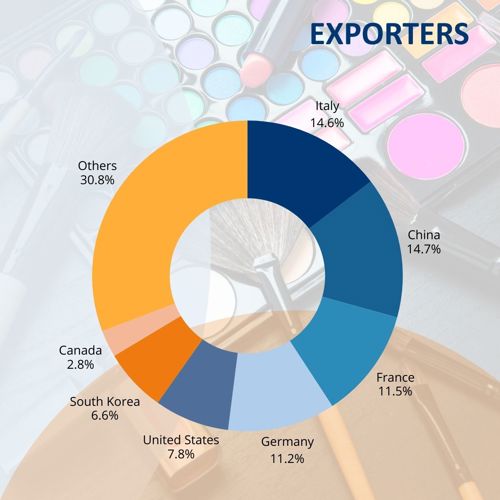
In 2023, the leading exporters of eye make-up preparations were:
- Italy – $859M
- China – $845M
- France – $607M
Countries with the highest share of eye make-up preparations in their export portfolios were:
- Luxembourg – 0.54%
- Cayman Islands – 0.18%
- Italy – 0.13%
The largest trade surpluses were recorded by:
- China – $692M
- Italy – $690M
- South Korea – $290M
IMPORT
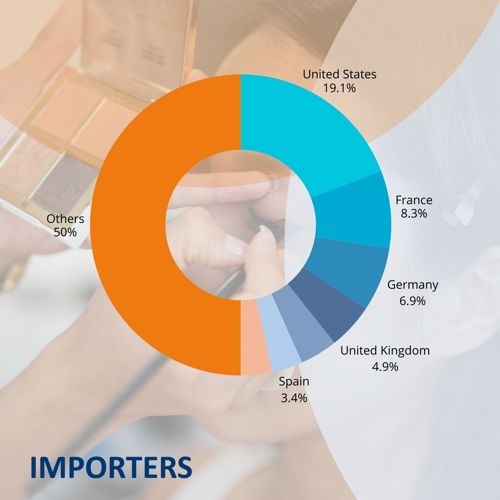
In 2023, the main importers of eye make-up preparations were:
- United States – $868M
- France – $412M
- Germany – $391M
Countries with the highest share of this category in their import portfolios were:
- Hong Kong – 0.25%
- France – 0.16%
- Germany – 0.14%
The largest trade deficits were recorded by:
- United States – -$487M
- Hong Kong – -$128M
- Netherlands – -$126M
CURIOSITY CORNER: EYE MAKE-UP PREPARATIONS
Eye make-up has always been more than just a cosmetic product: it’s a cultural statement. Already in Ancient Egypt, both men and women used kohl to outline their eyes, not only for beauty but also for spiritual protection. Over the centuries, eye make-up became a symbol of fashion and identity: from the dramatic eyeliner of Cleopatra to the smoky eyes of Hollywood divas, each era has left its mark.
Today, eye make-up preparations are at the heart of a global industry that blends science, art, and marketing. Modern mascaras promise volume and length thanks to advanced polymers, while eyeliners and shadows are increasingly formulated to be vegan, cruelty-free, and hypoallergenic. Social media has amplified their cultural role: a single viral tutorial can launch a new trend worldwide, turning a niche product into a must-have overnight.
Interestingly, the dominance of countries like Italy and France in exports reflects their strong luxury cosmetics heritage, while the United States remains the largest consumer market. This duality of European craftsmanship and American consumptionvshows how eye make-up is both a symbol of beauty and a driver of global trade.
CONCLUSION
Eye make-up preparations illustrate how cosmetics are both a cultural artifact and a global trade product. With exports led by Italy, China, and France, and imports dominated by the United States, the sector reflects the balance between production hubs in Europe and Asia and consumption centers in North America and Europe. The medium PCI ranking shows that while these products are not highly complex compared to electronics, they carry significant economic and cultural weight. Looking ahead, growth will be driven by consumer trends toward sustainability, inclusivity, and innovation, making eye make-up a fascinating case study of how beauty and commerce intertwine.