OVERVIEW
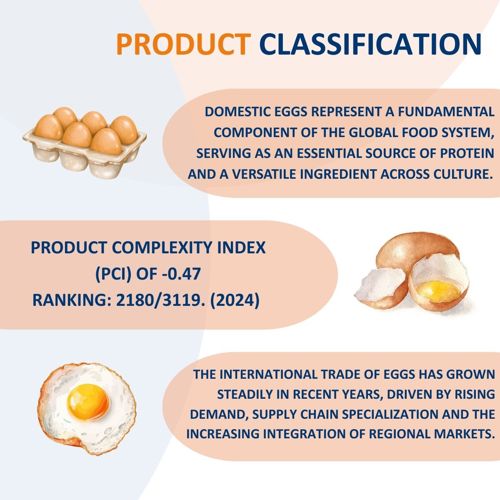
Domestic eggs represent a fundamental component of the global food system, serving as an essential source of protein and a versatile ingredient across cultures. Despite being a relatively low‑complexity agricultural product, the international trade of eggs has grown steadily in recent years, driven by rising demand, supply chain specialization, and the increasing integration of regional markets.
GLOBAL TRADE PERFORMANCE
In 2024, global trade of Domestic Eggs reached $3.09B, marking an 2.73% decrease from 2023, when total trade amounted to $3.18B. Over the past five years, the category has expanded at an annualized rate of 5.48%, reflecting both growing consumption and the strengthening of cross‑border supply networks.
Among the 5,380 products traded worldwide in 2024, Domestic Eggs ranked 1,122nd in global trade value, accounting for 0.014% of world trade. According to the Product Complexity Index (PCI), eggs were the 2,180th most complex product out of 3,119, with a PCI score of –0.47, consistent with their nature as a standardized agricultural commodity.
Domestic Eggs fall under the Animal Products section, specifically within HS2 Edible products of animal origin, n.e.s., under the HS4 Eggs classification.
EXPORT
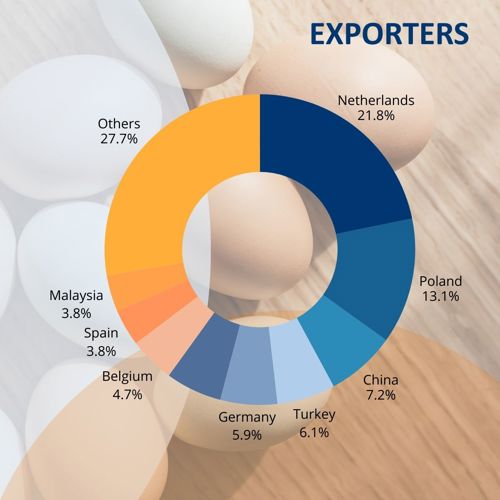
In 2024, the leading exporters of Domestic Eggs were:
- Netherlands – $673M
- Poland – $405M
- China – $223M
The Netherlands remains a dominant force in the global egg trade thanks to its highly industrialized poultry sector and strong logistical infrastructure. Poland continues to expand its export footprint, supported by competitive production costs and growing EU market share. Turkey, meanwhile, has strengthened its position as a regional supplier, particularly to Middle Eastern markets.
IMPORT
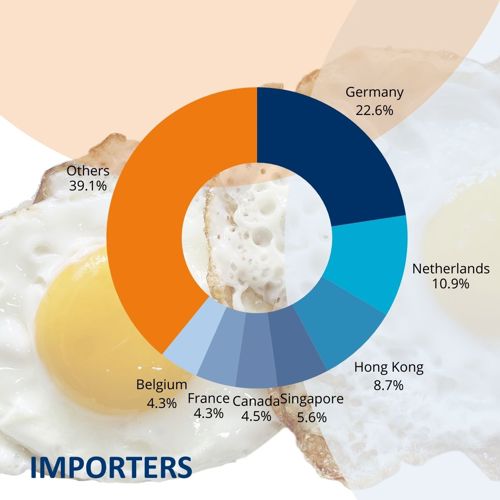
In the same year, the main importers of Domestic Eggs were:
- Germany – $698M
- Netherlands – $338M
- Hong Kong – $270M
Germany stands as the world’s largest importer, reflecting its high domestic consumption and reliance on neighboring EU producers. The Netherlands appears on both sides of the trade balance due to its role as a major distribution hub. Hong Kong, with limited domestic production capacity, remains heavily dependent on imports to meet local demand.
TRADE BALANCE
A global trade‑balance map for 2024 highlights clear regional patterns. Countries with the largest trade surpluses were:
- Poland – $373M
- Netherlands – $335M
- China – $223M
These surpluses reflect strong production capacity and well‑established export channels.
Conversely, the largest trade deficits were recorded by:
- Germany – –$514M
- Hong Kong – –$268M
- Singapore – –$171M
These economies rely heavily on imports due to limited domestic production or high consumption relative to output.
CURIOSITY CORNER:
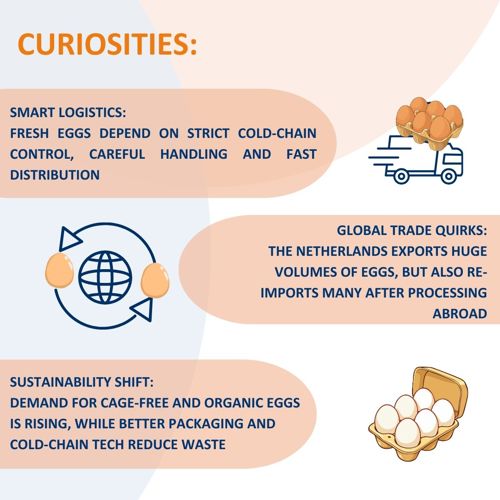
Eggs have been traded across borders for centuries, but modern egg logistics are surprisingly sophisticated. Fresh eggs require strict temperature control, careful handling, and rapid distribution to maintain quality. Some countries even specialize in exporting specific types of eggs (such as brown, white, or enriched varieties) based on regional consumer preferences.
Another interesting fact: the Netherlands, one of the world’s top exporters, also re‑imports significant volumes of eggs. This happens because Dutch companies often ship eggs abroad for processing or packaging and then bring them back into the EU market, illustrating how interconnected and specialized the supply chain has become.
Sustainability is increasingly shaping the sector. Demand for cage‑free and organic eggs is rising, especially in Europe, pushing producers to adapt their farming systems. At the same time, innovations in packaging and cold‑chain efficiency are helping reduce waste and extend shelf life, making eggs a more resilient product in global trade.
CONCLUSIONS
Domestic eggs may seem like a simple commodity, but their global trade dynamics reveal a complex and rapidly evolving market. With strong growth, clear export leaders, and significant regional dependencies, the egg sector highlights how essential food products move through international supply chains. As consumer preferences shift toward higher welfare standards and sustainable production, the global egg trade is likely to continue transforming in the years ahead.