PRODUCT CLASSIFICATION
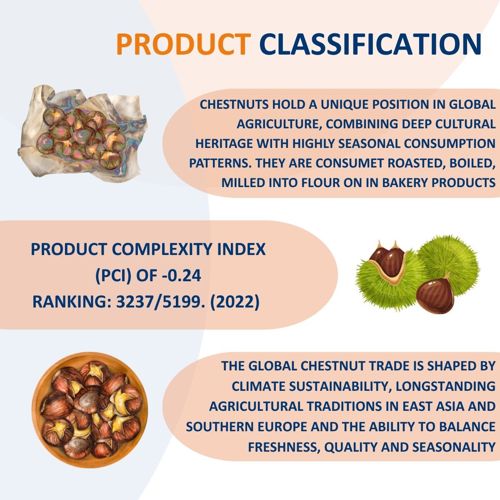
Chestnuts, the edible nuts produced by trees of the Castanea genus, hold a unique position in global agriculture, combining deep cultural heritage with highly seasonal consumption patterns. Appreciated for their sweet, earthy flavor and versatility, they are consumed roasted, boiled, milled into flour, or incorporated into confectionery and bakery products. Despite their rustic image, chestnuts require attentive handling and controlled storage, especially when traded fresh in-shell, as they are prone to mold and rapid moisture loss.
In international trade, chestnuts fall under the Vegetable Products section and are classified within HS Chapter 08: Edible fruits, nuts & fruit peels, specifically under HS4 Other Nuts. This category includes Nuts, edible: chestnuts (Castanea spp.), fresh or dried, in shell. While the product itself is biologically straightforward, its perishability and the need for climate-appropriate storage give chestnut supply chains a moderate degree of logistical complexity.
In 2024, global trade in chestnuts reached $248 million, marking a 11.1% decrease from $279 million in 2023. Over the last five years, this segment recorded an annualized decline of 5.2%, reflecting both climatic challenges in producing regions and shifting seasonal demand patterns.
Out of 5,380 products traded globally in 2024, chestnuts ranked 3816th, accounting for less than 0.005% of global trade value. This relatively low ranking aligns with their niche but resilient role in international markets, heavily influenced by traditional consumption habits, regional production cycles, and holiday-season surges.
The global chestnut trade is shaped by climate suitability (temperate zones with specific moisture requirements), longstanding agricultural traditions in East Asia and Southern Europe, and the ability of exporters to balance freshness, quality, and seasonality. Even as a low-volume commodity, chestnuts illustrate how specialty agricultural products maintain strong cultural significance and stable demand across continents.
EXPORT
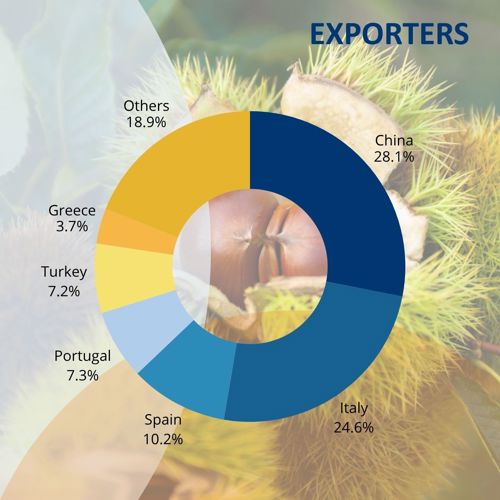
In 2024, the leading exporters of chestnuts (fresh or dried, in shell) were:
- China – $69.8M
- Italy – $61.1M
- Spain – $25.4M
China remains the world’s largest producer of Castanea mollissima, supported by extensive cultivation areas and established processing hubs. Italy’s export strength is rooted in centuries-old chestnut groves in regions such as Tuscany, Piedmont, and Campania, known for high-quality varieties like Marroni. Spain contributes steadily through production in Galicia, Catalonia, and Andalusia.
Countries where chestnuts represented the highest share of their export portfolio in 2024 were:
- Aruba – 0.13%
- Albania – 0.031%
- Portugal – 0.021%
Although the percentages are small, they highlight the relevance of chestnuts as a strategic local specialty in these countries, particularly for Albania and Portugal, which have traditional harvesting regions.
The largest trade surpluses in 2024 were recorded by:
- China – $60.5M
- Italy – $30.9M
- Turkey – $16.5M
These surpluses underline the strong export orientation of chestnut-producing economies, supported by established cultivation zones, favorable microclimates, and consistent demand in European and Asian markets.
IMPORT
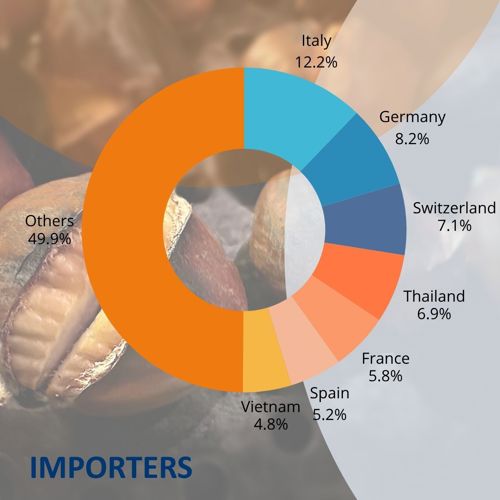
In 2024, the main importers of chestnuts (fresh or dried, in shell) were:
- Italy – $30.2M
- Germany – $20.3M
- Switzerland – $17.7M
Italy’s position as both a top exporter and top importer is linked to its dual role: domestic harvest supports export markets, while imports, particularly from China, complement supply during periods of lower local availability. Germany and Switzerland, with strong winter consumption traditions, rely on imports to satisfy seasonal peaks.
Countries with the largest trade deficits in 2024 were:
- Switzerland – –$17.4M
- Germany – –$17.1M
- Thailand – –$17M
These deficits reflect limited domestic production and high consumption demand, particularly in European countries where roasted chestnuts remain iconic winter foods.
CURIOSITY CORNER: THE CULTURAL AND BOTANICAL FASCINATION OF CHESTNUTS
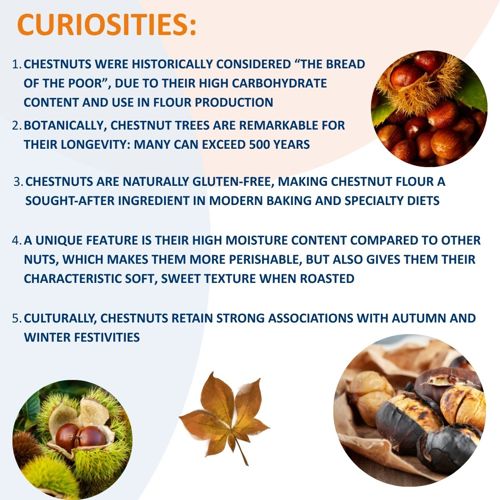
Chestnuts have been cultivated for thousands of years, especially across East Asia and Southern Europe, where they were historically considered a staple food, often referred to as “the bread of the poor” due to their high carbohydrate content and use in flour production. In many mountainous regions of Italy, France, and Spain, chestnut orchards shaped rural economies for centuries.
Botanically, chestnut trees are remarkable for their longevity: many can exceed 500 years, and ancient groves in Italy and China are still productive today. Their nuts are naturally gluten-free, making chestnut flour a sought-after ingredient in modern baking and specialty diets.
A unique feature of chestnuts is their high moisture content compared to other nuts, which makes them more perishable but also gives them their characteristic soft, sweet texture when roasted. This also explains why supply chains require ventilated storage, rapid transport, and careful temperature control.
Culturally, chestnuts retain strong associations with autumn and winter festivities. From roasted street-vendor chestnuts in European cities to traditional Chinese New Year dishes, chestnuts symbolize warmth, celebration, and seasonality. Their global journey, from ancient mountain forests to international trade flows worth hundreds of millions of dollars, illustrates how a humble nut continues to connect tradition, culture, and global commerce.
CONCLUSION
The global chestnut trade in 2024 highlights the resilience of a traditional agricultural product deeply rooted in cultural heritage yet fully integrated into modern international markets. Despite an overall decline in global trade value (down 11.1% from 2023) chestnuts remain a seasonal staple with strong regional demand.
Major exporters such as China, Italy, and Spain leverage their climatic advantages and long-standing expertise, while key importing countries including Italy, Germany, and Switzerland underscore the enduring popularity of chestnuts across Europe.
Even with low product complexity and relatively small trade volumes, chestnuts depend on coordinated logistics, controlled storage conditions, and consistent seasonal demand. As consumers continue to value traditional foods, plant-based alternatives, and gluten-free ingredients, chestnuts maintain their role as a distinctive and culturally significant product in global trade.