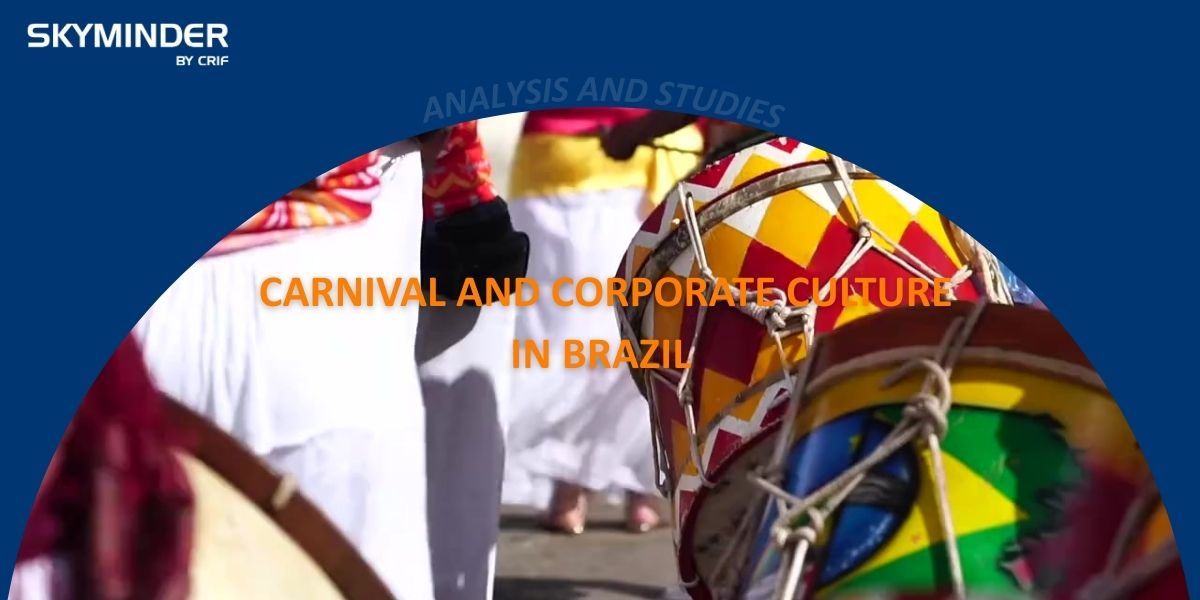
Carnival and Corporate Culture: Understanding Brazil Through Its Most Iconic Celebration
As Brazil enters the height of Carnival celebrations this week, the country’s vibrant spirit is more visible than ever: a perfect moment to explore how this cultural energy also shapes everyday life, including the way Brazilians work.
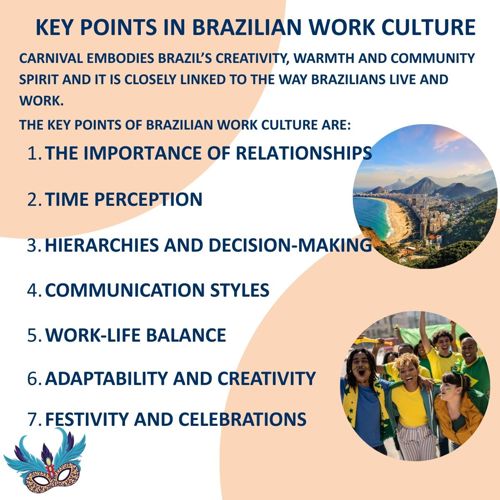
Brazil is famous for its vibrant lifestyle and welcoming people. It also has a unique work culture worth exploring. Brazilian work culture blends cooperation, creativity, and a strong sense of community and understanding their work culture is key to succeeding in this dynamic environment. From relationships to communication styles, workplaces in Brazil reflect the nation’s values.
Brazilians have a strong passion for celebrating, and this joyful spirit often carries over into the workplace. It’s common for offices to mark birthdays, work milestones, and holidays with small festivities that strengthen relationships and boost morale. These moments of shared joy reflect the country’s deep sense of community, also visible in everyday rituals like the cafezinho, which reinforces connection and belonging.
This cultural inclination toward celebration is not limited to the workplace; it is woven into the fabric of Brazilian life. To truly understand Brazilian culture, and by extension its work culture, one must look at Carnival. Taking place this year from February 16 to 21, Carnival embodies the creativity, warmth, and community spirit that shape how Brazilians live and work.
CARNIVAL
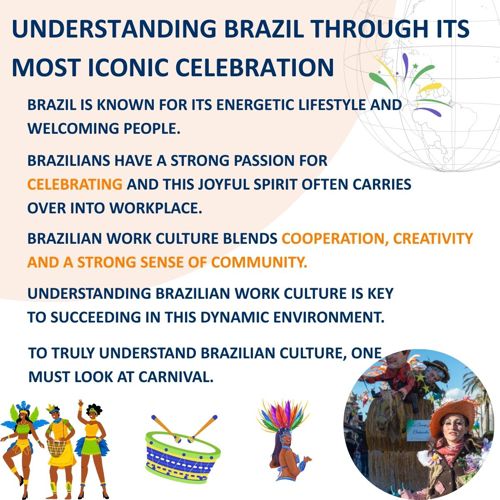
Carnival in Brazil is a vibrant celebration shaped by diverse cultural influences and rich traditions. Its origins date back to the 16th century, evolving from European customs and African heritage into the spectacular festivities seen today. This annual event features colorful parades, lively music, and elaborate dance performances, making it a defining element of Brazil’s cultural identity. Over the years, Carnival has evolved into a celebration with distinct regional variations that reflect Brazil’s diverse cultural heritage. Each area of the country adds its own unique flavor, turning the festival into a rich tapestry of art, music, and community spirit. Beyond entertainment, Carnival plays a meaningful role in Brazilian society, influencing economic activity and fostering a strong sense of unity among participants. Each region of Brazil celebrates Carnival with its own customs and styles and the festival plays an important role in Brazil’s society and economy.
Rio de Janeiro is the beating heart of Brazilian Carnival, hosting some of the world’s most iconic parades. The main event takes place in the Sambadrome, where samba schools compete with dazzling floats, vibrant costumes, and high‑energy choreography. The atmosphere is electric, drawing millions of spectators, while street parties, known as blocos, bring locals and tourists together to dance, sing, and celebrate. Music and dance, especially samba, are central to the festival, reflecting Brazil’s cultural diversity.
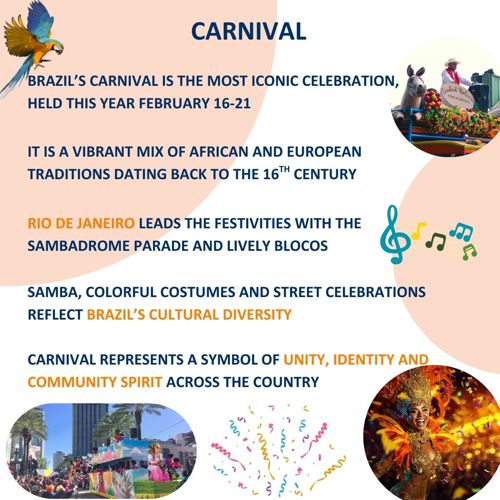
Samba, rooted in Afro‑Brazilian traditions, is the soul of Carnival. Its lively rhythms and captivating melodies fill the streets, inspiring dancers to prepare for months in advance. Colorful costumes and expressive movements embody the joy of the celebration, creating a sense of unity among participants. Costumes and masks also play a key role, showcasing creativity, cultural themes, and historical references. Many are handmade, adding to the visual spectacle and enhancing the festive atmosphere.
The Grand Parade in Rio is the most famous Carnival event. Each samba school presents a themed performance featuring giant floats, intricate costumes, and thousands of performers. Judges evaluate creativity, execution, and overall impact, raising the stakes and attracting massive crowds. The parade highlights Rio’s cultural richness and draws visitors from around the world.
Carnival also serves as a platform for social commentary. Performances often address political issues, inequality, and cultural identity, blending entertainment with activism. Samba schools frequently choose themes that spark reflection and dialogue about Brazil’s challenges. This makes Carnival not only a celebration but also a powerful expression of collective voice.
Inclusivity is another defining feature. Carnival embraces participants from all backgrounds, celebrating Indigenous, African, and European influences. Samba schools welcome people from diverse communities, breaking social barriers and giving everyone a chance to be represented. This broad participation makes Carnival a symbol of unity and cultural pride across Brazil.
In essence, Carnival captures the spirit of Brazil itself: vibrant, inclusive, and deeply rooted in community, offering a powerful window into the country’s cultural identity.
THE IMPORTANCE OF RELATIONSHIPS
Carnival offers one of the clearest examples of how relationships shape Brazilian life, and the workplace is no different. Just as Carnival depends on collaboration among samba schools, musicians, dancers, and entire communities, professional success in Brazil is built on strong personal connections.
In fact, building meaningful connections plays a central role in Brazilian professional culture and people in Brazil place great importance on personal relationships, both at work and in their private lives. Networking is widely viewed as an essential ingredient for achieving success in the workplace.
It’s common for coworkers to start with light, informal conversations before addressing business matters. This habit helps foster trust and a sense of closeness. Brazilians also consider trust a fundamental element of productive teamwork, so investing time in getting to know colleagues can greatly enhance the overall work atmosphere.
Leaders in Brazil typically embrace a leadership style focused on people. They prioritize cooperation and maintaining positive relationships. This mindset contributes to a welcoming and encouraging environment where employees feel appreciated and driven.
TIME PERCEPTION IN BRAZILIAN WORK CULTURE
Just as Carnival unfolds with a rhythm of its own, vibrant, fluid, and guided more by collective energy than strict schedules, Brazilians often approach time in a similarly flexible way in professional settings. The festival’s dynamic pace reflects a broader cultural tendency to prioritize human connection and adaptability over rigid timetables.
Brazilians tend to view time with a certain degree of flexibility. While punctuality is generally respected in professional environments, it isn’t always strictly followed. Meetings may begin slightly later than scheduled, and deadlines can occasionally be adjusted. This attitude reflects the importance Brazilians place on relationships and adaptability. Instead of adhering rigidly to timetables, they prioritize building rapport and finding workable, real‑world solutions. For international professionals, keeping this in mind can help set realistic expectations and support smoother collaboration.
HIERARCHIES AND DECISION-MAKING
Carnival relies on well‑defined structures to bring its spectacular parades to life, from the leadership of samba school directors to the coordinated work of musicians, dancers, designers, and volunteers. Brazilian workplaces also operate within clear hierarchies. Behind the vibrant chaos of Carnival lies an organized system where roles, responsibilities, and decision‑making processes are respected to ensure everything runs smoothly.Brazilian organizations generally operate with well‑defined hierarchies. Respect for authority is a strong cultural value, and employees are expected to address workplace matters by following the established chain of command.
At the same time, leadership in Brazil often blends authority with a friendly, accessible attitude. Although hierarchy is acknowledged, managers typically welcome input and ideas from their teams. This combination helps maintain structure while also creating a sense of inclusion among employees.
COMMUNICATION STYLES IN BRAZIL
The expressive energy that defines Carnival also shapes the way Brazilians communicate. The festival’s music, dance, and visual storytelling reveal a culture that values emotion, warmth, and connection, qualities that naturally carry over into everyday interactions, including those in the workplace. Effective communication is a key element of professional life in Brazil. Brazilians are recognized for their lively and expressive way of interacting, often using gestures, tone, and facial expressions to reinforce what they mean. Direct confrontation is avoided. Phrases like “é difícil” or “vamos ver” often signal disagreement. Foreign executives who miss these cues risk false assumptions and missed deadlines.
In the workplace, face‑to‑face conversations are generally preferred over emails or phone calls. This preference reflects the cultural emphasis on building personal rapport. Meetings tend to be dynamic and participatory, with people openly exchanging ideas and viewpoints.
When it comes to written communication, Brazilians value clarity and courtesy. Messages should be straightforward but polite, and including greetings and formal expressions is seen as a mark of professionalism.
WhatsApp is a business tool: while email is used for formal documentation, decisions and follow‑ups often happen via instant messaging. Understanding this dynamic is essential for managing responsiveness and decision velocity.
WORK-LIFE BALANCE IN BRAZIL
The way Brazil pauses to celebrate Carnival each year reveals how deeply the country values moments of joy, rest, and collective connection. This national slowdown, where cities shift their rhythm and people step away from daily routines, mirrors the importance Brazilians place on maintaining balance in their everyday lives, including the workplace.
Work–life balance holds an important place in Brazilian professional culture. Employees value their personal lives just as much as their work responsibilities, and many companies support this by offering flexible schedules and generous vacation allowances.
Brazil also has a large number of public holidays, reflecting its rich cultural and religious diversity. These breaks give workers time to rest and recharge.
Even with this strong focus on balance, Brazilians are widely recognized for their commitment to their jobs. They often put in extra effort to meet deadlines and contribute to organizational success. This blend of dedication and personal well‑being helps create a work environment that is both productive and fulfilling.
ADAPTABILITY AND CREATIVITY
Few moments capture Brazil’s creative spirit as powerfully as Carnival. The festival is a showcase of imagination: samba schools spend months designing costumes, composing music, building floats, and choreographing performances that transform ideas into vibrant visual stories. This ability to innovate, improvise, and find solutions even under pressure reflects a broader cultural trait that also shapes the Brazilian workplace. Brazilian work culture is strongly shaped by flexibility and inventive thinking. Ans also in everyday life, employees often tackle challenges with original ideas and a positive, solution‑oriented mindset. This adaptability is influenced by the country’s constantly evolving economic and social environment.
In the workplace, Brazilians are known for being highly resourceful. They excel at developing practical approaches to complicated issues, and this creative spirit is especially visible in fields like technology, design, and advertising.
Employers in Brazil appreciate individuals who can think creatively and approach problems from new angles. Encouraging innovation not only drives progress but also contributes to greater employee engagement and satisfaction.
CHALLENGES IN BRAZILIAN WORK CULTURE
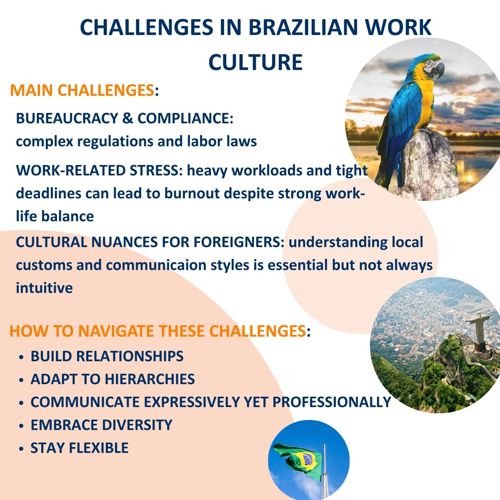
Behind the dazzling spectacle of Carnival lies an enormous amount of coordination, negotiation, and problem‑solving. Samba schools must navigate tight budgets, complex logistics, strict regulations, and intense competition, challenges that reveal another side of Brazilian culture: the ability to thrive amid complexity. These behind‑the‑scenes pressures mirror some of the difficulties that also emerge in the workplace, where bureaucracy, time constraints, and cultural nuances can create obstacles for both local and international professionals. While Brazilian work culture offers many advantages, it also comes with certain challenges. One frequent difficulty is the presence of bureaucracy. Organizations in Brazil often deal with intricate regulations and administrative procedures, which can slow down the decision‑making process. Brazil’s labor laws are complex, and informal agreements can create liabilities. Foreign employers must balance cultural flexibility with strict compliance.
Managing work‑related stress is another concern. Even though work–life balance is highly valued, heavy workloads and tight deadlines can sometimes lead to burnout. More and more employers are addressing this by promoting mental‑health awareness and introducing wellness initiatives.
For foreigners, understanding the cultural subtleties of Brazilian workplaces can also be demanding. Learning local customs and traditions is essential for building strong professional relationships.
For professionals and companies aiming to thrive in Brazil, here are some practical suggestions:
- Build relationships: Take time to connect with colleagues and establish trust.
- Adapt to hierarchies: Respect formal structures while keeping communication open with supervisors.
- Communicate effectively: Be expressive but maintain professionalism.
- Embrace diversity: Appreciate the varied perspectives your coworkers bring.
- Stay flexible: Be ready to adjust to shifting situations and challenges.
Understanding these characteristics helps professionals form meaningful connections and succeed. By remaining adaptable, fostering trust, and respecting local norms, you can navigate the Brazilian workplace with confidence.
CONCLUSION:
Brazilian culture is defined by warmth, creativity, and a deep sense of community, values that shape not only social life but also the way people work, collaborate, and build relationships. Carnival, the country’s most iconic celebration, captures this spirit in its most vibrant form. Far from being just a festival, it is a cultural mirror: it reflects the joy, resilience, and collective energy that characterize Brazil, while also influencing how Brazilians interact, communicate, and solve problems in everyday contexts.
The creativity seen in Carnival’s music, costumes, and performances echoes the inventive mindset found in Brazilian workplaces. The festival’s collaborative nature, where entire communities come together to create something extraordinary, mirrors the importance of relationships and teamwork in professional settings. Even the fluid rhythm of Carnival resonates with the flexible approach to time and adaptability that many international professionals observe when working in Brazil.
At the same time, the challenges behind organizing such a massive event reveal another side of Brazilian culture: the ability to navigate complexity, embrace diversity, and find solutions through collective effort. In this sense, Carnival is both a celebration and a cultural blueprint. It shows how Brazilians balance structure with spontaneity, tradition with innovation, and individuality with community.
Understanding Carnival means understanding Brazil. And by recognizing how this celebration embodies the country’s values, professionals can better appreciate the cultural dynamics that shape Brazilian workplaces and engage with them more confidently and authentically.