
Business Culture Around the World: Understanding How to Navigate International Negotiations
Focus Country: Spain
In international business, cultural awareness is essential for building trust and avoiding misunderstandings. Spain, one of Europe’s largest economies, combines a strong entrepreneurial spirit with a relationship‑driven business culture. Understanding how Spanish professionals communicate, negotiate, and make decisions can significantly improve collaboration and commercial success.
In this edition of Business Culture Around the World, we explore the key traits of Spanish business culture and how international partners can navigate negotiations effectively.
Doing Business in Spain: What International Partners Should Know
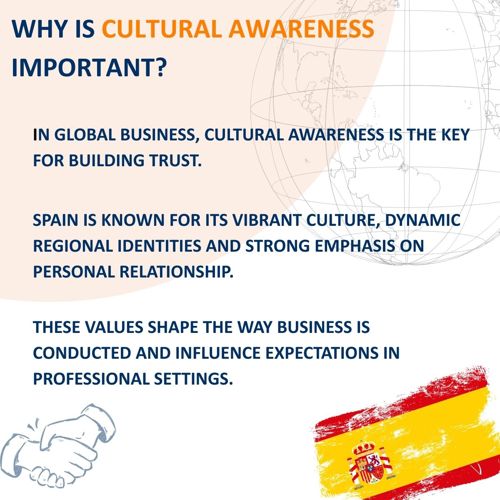
Spain is known for its vibrant culture, dynamic regional identities, and strong emphasis on personal relationships. These values shape the way business is conducted and influence expectations in professional settings.
1. Negotiation Style in Spain
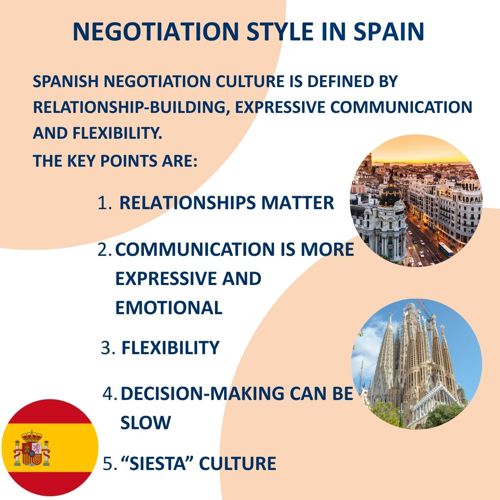
Spanish negotiation culture is defined by relationship‑building, expressive communication and flexibility.
Relationships Matter
Trust is essential in Spain. Before discussing contracts or numbers, Spanish professionals often prefer to establish a personal connection. A good relationship can accelerate negotiations and strengthen long‑term partnerships.
Expressive and Emotional Communication
Spanish communication tends to be more expressive than in Northern Europe. Tone, gestures, and facial expressions play an important role. This expressiveness reflects engagement, not conflict.
Flexible Approach to Negotiation
Negotiations may involve lively discussions and last‑minute adjustments. Adaptability is appreciated, and rigid structures may be seen as limiting.
Decision‑Making Can Be Slow
Decisions often require approval from senior leadership, especially in traditional or family‑owned companies. Patience is key.
Working hours and time off
Spain is famous for its “siesta” culture, though in modern urban centers, the long midday break is less common than it once was. Still, working hours in Spain can differ significantly from those in the US or Northern Europe. The traditional workday often starts around 9:00 or 10:00 a.m., with a break for lunch between 2:00 and 4:00 p.m., followed by a return to work until 7:00 or 8:00 p.m. In practice, many companies now follow a more standard European schedule, but it’s important to clarify working hours with your Spanish partners, and to be aware of possible interruptions to services like the mail.
Work-life balance is highly valued in Spain. Spaniards typically take their vacations seriously, with the month of August often reserved for extended holidays. It’s not uncommon for businesses to slow down or even close during this period. Understanding and respecting these rhythms is crucial for planning meetings, negotiations, and project timelines.
2. What to Avoid When Doing Business with Spanish
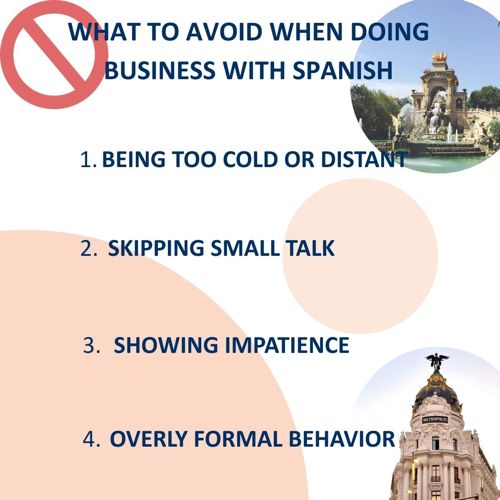
Certain behaviors may be perceived negatively:
- Being too cold or distant Spaniards value warmth and personal interaction.
- Skipping small talk Conversations about family, food, or culture help build trust.
- Showing impatience Pressuring for quick decisions can damage the relationship.
- Overly formal behavior Spanish business culture is professional but relaxed.
3. Cultural Differences That Influence Business
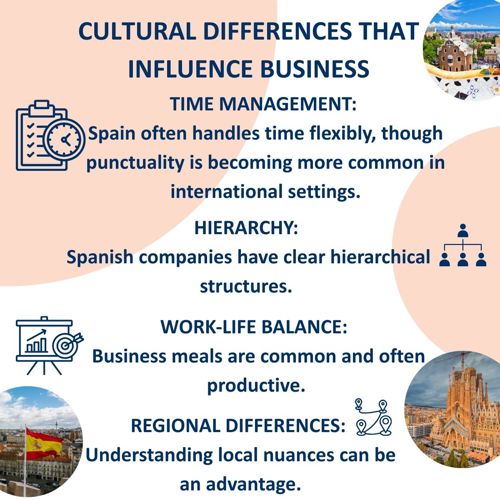
Time Management
Spain has a more flexible approach to time than Northern Europe. Meetings may start slightly later than scheduled, and agendas can shift. However, punctuality is becoming more common in international contexts.
Hierarchy
Spanish companies often have clear hierarchical structures. Final decisions typically come from senior leaders.
Work–Life Balance
Lunch is an important social moment and can last longer than in other countries. Business meals are common and often productive.
Regional Differences
Spain’s regions (Catalonia, Basque Country, Andalusia, Madrid, etc.) have distinct identities and business styles. Understanding local nuances can be an advantage.
4. Etiquette, Communication, and Curiosities
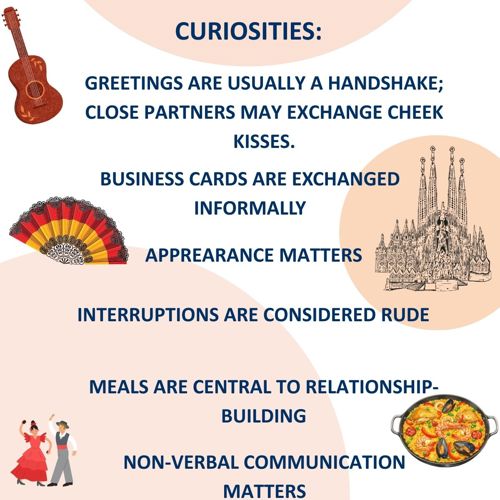
Some cultural traits that often surprise international partners:
- Greetings usually involve a handshake; close partners may use light cheek kisses (outside formal business).
- Business cards are exchanged informally.
- Dress code is elegant and stylish: appearance matters.
- Interruptions during conversations are common and not considered rude.
- Meals are central to relationship‑building; lunch is often the main business meal.
- Non‑verbal communication (gestures, tone) carries significant meaning.
Conclusion
Doing business in Spain requires warmth, patience, and an appreciation for expressive communication and relationship‑building. Companies that adapt to these cultural expectations can:
- negotiate more effectively
- build strong, trust‑based partnerships
- avoid misunderstandings
- strengthen their presence in one of Europe’s most dynamic markets
Spain offers excellent opportunities and cultural awareness is the key to unlocking them.
Source: Business Etiquette in Spain: Practical Insights for a Successful Market Entry , Business Etiquette in Spain and Other Spanish-Speaking Countries , An Introduction to Business Culture in Spain | Babbel for Business