
Business Culture Around the World: Understanding How to Navigate International Negotiations
Doing Business in Italy: What International Partners Should Know
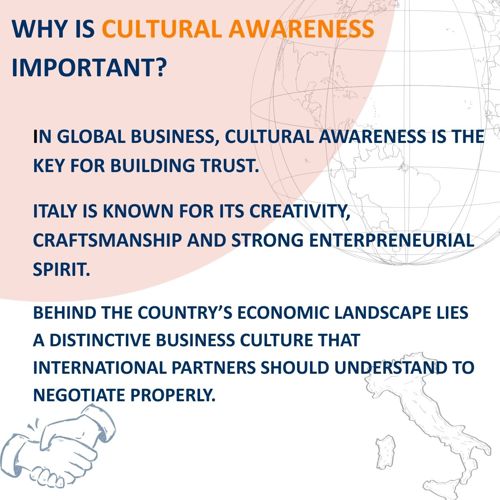
Italy is known for its creativity, craftsmanship, and strong entrepreneurial spirit. But behind the country’s economic landscape lies a distinctive business culture that international partners should understand to navigate negotiations effectively.
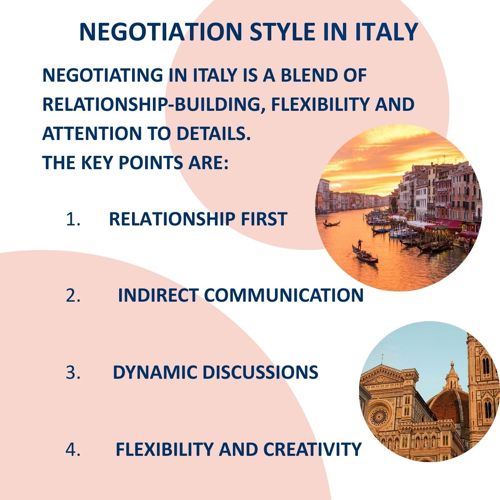
1. Negotiation Style in Italy
Negotiating in Italy is a blend of relationship‑building, flexibility and attention to detail.
Relationships First:
Italian professionals value personal connections. Before diving into contracts or numbers, they often prefer to establish trust through conversation, shared interests, or informal meetings. A strong relationship can significantly accelerate the business process.
Indirect Communication:
While Italians can be expressive, their communication is not always direct. Expressions like “we’ll see”, “maybe”, or “it could be possible” may require interpretation. Context matters as much as words.
Dynamic Discussions:
Negotiations can be lively, with animated conversations and passionate tones. This is not a sign of conflict, it reflects engagement and interest.
Flexibility and Creativity:
Italian partners often appreciate tailored solutions rather than rigid frameworks. Adaptability is seen as a strength.
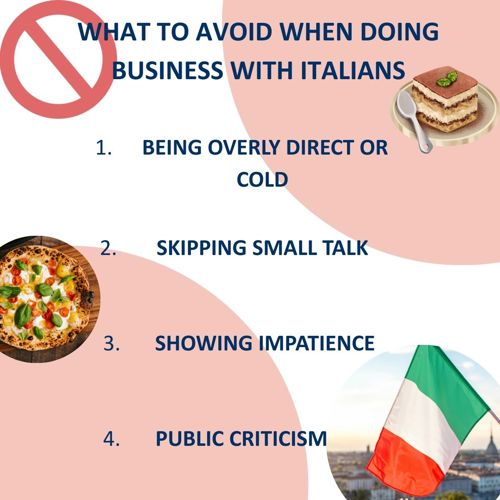
2. What to Avoid When Doing Business with Italians
Certain behaviors may be perceived as impolite or counterproductive:
- Being overly direct or cold Assertiveness is fine, but harshness is not well received.
- Skipping small talk Jumping straight to business can seem rushed or impersonal.
- Showing impatience Decision‑making may take time, especially in family‑owned companies.
- Public criticism Feedback should be delivered tactfully and preferably in private.
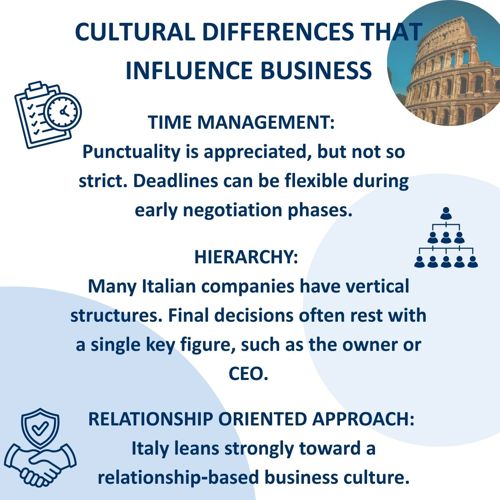
3. Cultural Differences That Influence Business
Time Management:
Punctuality is appreciated, but not as strict as in Northern Europe. Deadlines can be flexible during early negotiation phases, though expectations tighten once agreements are formalized.
Hierarchy:
Many Italian companies, especially SMEs, have vertical structures. Final decisions often rest with a single key figure, such as the owner or CEO.
Relationship‑Oriented Approach:
Italy leans strongly toward a relationship‑based business culture. Trust and personal rapport are essential foundations for long‑term partnerships.
4. Etiquette, Communication, and Curiosities
These cultural elements often surprise international partners:
- Eye contact matters: it signals sincerity and engagement.
- Gestures are part of the language: expressive communication is normal.
- Business cards are exchanged informally, without strict protocol.
- Business lunches can be strategic moments where deals progress more than in meeting rooms.
- A lively tone of voice is common and not a sign of disagreement.
- Attention to appearance is important: dressing well conveys professionalism.

Conclusion
Understanding Italy’s business culture means recognizing the importance of relationships, communication style, and decision‑making dynamics. For companies operating internationally, these insights help:
- negotiate more effectively
- avoid misunderstandings
- build stronger, long‑lasting partnerships
Italy offers significant opportunities and knowing how to navigate its cultural landscape is the first step toward successful collaboration.
Source: Italian Business Culture: Cultural Nuances and Etiquette - Fluent Fast Italian