Business Culture Around the World: Understanding How to Navigate International Negotiations
FOCUS COUNTRY: FINLAND
In international business, cultural awareness is essential for building trust and avoiding misunderstandings. Among the Nordic countries, Finland stands out for its unique combination of precision, directness, and quiet professionalism. Understanding these traits can help foreign partners navigate negotiations more effectively and build long‑lasting business relationships.
DOING BUSINESS IN FINLAND: WHAT INTERNATIONAL PARTNERS SHOULD KNOW
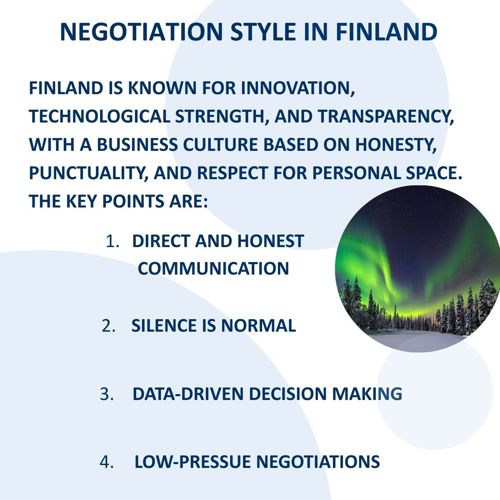
Finland is known for its innovation, technological excellence, and strong commitment to transparency. Its business culture reflects values such as honesty, punctuality, and respect for personal space, all of which shape how professionals interact with foreign partners.
1. Negotiation Style in Finland:
Finnish negotiation culture is defined by direct communication, preparation, and calm efficiency.
Direct and Honest Communication:
Finns value clarity. They say what they mean and expect the same in return. There is little room for exaggeration or vague language.
Silence is Normal:
Unlike many cultures, silence in Finland is not uncomfortable. Pauses in conversation are seen as moments of reflection, not tension.
Data‑Driven Decision‑Making:
Finnish professionals rely heavily on facts, logic, and documentation. Well‑prepared materials and clear evidence are essential.
Low‑Pressure Negotiations:
Negotiations are calm, structured, and free of emotional intensity. Raising your voice or pushing aggressively is counterproductive.
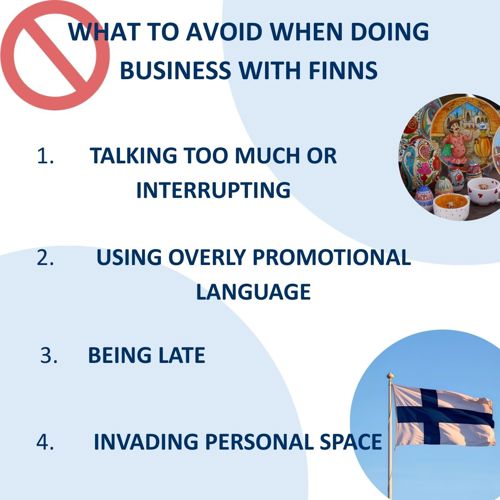
2. What to Avoid When Doing Business with Finns:
Certain behaviors may be perceived negatively:
- Talking too much or interrupting: Finns appreciate concise communication.
- Using overly promotional language: Claims must be realistic and supported by data.
- Being late: Punctuality is a sign of respect.
- Invading personal space: Physical distance and privacy are highly valued.
3. Cultural Differences That Influence Business
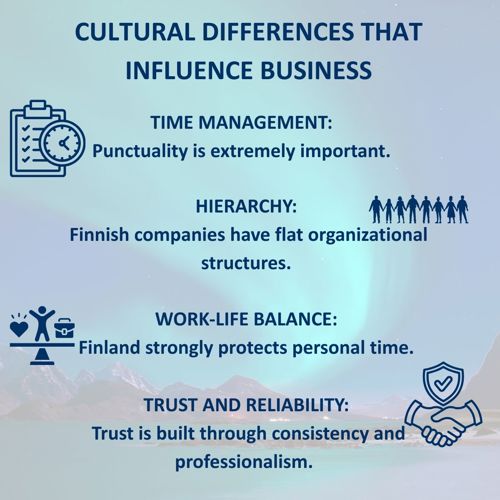
Time Management:
Punctuality is extremely important. Meetings start exactly on time and often end earlier than scheduled.
Hierarchy:
Finnish companies have flat organizational structures. Managers are approachable, and decisions are often made collaboratively.
Work–Life Balance:
Finland strongly protects personal time. Scheduling meetings outside standard working hours is discouraged.
Trust and Reliability:
Trust is built through consistency and professionalism. Once a commitment is made, it is expected to be honored without reminders.
4. Etiquette, Communication, and Curiosities
Some cultural traits that often surprise international partners:
- Business cards are exchanged, but without ceremony.
- Small talk is minimal: Finns prefer to get straight to the point.
- Coffee culture is huge: Finland has one of the highest coffee consumption rates in the world.
- Dress code is simple, functional, and modest.
- Personal space is important, even in elevators.
- Humor is subtle, often dry or understated.
CONCLUSIONS
Doing business in Finland requires clarity, respect for personal boundaries, and an appreciation for silence and precision. Companies that adapt to these cultural expectations can:
- negotiate more effectively
- build trust‑based partnerships
- avoid misunderstandings
- strengthen their presence in one of Europe’s most innovative economies
Finland offers excellent opportunities and cultural awareness is the key to unlock them.